
Wednesday, May 6, 2026

MikeGPT CyberSecurity

“Playbook for the Secure Enterprise”

MikeGPT Daily Threat Rundown

Heroes, your curated look at the current cybersecurity landscape for May 06, 2026.

Critical Threats
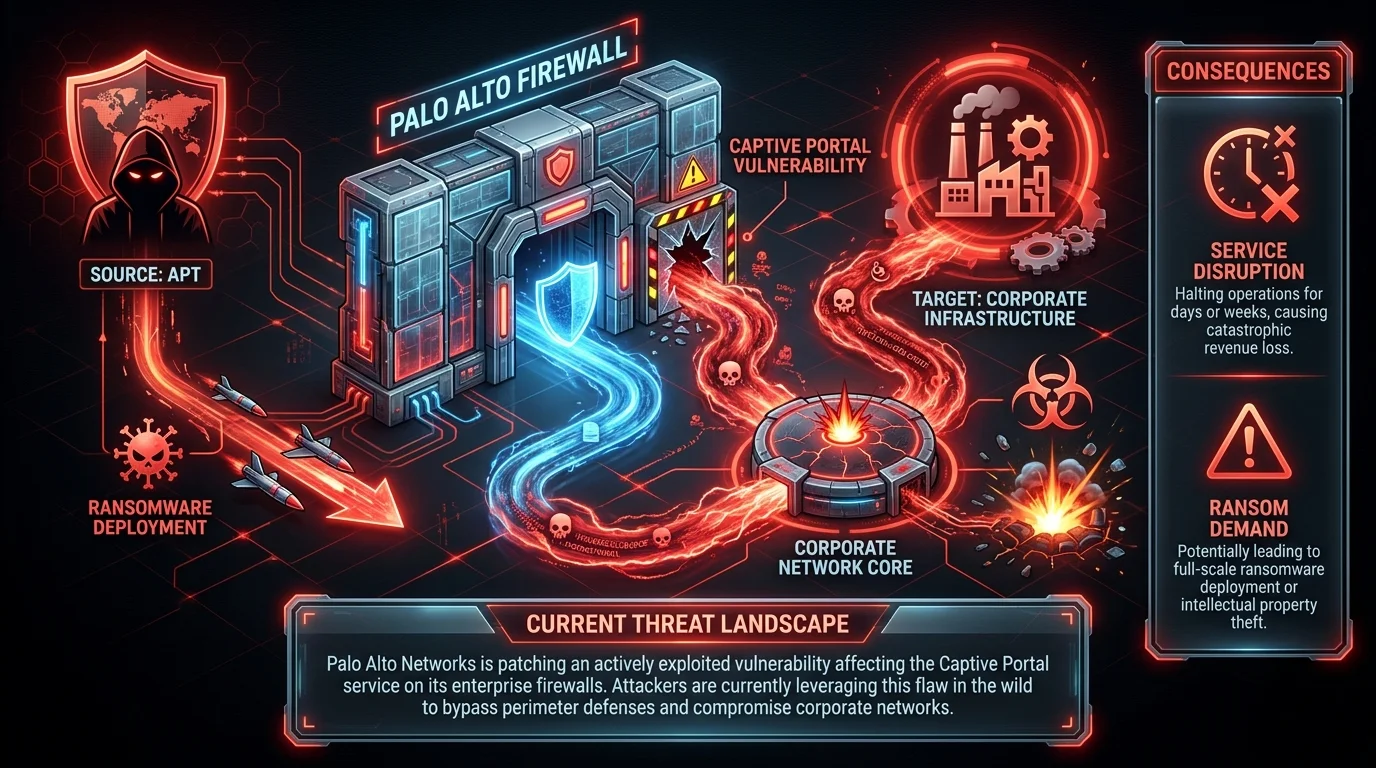
Palo Alto Networks to Patch Zero-Day Exploited to Hack Firewalls

    Palo Alto Networks is patching an actively exploited vulnerability affecting the Captive Portal service on its enterprise firewalls. Attackers are currently leveraging this flaw in the wild to bypass perimeter defenses and compromise corporate networks.

    Business Impact

    A compromised firewall allows attackers to bypass all network defenses, potentially leading to a full-scale ransomware deployment or intellectual property theft. The resulting business disruption could halt operations for days or weeks, causing catastrophic revenue loss.

    Recommended Action

    Ask your IT team: Are we using Palo Alto Networks firewalls with the Captive Portal service enabled, and have we implemented the vendor's emergency mitigations or patches?

    General Enterprise SecurityWeek ↗

The Apache Software Foundation has released an emergency update to fix a critical vulnerability in its web server software that allows attackers to execute unauthorized commands remotely. This flaw enables threat actors to take complete control of affected web servers without needing any passwords or credentials.

Business Impact

If exploited, attackers could completely compromise internet-facing web servers, leading to massive customer data theft, operational downtime, and severe reputational damage. This could trigger immediate regulatory fines, class-action lawsuits, and a significant loss of customer trust.

Recommended Action

Ask your IT team: Have we identified all external and internal Apache web servers, and are we urgently applying the latest patch to address CVE-2026-23918?

Abuse of Microsoft Dynamics Redirects Delivers Phishing Payloads at Scale

    Threat actors are abusing legitimate Microsoft Dynamics marketing features to deliver deceptive emails at scale. By blending into expected enterprise workflows and using trusted Microsoft infrastructure, attackers are successfully bypassing traditional email security filters.

    Business Impact

    Successful phishing campaigns can lead to compromised executive accounts, unauthorized wire transfers, and severe data breaches. This exposes the company to financial fraud, regulatory scrutiny, and significant legal liability.

    Recommended Action

    Ask your IT team: Are our email security gateways configured to inspect and flag suspicious redirects, even if they originate from trusted Microsoft domains?

    General Enterprise Varonis ↗

High Severity

The OceanLotus threat group is suspected of uploading malicious software packages to a popular code repository used by developers. This supply chain attack targets software engineers by tricking them into downloading compromised code libraries into corporate applications.

Business Impact

If developers inadvertently integrate this malicious code, it could compromise proprietary software products, leading to a supply chain breach affecting both the company and its customers. This carries massive liability, potential breach of contract lawsuits, and reputational destruction.

Recommended Action

Ask your IT team: Do we have automated security scanning in our software development pipeline to detect and block malicious open-source packages before they are used?

General Enterprise Kaspersky ↗

Security researchers have demonstrated a new hardware-level attack that grants complete control over NVIDIA processors. This vulnerability manipulates physical memory cells to alter data and escalate privileges, bypassing traditional software security.

Business Impact

Exploitation of hardware vulnerabilities can allow attackers to steal highly sensitive data or cryptographic keys directly from memory, bypassing all software-based security controls. This could lead to catastrophic intellectual property theft and loss of competitive advantage.

Recommended Action

Ask your IT team: Are we monitoring vendor guidance from NVIDIA regarding hardware mitigations, and how does this impact our high-performance computing or AI environments?

General Enterprise Schneier on Security ↗

Executive Briefing

Mean Time to Exploit Has Gone Negative. Security Strategy Has to Change.

Mandiant's latest M-Trends report reveals that the mean time to exploit vulnerabilities has reached negative seven days, meaning attackers are actively exploiting flaws before patches are even available. This fundamental shift requires organizations to move beyond traditional patch management and adopt proactive threat hunting and zero-trust architectures.

Suzu Labs · 5:12 PM ·
Oracle Debuts Monthly Critical Security Patch Updates

Oracle is shifting to a monthly rollout for critical security patch updates to address priority issues faster. This change will require enterprise IT teams to accelerate their testing and deployment cycles to keep pace with the new cadence and minimize exposure windows.

SecurityWeek · 6:32 AM ·

Vendor Spotlight

Rapid7

Specialization: Vulnerability Management & Exposure Management

Why Rapid7 Today: Today's threat landscape features a barrage of critical infrastructure vulnerabilities, including the Apache HTTP/2 double-free RCE (CVE-2026-23918), Palo Alto Networks' PAN-OS zero-day (CVE-2026-0300), and Oracle's new monthly patch cycle. Rapid7's vulnerability management and exposure platform enables security teams to rapidly scan their external and internal attack surfaces to identify and prioritize these specific critical CVEs across web servers, firewalls, and databases.

Key Capability: Automated vulnerability scanning and prioritization

Recommended Actions:
1. Navigate to InsightVM Console → Administration → Global and Console Settings → Administration → Content Updates
2. Navigate to InsightVM Console → Assets → Filtered Asset Search
3. Navigate to InsightVM Console → Vulnerabilities → Remediation Projects → Create a Project

Verification Steps:
- Review the 'Scan History' under the Sites tab after initiating a targeted scan on the newly created Dynamic Asset Group.
- Monitor the Remediation Project dashboard for the assigned Apache and PAN-OS vulnerabilities after IT reports patching is complete.

Learn More About Rapid7 ↗

Detection & Response

Detection & Response Kit (4 items)

⚠️ Disclaimer: Test all detection logic in non-production environments before deployment.

1. Vendor Platform Configuration - Rapid7

# Actionable Guidance for Rapid7 # Generated: 2026-05-06 14:03:51 # Step 1: Navigate to InsightVM Console → Administration → Global and Console Settings → Administration → Content Updates # Purpose: Ensure the Rapid7 Scan Engine has the latest vulnerability definitions to detect the newly disclosed Apache (CVE-2026-23918), PAN-OS (CVE-2026-0300), and Oracle CVEs. # Expected: The console will download and apply the latest vulnerability checks, ensuring subsequent scans can accurately identify these specific critical infrastructure threats. # Step 2: Navigate to InsightVM Console → Assets → Filtered Asset Search # Purpose: Create a Dynamic Asset Group (DAG) targeting potentially affected infrastructure by filtering for 'Software name contains Apache', 'OS contains PAN-OS', and 'Software name contains Oracle'. # Expected: A dynamically updating list of all internal and external assets running the targeted software, allowing security teams to isolate the attack surface for immediate assessment. # Step 3: Navigate to InsightVM Console → Vulnerabilities → Remediation Projects → Create a Project # Purpose: Create a targeted remediation project specifically filtering for CVE-2026-23918 and CVE-2026-0300, assigning it directly to the network and web infrastructure teams. # Expected: A tracked workflow that provides IT teams with specific remediation steps (e.g., PAN-OS hotfixes, Apache updates) and tracks resolution progress in real-time. # Verification Steps: # - Review the 'Scan History' under the Sites tab after initiating a targeted scan on the newly created Dynamic Asset Group. # Expected: Scan status displays 'Completed' with no authentication failures, and the Vulnerabilities tab accurately reflects the presence or absence of the specified CVEs based on the latest content update. # - Monitor the Remediation Project dashboard for the assigned Apache and PAN-OS vulnerabilities after IT reports patching is complete. # Expected: Following the next automated scan cycle, the vulnerability status within the Remediation Project automatically transitions from 'Open' to 'Closed/Remediated', decreasing the overall Real Risk Score.

2. YARA Rule for Karakurt / Apache HTTP/2 Exploit Artifacts

rule Detect_Karakurt_Apache_Exploit_Artifacts { meta: description = "Detects artifacts related to Karakurt activity and CVE-2026-23918 exploitation attempts" author = "Threat Rundown" date = "2026-05-06" reference = "https://securityaffairs.com/?p=191759" severity = "high" tlp = "white" strings: $s1 = "Karakurt" ascii wide $s2 = "CVE-2026-23918" ascii wide $s3 = "Microsoft" ascii wide $s4 = "Malware" ascii wide $h1 = { 48 54 54 50 2F 32 00 00 00 } // HTTP/2 binary framing artifact condition: any of ($s*) or $h1 }

3. SIEM Query — Apache HTTP/2 Double-Free RCE Detection

index=security sourcetype="pan:traffic" OR sourcetype="apache:access" (cve="CVE-2026-23918" OR signature="*Karakurt*" OR user_agent="*Malware*") | eval risk_score=case( signature="*Karakurt*" AND action="allowed", 100, cve="CVE-2026-23918", 80, 1==1, 25) | where risk_score >= 80 | table _time, src_ip, dest_ip, http_method, uri_path, user_agent, risk_score | sort -_time

4. PowerShell Script — Apache Server Version Verification

$computers = "localhost", "WEBSERVER01", "WEBSERVER02" foreach ($computer in $computers) { if (Test-Connection -ComputerName $computer -Count 1 -Quiet) { Write-Host "Checking Apache version on $computer..." # Query installed Apache service details to identify vulnerable versions Invoke-Command -ComputerName $computer -ScriptBlock { $apacheService = Get-WmiObject Win32_Service | Where-Object {$_.Name -match "Apache"} if ($apacheService) { $exePath = $apacheService.PathName -replace '"', '' $versionInfo = (Get-Item $exePath).VersionInfo.FileVersion Write-Output "Found Apache Version: $versionInfo" if ($versionInfo -match "2.4.59") { # Example vulnerable version check Write-Warning "Potentially vulnerable to CVE-2026-23918!" } } else { Write-Output "Apache service not found." } } } }

This rundown should provide a solid overview of the current threat landscape. Thank you to all our cyberheroes for your diligence and hard work. Stay vigilant!