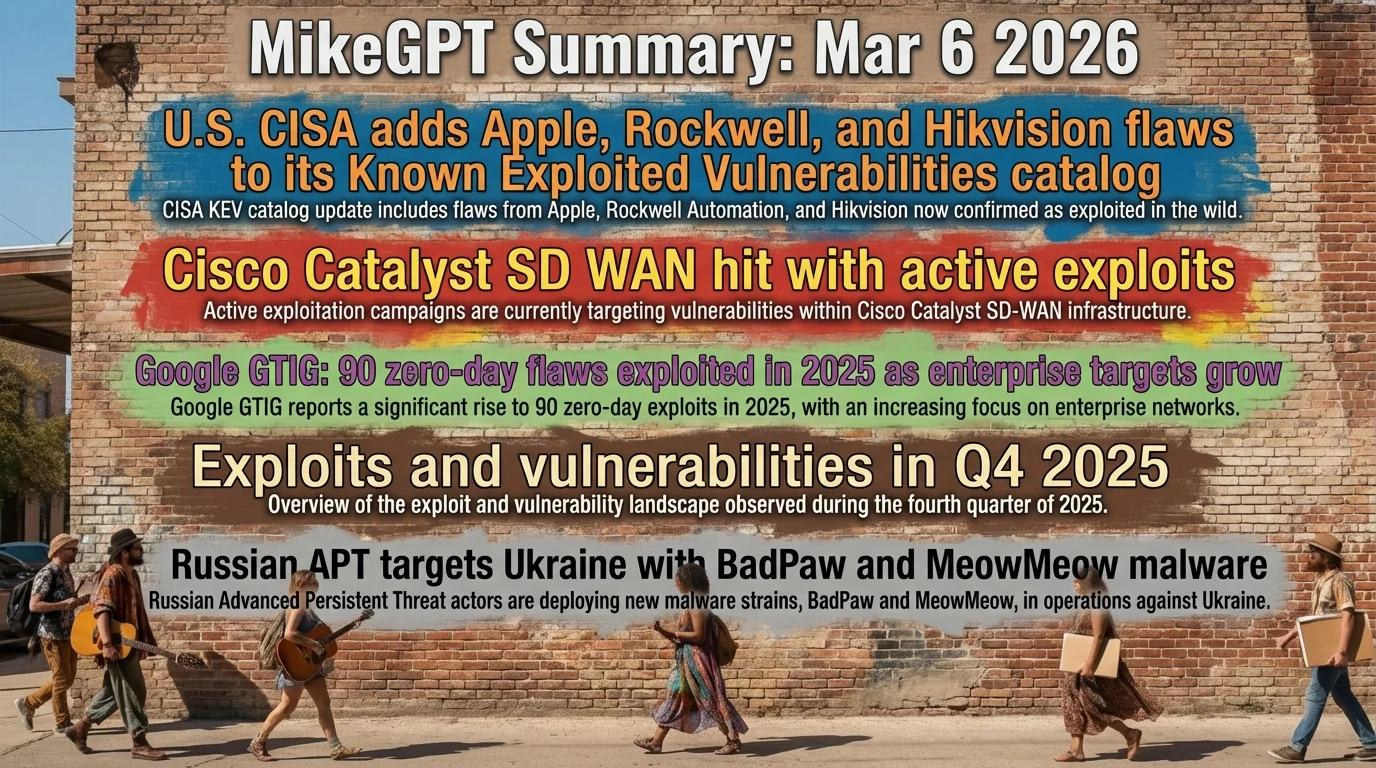
Heroes, your curated look at the current cybersecurity landscape for Mar 06, 2026.
Critical Threats
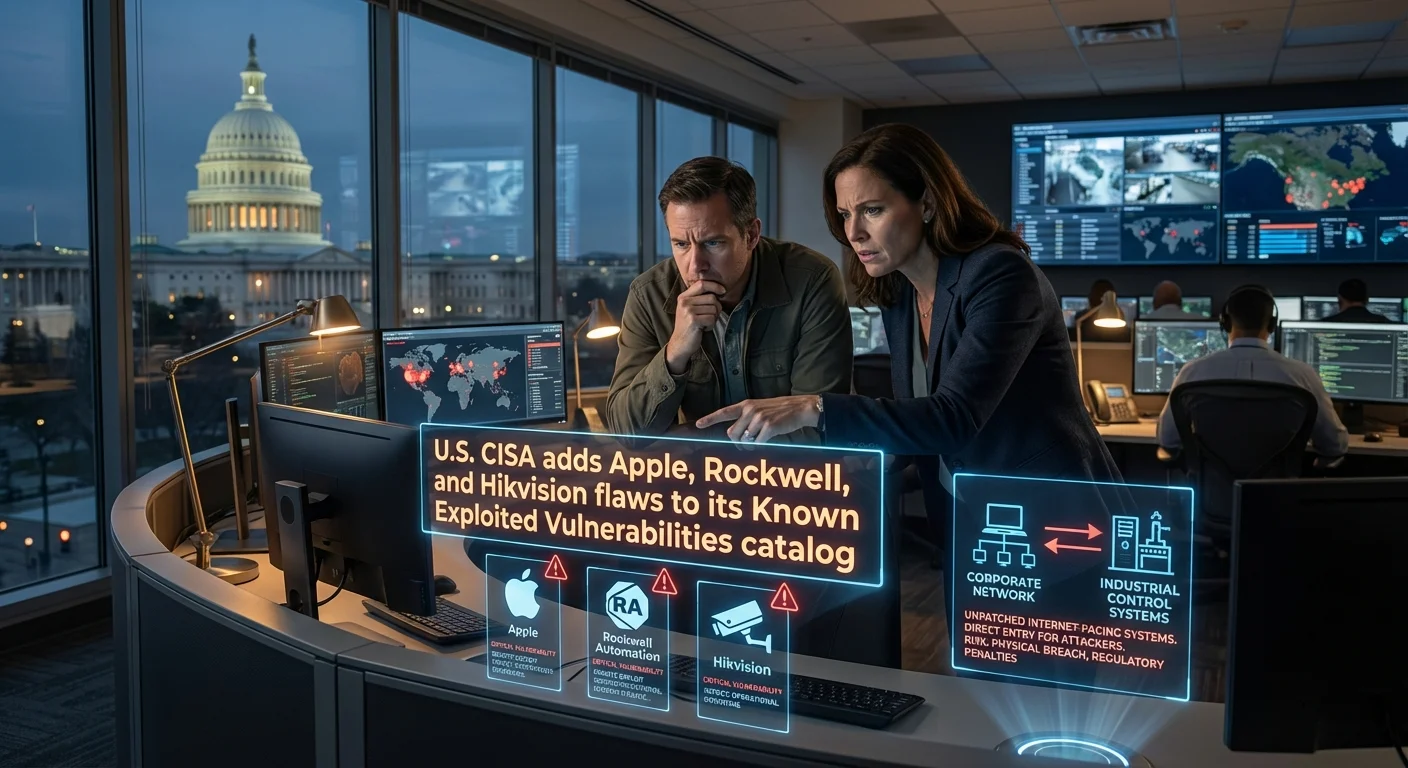
The Cybersecurity and Infrastructure Security Agency (CISA) has added critical CVSS 9.8 vulnerabilities affecting Hikvision cameras and Rockwell Automation products, alongside Apple flaws, to its KEV catalog due to active exploitation in the wild.
Business Impact
Unpatched internet-facing cameras and industrial control systems provide attackers direct entry into corporate networks, potentially leading to operational downtime, physical security breaches, and severe regulatory penalties.
Recommended Action
Ask your IT team: Have we identified all Hikvision cameras and Rockwell automation assets on our network, and are they patched to the latest firmware?
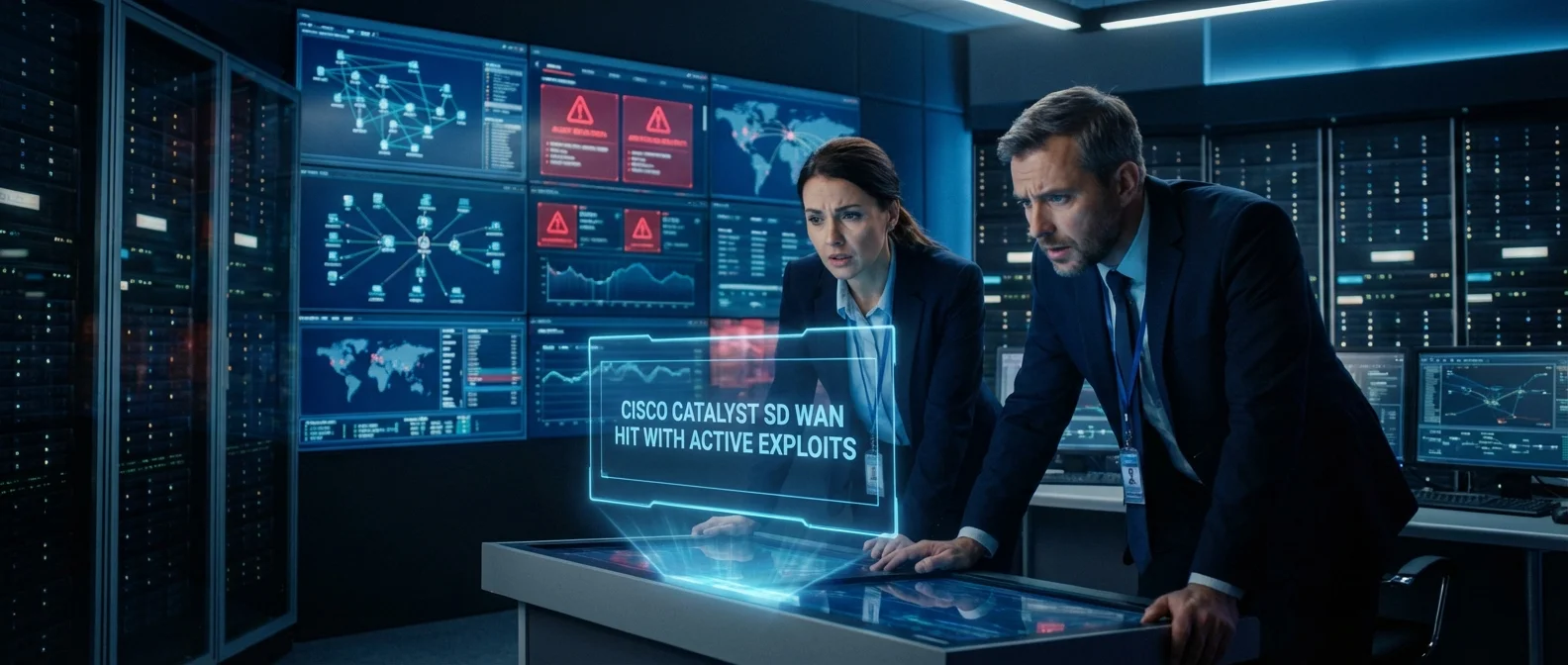
Critical vulnerabilities in Cisco Catalyst SD WAN vManage are being actively exploited in the wild, allowing arbitrary file overwrites and system compromise.
Business Impact
Compromise of core SD-WAN infrastructure could allow attackers to intercept corporate communications, reroute traffic, and cause widespread network outages, leading to massive business disruption and data theft.
Recommended Action
Ask your IT team: Have we applied the emergency patches for our Cisco vManage instances to address the actively exploited arbitrary file overwrite vulnerabilities?
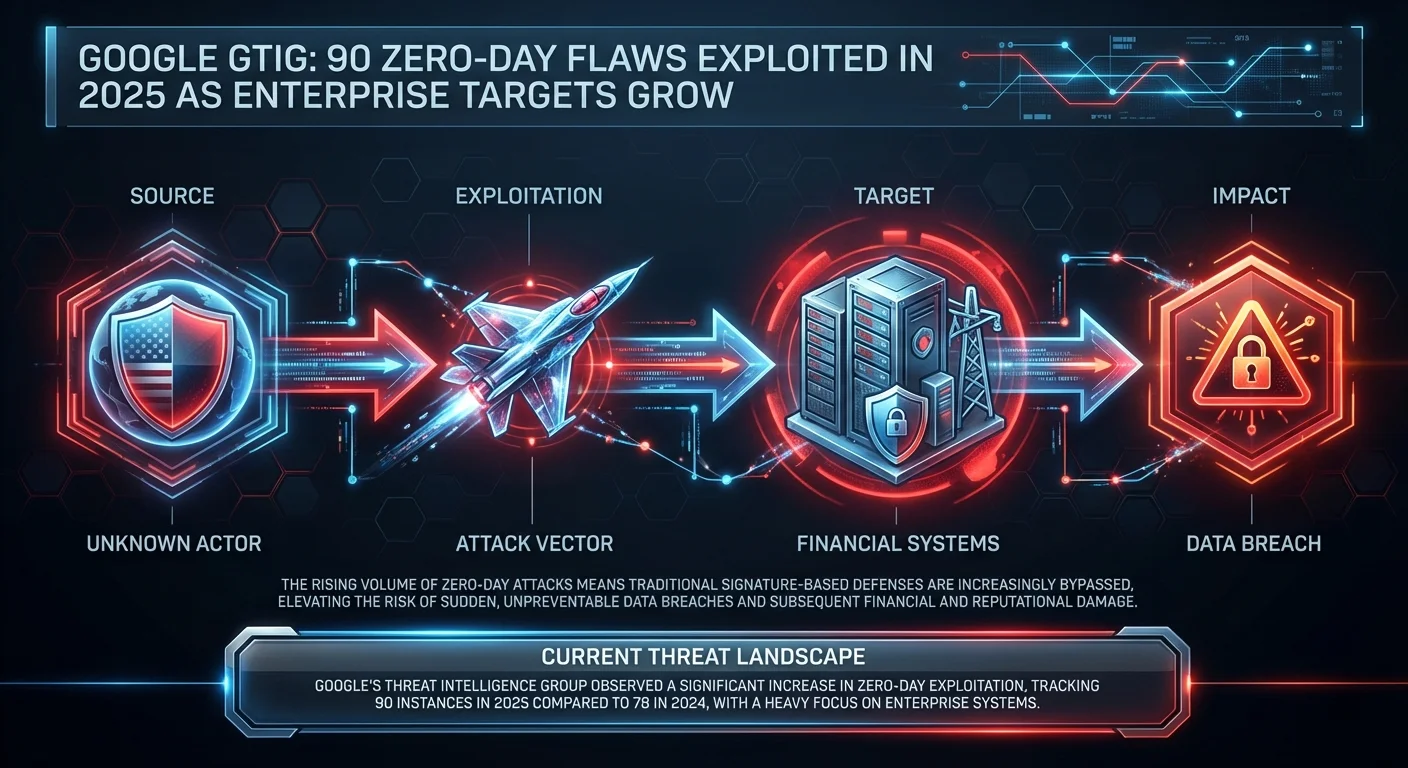
Google's Threat Intelligence Group observed a significant increase in zero-day exploitation, tracking 90 instances in 2025 compared to 78 in 2024, with a heavy focus on enterprise systems.
Business Impact
The rising volume of zero-day attacks means traditional signature-based defenses are increasingly bypassed, elevating the risk of sudden, unpreventable data breaches and subsequent financial and reputational damage.
Recommended Action
Ask your IT team: Are we relying solely on known vulnerability signatures, or do we have behavioral detection in place to catch zero-day post-compromise activity?
High Severity
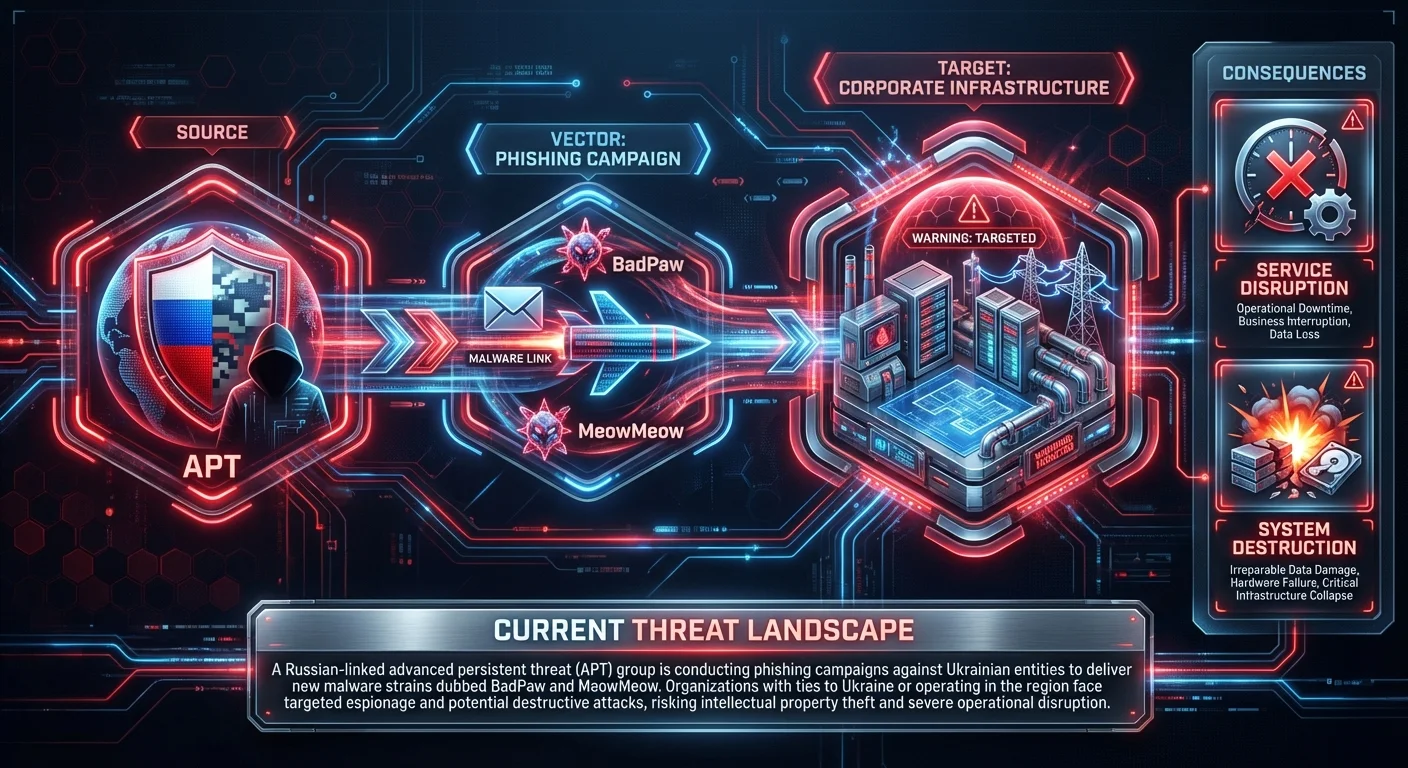
A Russian-linked advanced persistent threat (APT) group is conducting phishing campaigns against Ukrainian entities to deliver new malware strains dubbed BadPaw and MeowMeow.
Business Impact
Organizations with ties to Ukraine or operating in the region face targeted espionage and potential destructive attacks, risking intellectual property theft and severe operational disruption.
Recommended Action
Ask your IT team: Have we updated our email filtering rules to detect the latest phishing lures associated with the BadPaw and MeowMeow campaigns?

Threat actors are leveraging highly-ranked, malicious GitHub repositories to distribute a fake OpenClaw installer that infects victims with infostealer malware and the GhostSocks proxy.
Business Impact
Developers downloading compromised tools can inadvertently introduce infostealers into the corporate environment, leading to the theft of source code, credentials, and customer data.
Recommended Action
Ask your IT team: Do we have controls in place to verify the authenticity of open-source tools and installers downloaded by our engineering teams?
Other Noteworthy
Executive Briefing
As autonomous AI agents increasingly outnumber human users, traditional Zero Trust models must evolve to manage non-human identities and new attack surfaces effectively.
Recent breaches demonstrate that niche fourth-party vendors can cripple entire industries, necessitating a shift from static questionnaires to continuous, AI-driven monitoring of nth-party dependencies.
The modern Security Operations Center (SOC) is rapidly evolving, driven by AI-powered triage, enrichment, and upstream detection capabilities that redefine the cybersecurity stack.
Vendor Spotlight
Why Cloudflare Today: Cloudflare's edge proxy and Zero Trust architecture directly mitigate today's most critical threats by shielding vulnerable web frameworks (React2Shell), cloaking exposed management interfaces (Cisco SD-WAN, Tank Gauges), and using machine learning to block the rising tide of enterprise zero-day exploits before they reach the origin.
React2Shell (CVE-2025-55182): Critical React Vulnerability
1. Threat — React2Shell (CVE-2025-55182), a critical vulnerability affecting React applications.
2. Cloudflare Product(s) — WAF (Web Application Firewall)
3. Configuration Guidance — Dashboard → Security → WAF → Managed Rules. Ensure the "Cloudflare Managed Ruleset" is deployed and set to Block. To catch zero-day variations of the exploit payload, navigate to Dashboard → Security → WAF → Custom Rules → Create rule: cf.waf.score.sqli < 20 or cf.waf.score.rce < 20 and set the action to Block.
4. Coverage Assessment — Strong
Cisco Catalyst SD WAN Active Exploits (CVE-2026-20122, CVE-2026-20128)
1. Threat — Actively exploited arbitrary file overwrite vulnerabilities in Cisco Catalyst SD WAN vManage interfaces (CVE-2026-20122 and CVE-2026-20128).
2. Cloudflare Product(s) — Cloudflare Tunnel, Zero Trust (Cloudflare Access), WAF (Web Application Firewall)
3. Configuration Guidance — Dashboard → Zero Trust → Networks → Tunnels. Create a tunnel to route traffic to the vManage interface, allowing you to close inbound firewall ports. Then, go to Dashboard → Zero Trust → Access → Applications → Add an Application to enforce strict Identity Provider (IdP) authentication and MFA before any user can reach the management portal.
4. Coverage Assessment — Strong
Critical Vulnerabilities in Automated Tank Gauge Systems
1. Threat — Critical vulnerabilities discovered in internet-exposed Automated Tank Gauge (ATG) systems (OT/IoT infrastructure).
2. Cloudflare Product(s) — Cloudflare Tunnel, Zero Trust (Cloudflare Access)
3. Configuration Guidance — Dashboard → Zero Trust → Networks → Tunnels. Install cloudflared on a machine within the OT network to broker outbound-only connections to Cloudflare's edge, completely removing the ATG systems from public internet scanning (Shodan/Censys).
4. Coverage Assessment — Strong
Enterprise Zero-Day Exploitation Surge
1. Threat — 90 zero-day vulnerabilities exploited in the wild targeting enterprise systems (as reported by Google GTIG).
2. Cloudflare Product(s) — WAF (Web Application Firewall), Browser Isolation
3. Configuration Guidance — To protect against web-borne zero-days targeting employees: Dashboard → Zero Trust → Settings → Browser Isolation → Enable isolation for risky or uncategorized domains. To protect infrastructure: Dashboard → Security → WAF → Managed Rules → Enable "Cloudflare WAF Attack Score" to leverage machine learning for detecting anomalous, zero-day payloads that bypass traditional signature-based rules.
4. Coverage Assessment — Integration-Dependent
5. Integration Note — While Cloudflare blocks network and web-layer zero-day delivery, endpoint execution and lateral movement of zero-days (such as the Apple flaws noted by CISA) require CrowdStrike or SentinelOne XDR for device posture assessment and process-level blocking.
Coverage Gaps:
While Cloudflare provides strong perimeter and access controls for the web and network vulnerabilities highlighted today (React, Cisco, OT systems), several threats in today's rundown fall outside Cloudflare's standalone scope. Specifically, the Apple vulnerabilities added to the CISA KEV catalog and the underlying remediation of the 90 zero-days reported by Google GTIG require OS-level patching, Mobile Device Management (MDM), and Endpoint Detection and Response (EDR) solutions to fully secure the device layer.