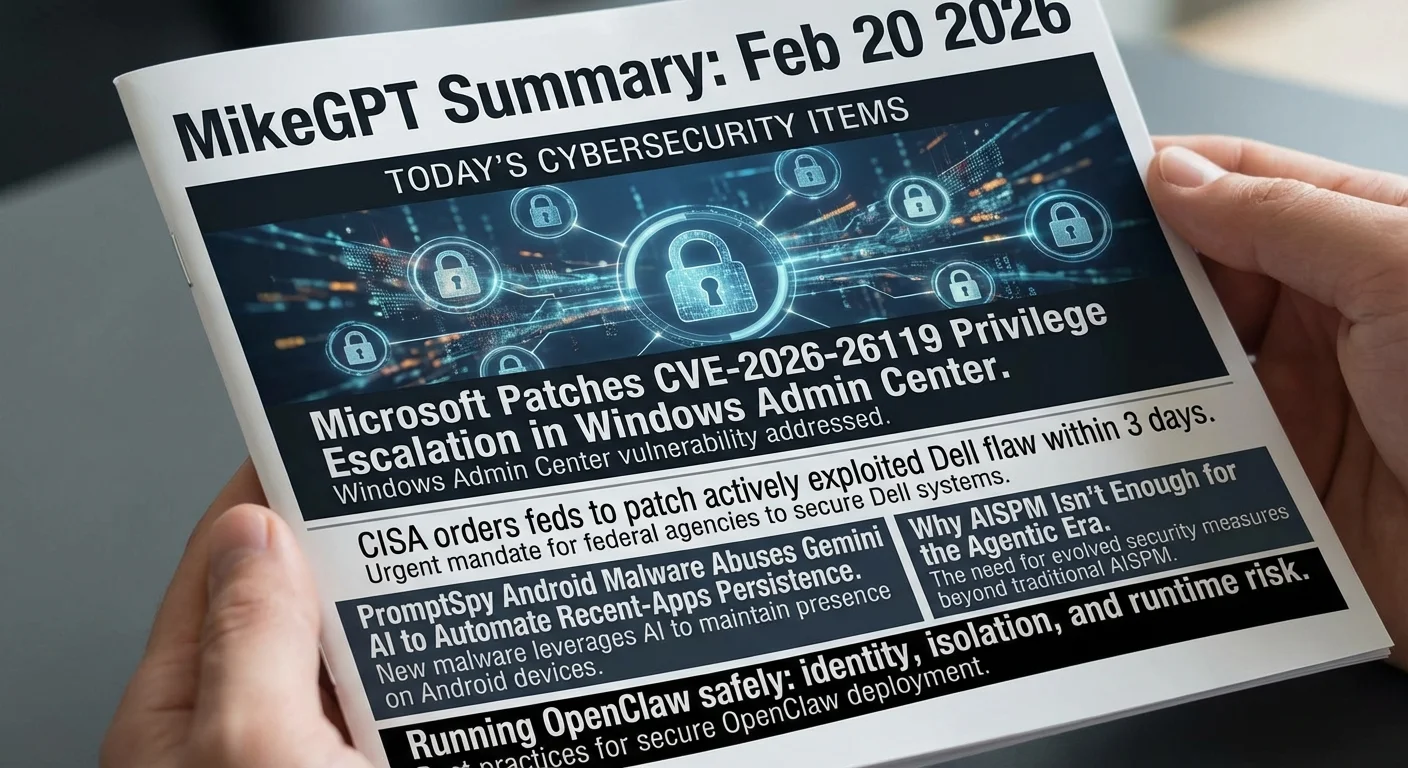
Heroes, here's your curated threat landscape for Feb 20, 2026.
Critical Threats

Microsoft has released a patch for a critical privilege escalation vulnerability in Windows Admin Center, a widely used browser-based management tool. If left unpatched, attackers could elevate their privileges to gain full administrative control over Windows Clients, Servers, and Clusters.
Business Impact
Exploitation of this flaw would allow attackers to bypass access controls, potentially leading to full domain compromise, widespread ransomware deployment, and severe operational downtime across the enterprise.
Recommended Action
Ask your IT team: Have we applied the latest Microsoft security updates to all instances of Windows Admin Center, and are we monitoring for anomalous administrative logins?
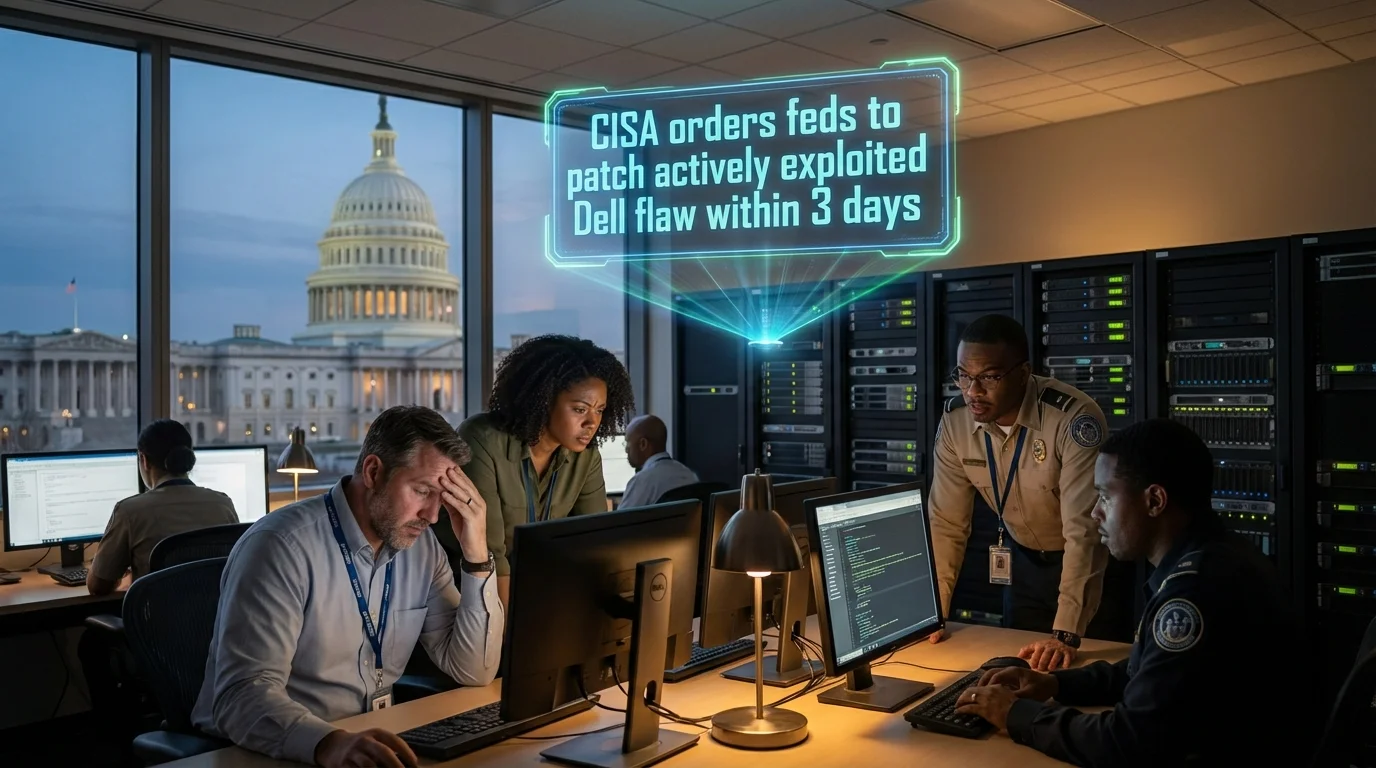
CISA has issued an urgent mandate requiring federal agencies to patch a maximum-severity Dell vulnerability within three days due to active exploitation in the wild since mid-2024. The flaw allows attackers to compromise Dell systems at a fundamental level.
Business Impact
Failure to patch exposes the organization to immediate, known threat actor campaigns, risking complete system takeover, data theft, and potential loss of federal contracts due to compliance violations.
Recommended Action
Ask your IT team: Have we identified all vulnerable Dell assets in our fleet, and are we on track to deploy the required patches within the 72-hour CISA window?
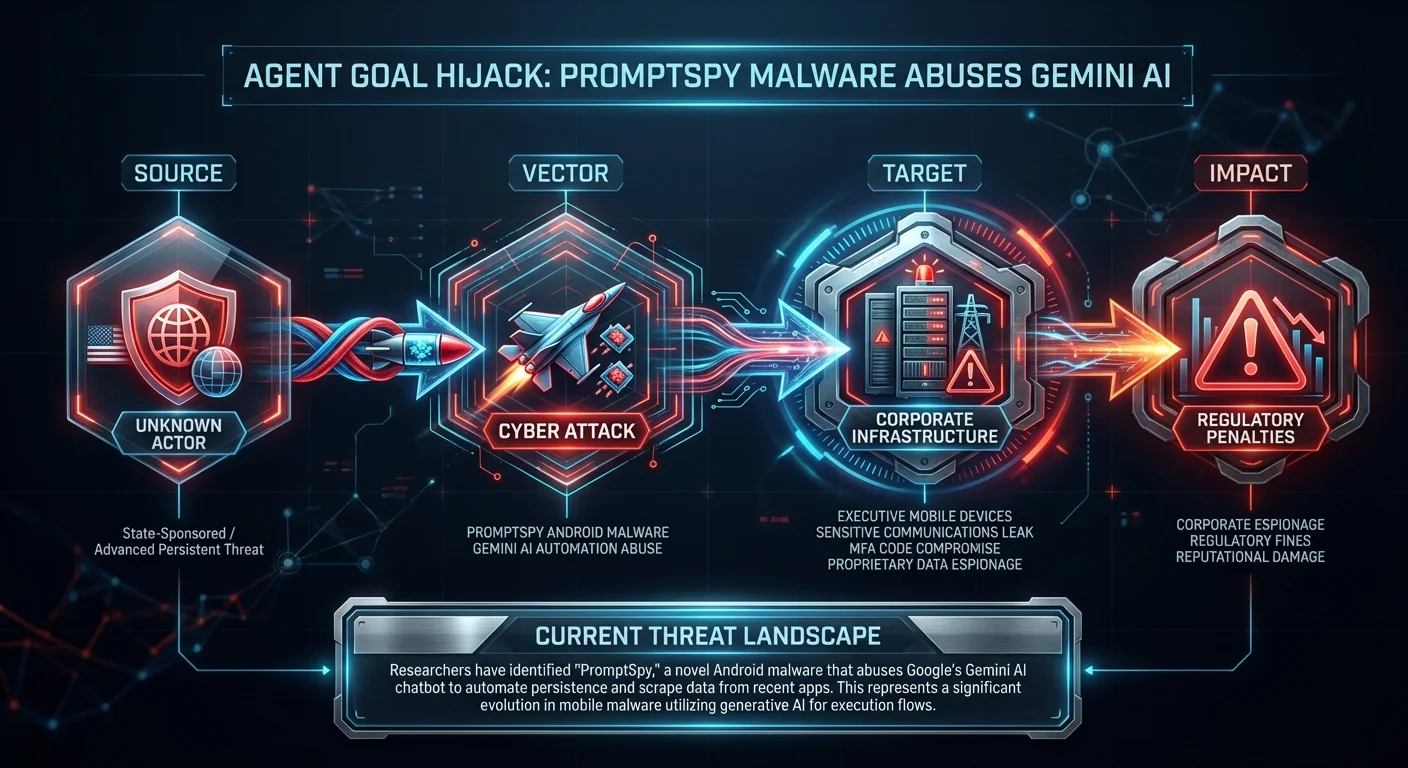
Researchers have identified "PromptSpy," a novel Android malware that abuses Google's Gemini AI chatbot to automate persistence and scrape data from recent apps. This represents a significant evolution in mobile malware utilizing generative AI for execution flows.
Business Impact
Compromised executive mobile devices could silently leak sensitive corporate communications, multi-factor authentication codes, and proprietary data, leading to corporate espionage and regulatory fines.
Recommended Action
Ask your IT team: Are our Mobile Device Management (MDM) policies configured to block unauthorized Android applications, and can we detect PromptSpy or VNCSpy network traffic?

As AI agents move from novelty to operational reality, traditional AI Security Posture Management (AISPM) and IAM are proving insufficient. Security leaders must recognize that risk now emerges at runtime, requiring Agentic SPM to govern autonomous AI actions across business systems.

Self-hosted AI agents like OpenClaw are rapidly entering enterprise pilots but lack built-in security controls. Organizations face significant runtime risks as these agents can ingest untrusted text, download malicious payloads, and execute unauthorized skills if not properly isolated.
Vendor Spotlight
Specialization: Mobile Threat Defense (MTD) and Security Service Edge (SSE)
Why Lookout Today: Lookout is highly relevant to today's threat landscape, specifically addressing the newly discovered PromptSpy Android malware through its industry-leading Mobile Threat Defense (MTD) solutions. Furthermore, Lookout's Security Service Edge (SSE) and Zero Trust Network Access (ZTNA) offerings provide secure alternatives to vulnerable legacy VPN clients like Fortinet FortiClient, mitigating local privilege escalation risks.
Key Capability: Advanced mobile malware detection and zero-trust access controls to protect endpoints and secure cloud connectivity.
Recommended Actions: 1. Navigate to Lookout MES Console → Protections → Policies → App Threats 2. Navigate to Lookout SSE Console → Secure Private Access → Policies → Access Policies 3. Navigate to Lookout MES Console → System → Connectors → [Your IdP/SSO Integration]
Verification Steps: - Review the Lookout MES Console → Dashboard → Issues to verify threat detection capabilities - Attempt to access an internal application via Lookout Secure Private Access from a test device without the legacy VPN client installed