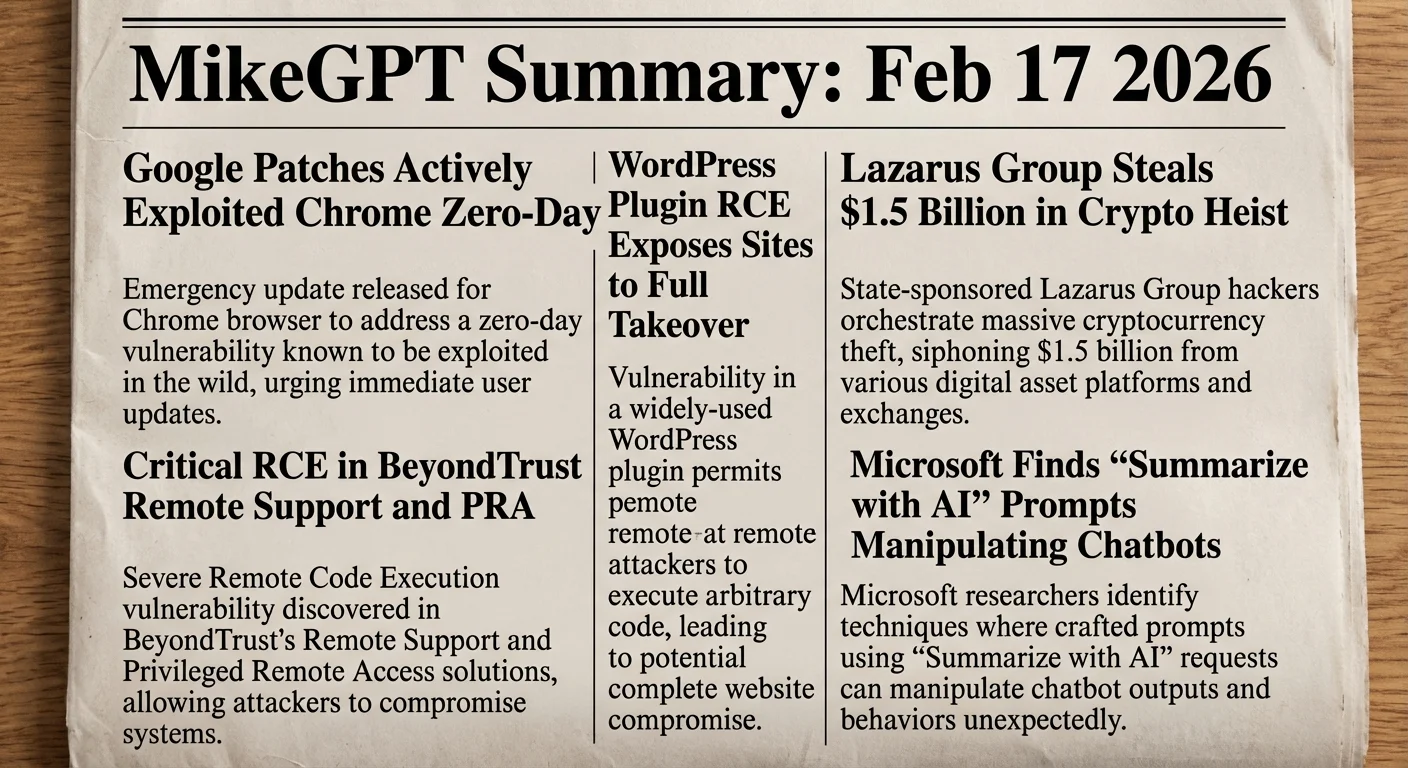
Heroes, your curated look at the current cybersecurity landscape for Feb 17, 2026.
Critical Threats

Google has released an emergency update for the first Chrome zero-day of the year, which is being actively exploited to allow attackers to execute arbitrary code on user devices simply by visiting a compromised webpage. This vulnerability affects the browser's rendering engine, making it a high-risk vector for drive-by downloads.
Business Impact
If exploited, attackers could gain initial access to corporate endpoints, leading to potential ransomware deployment, data theft, and significant operational downtime. Unpatched browsers represent an open door for attackers to bypass perimeter defenses.
Recommended Action
Ask your IT team: "Have we enforced the emergency Chrome update across all employee workstations and servers immediately?"
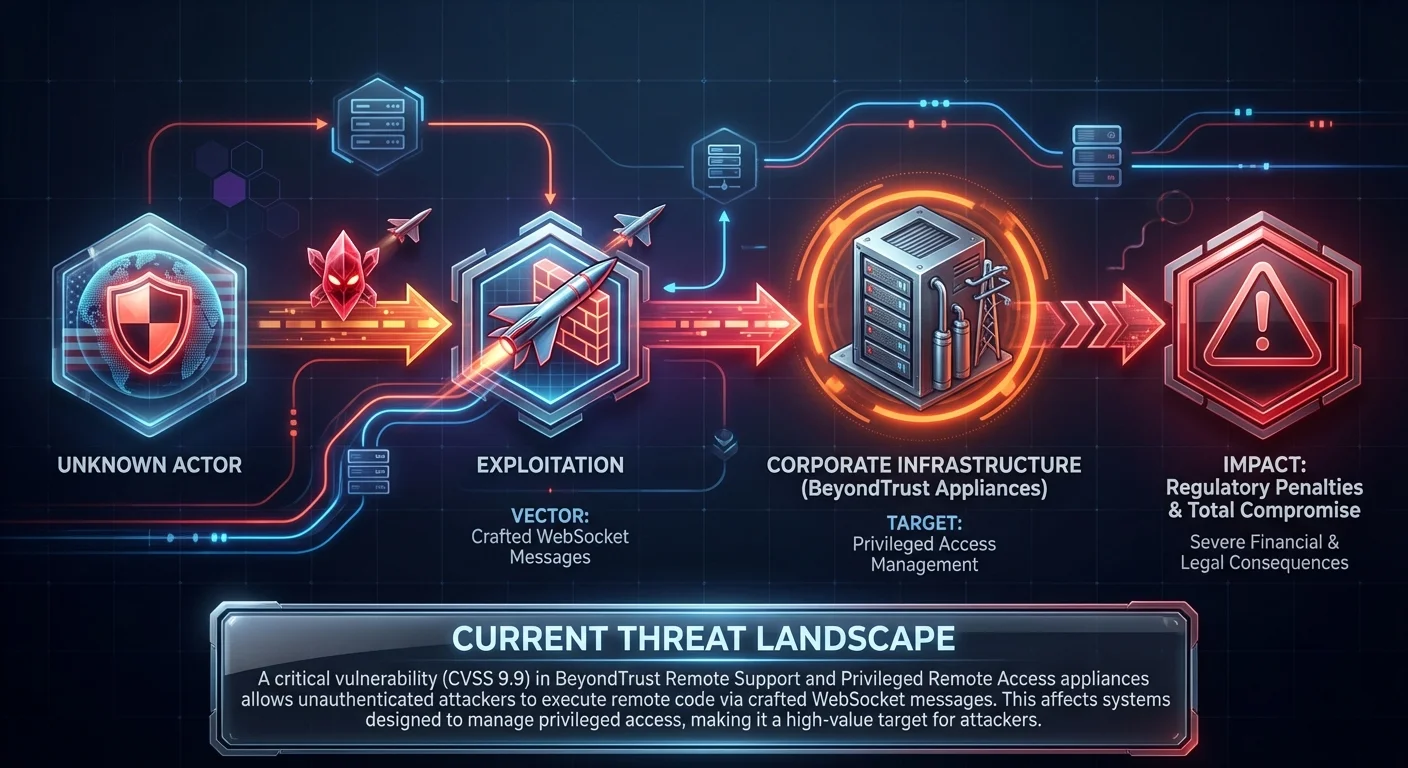
A critical vulnerability with a CVSS score of 9.9 has been disclosed in BeyondTrust Remote Support and Privileged Remote Access, allowing unauthenticated attackers to achieve full remote code execution via crafted WebSocket messages. This flaw exposes privileged access management systems that are intended to secure the most sensitive parts of a network.
Business Impact
Exploitation would grant attackers administrative control over the very tools used to manage privileged access, potentially leading to a total compromise of the IT infrastructure and massive data breaches.
Recommended Action
Ask your IT team: "Is our BeyondTrust instance exposed to the internet, and have we applied the critical patch for CVE-2026-1731 immediately?"

A critical flaw in the WPvivid WordPress plugin allows unauthenticated attackers to execute remote code, enabling them to upload malicious PHP files and take full control of affected websites. This vulnerability is particularly dangerous as it requires no user interaction or credentials.
Business Impact
Compromised corporate websites can be used to host malware, redirect customers to phishing sites, or deface brand assets, resulting in severe reputational damage and loss of customer trust.
Recommended Action
Ask your Web Management team: "Do any of our web properties utilize the WPvivid plugin, and if so, has it been updated to the patched version?"
High Severity
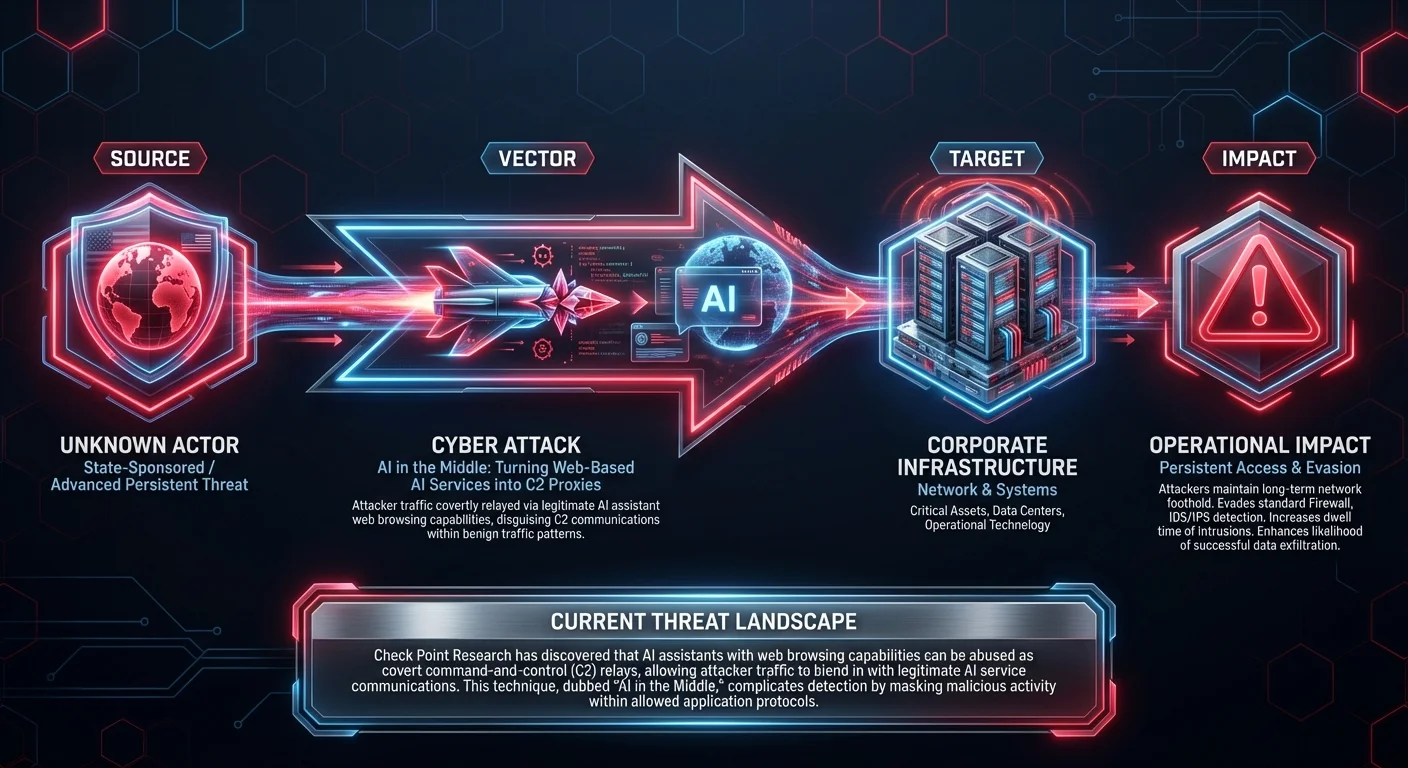
Check Point Research has discovered that AI assistants with web browsing capabilities can be abused as covert command-and-control (C2) relays, allowing attacker traffic to blend in with legitimate AI service communications. This technique, dubbed "AI in the Middle," complicates detection by masking malicious intent within trusted domains.
Business Impact
Attackers can maintain persistent access to the network while evading standard firewall and IDS/IPS detection, increasing the dwell time of intrusions and the likelihood of successful data exfiltration.
Recommended Action
Ask your SOC team: "Do our current network monitoring rules distinguish between legitimate AI assistant traffic and potential C2 tunneling behavior?"
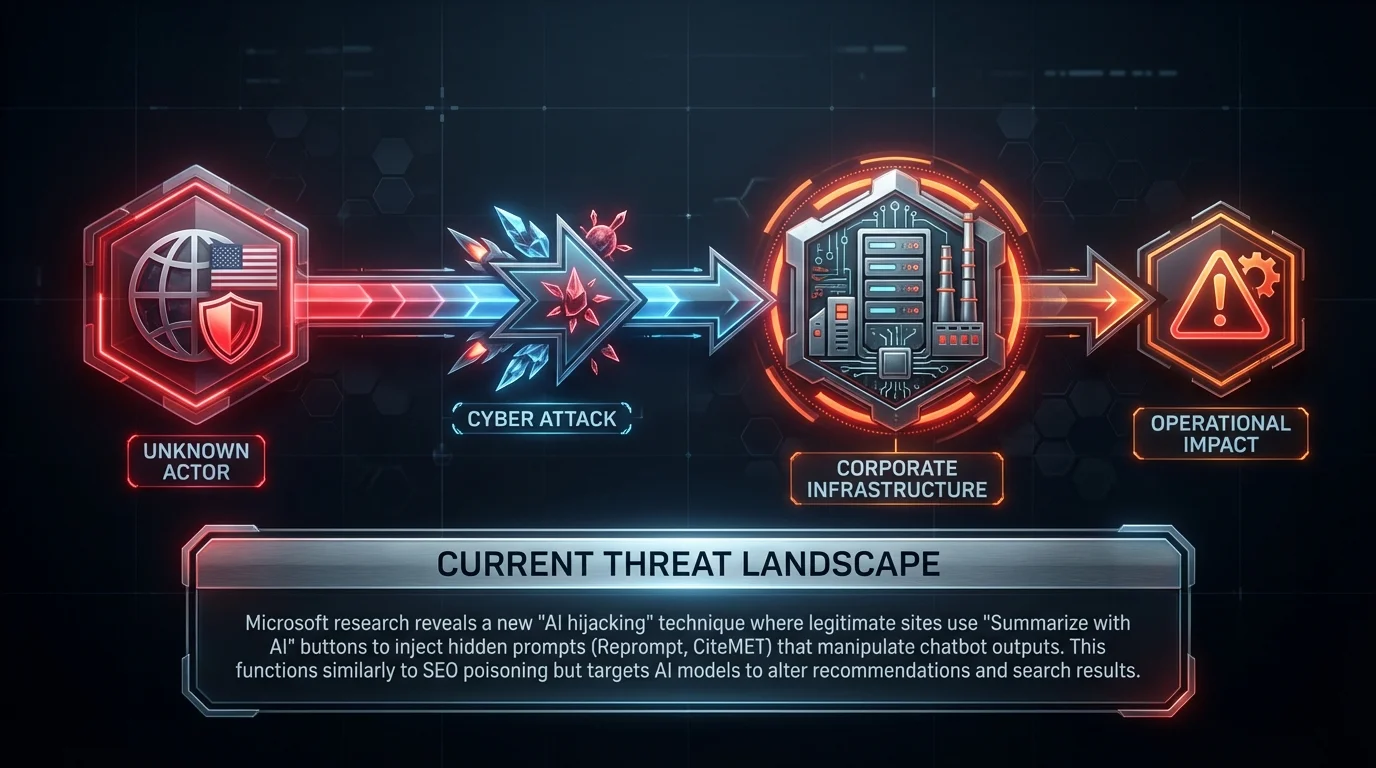
Microsoft research reveals that legitimate businesses are manipulating AI chatbots via "Summarize with AI" prompts on websites, effectively poisoning the data fed into AI models to skew recommendations. This technique mirrors search engine poisoning but targets the generative AI layer.
Business Impact
Reliance on manipulated AI summaries could lead to flawed business intelligence, skewed market analysis, and reputational harm if the organization's own AI tools ingest poisoned content.
Recommended Action
Ask your Data Science team: "How are we validating the integrity of external web content ingested by our internal AI summarization tools?"

New research highlights side-channel attacks against Large Language Models (LLMs), specifically remote timing attacks that can infer information about the model or the data it processes. As models scale, these physical implementation vulnerabilities become more relevant.

Dutch telecom provider Odido suffered a data breach following unauthorized access, highlighting the persistent threat to telecommunications infrastructure. This incident underscores the importance of securing customer data against targeted attacks.

A security flaw in the DavaIndia Pharmacy chain exposed customer data and granted outsiders full administrative control. This incident serves as a reminder of the risks associated with third-party retail and supply chain partners.
Other Noteworthy
New research highlights side-channel attacks against Large Language Models (LLMs), specifically remote timing attacks that can infer information about the model or the data it processes. As models scale, these physical implementation vulnerabilities become more relevant.
Dutch telecom provider Odido suffered a data breach following unauthorized access, highlighting the persistent threat to telecommunications infrastructure. This incident underscores the importance of securing customer data against targeted attacks.
A security flaw in the DavaIndia Pharmacy chain exposed customer data and granted outsiders full administrative control. This incident serves as a reminder of the risks associated with third-party retail and supply chain partners.
Vendor Spotlight
Island (Specialized Vendor)
Specialization: Enterprise Browser Platform
Why Island Today: Island offers an Enterprise Browser that centralizes security controls, allowing organizations to manage the browser environment directly to mitigate risks like the active Chrome zero-day exploit. Furthermore, its embedded data controls can govern user interactions with web-based AI tools, preventing data leakage and neutralizing 'AI in the Middle' threats.
Key Capability: Granular policy enforcement and data loss prevention (DLP) embedded directly within the web browser.
Recommended Actions: 1. Navigate to Management Console → Settings → General → Browser Updates 2. Navigate to Management Console → Policies → Data Protection → Add Rule 3. Navigate to Management Console → Extensions → Extension Settings
Verification Steps: - Launch Island Enterprise Browser on a test endpoint and navigate to island://settings/help - Attempt to paste text containing a mock credit card number or proprietary code into a public GenAI tool (e.g., chatgpt.com)