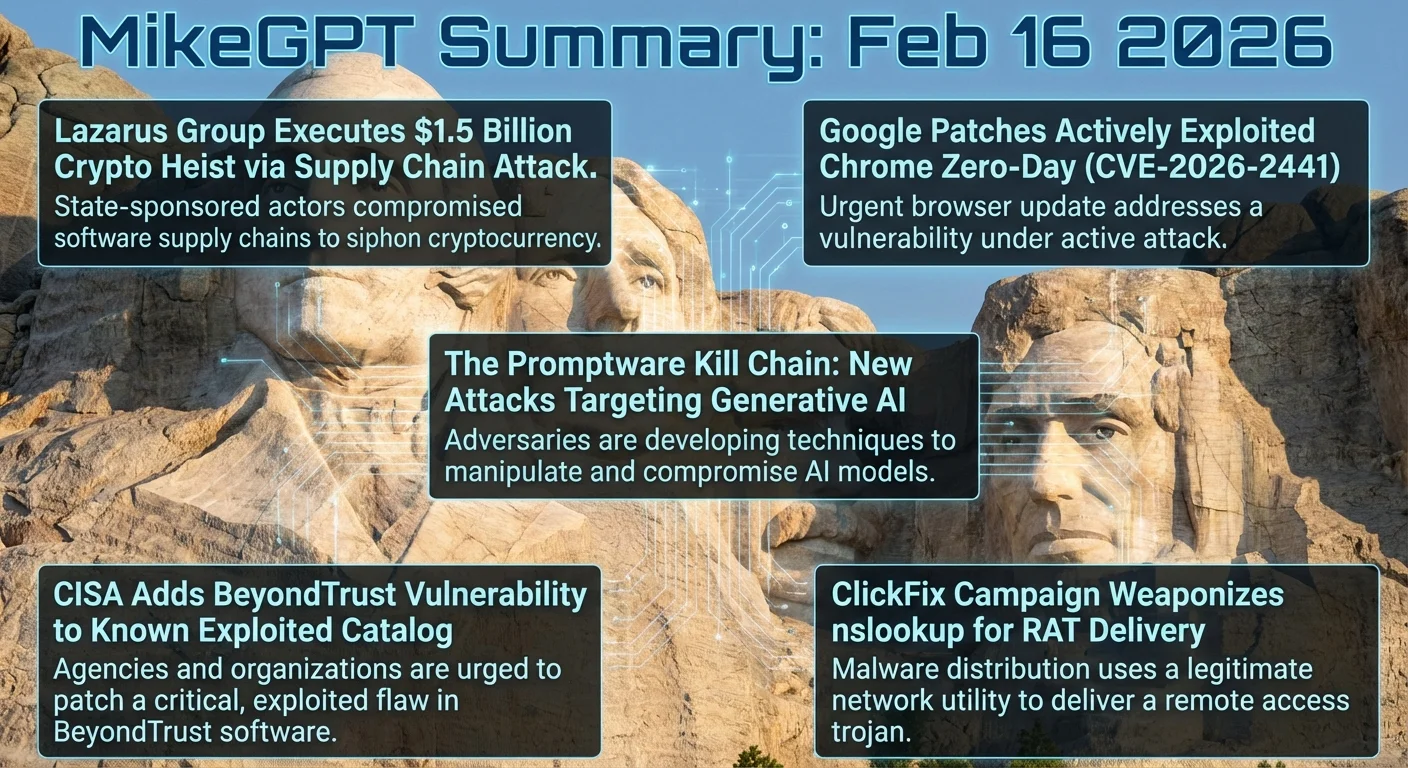
Heroes, your curated look at the current cybersecurity landscape for for Feb 16, 2026.
Critical Threats
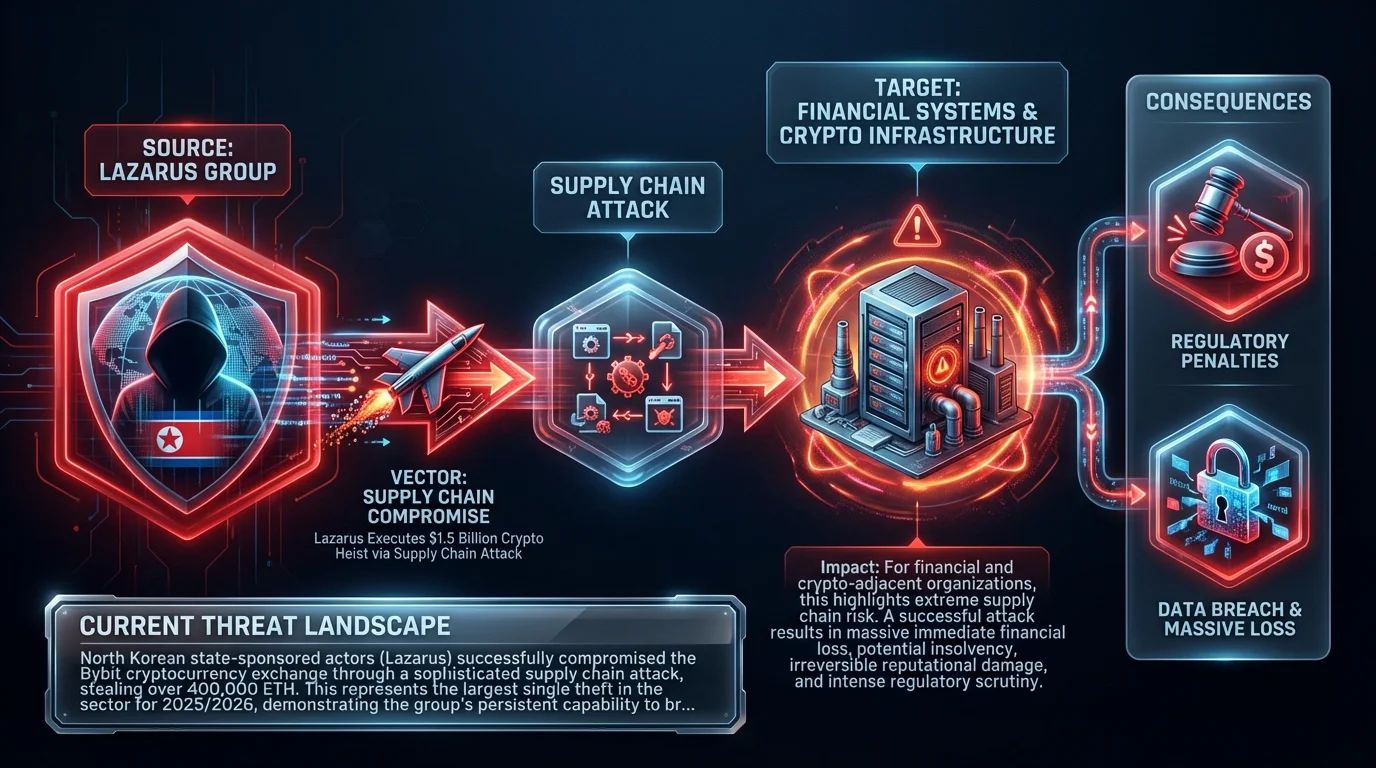
North Korean state-sponsored actors (Lazarus) successfully compromised the Bybit cryptocurrency exchange through a sophisticated supply chain attack, stealing over 400,000 ETH. This represents the largest single theft in the sector for 2025/2026, demonstrating the group's persistent capability to breach major financial platforms.
Business Impact
For financial and crypto-adjacent organizations, this highlights extreme supply chain risk. A successful attack results in massive immediate financial loss, potential insolvency, irreversible reputational damage, and intense regulatory scrutiny.
Recommended Action
Ask your CISO: "Have we audited the security posture of our third-party software providers recently, specifically those with access to financial transaction layers?"

Google has released an emergency update for Chrome to address CVE-2026-2441, a high-severity vulnerability currently being exploited in the wild. This flaw allows attackers to execute arbitrary code on a victim's machine simply by having them visit a malicious website.
Business Impact
This is a "drop everything" patch event. If left unpatched, any employee browsing the web could inadvertently grant attackers access to the corporate network, leading to ransomware deployment or data theft.
Recommended Action
Ask your IT Director: "Can we verify that 100% of our browser fleet has been updated to version 145 or higher as of this morning?"
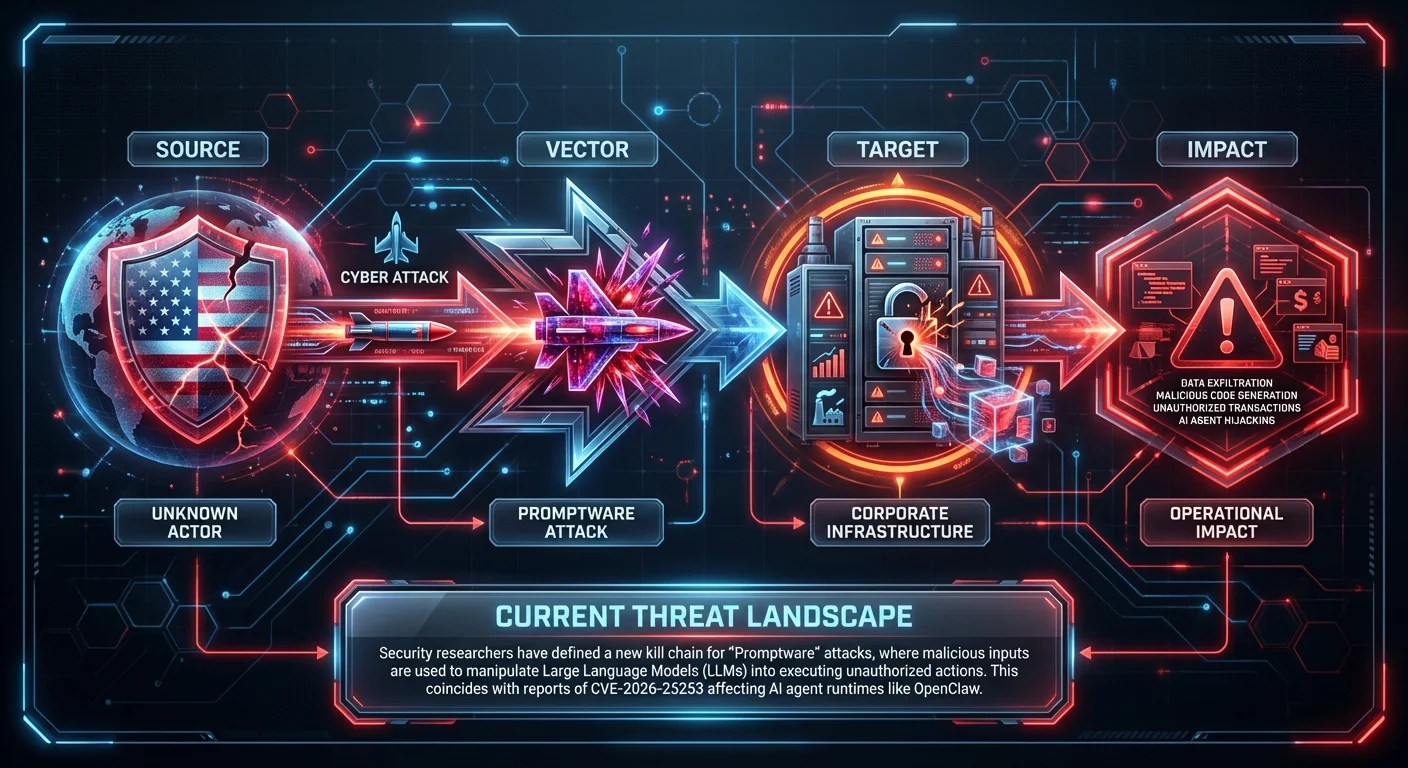
Security researchers have defined a new kill chain for "Promptware" attacks, where malicious inputs are used to manipulate Large Language Models (LLMs) into executing unauthorized actions. This coincides with reports of CVE-2026-25253 affecting AI agent runtimes like OpenClaw.
Business Impact
As companies integrate AI agents into business workflows, these vulnerabilities can allow attackers to hijack the AI to exfiltrate sensitive data, generate malicious code, or perform unauthorized transactions on behalf of the company.
Recommended Action
Ask your AI/Data team: "What guardrails do we have in place to prevent prompt injection attacks against our internal AI tools?"

CISA has added a critical flaw in BeyondTrust Remote Support (RS) and Privileged Remote Access (PRA) to its Known Exploited Vulnerabilities (KEV) catalog. Attackers are actively using this vulnerability (CVE-2026-1731) to compromise remote access tools used by IT administrators.
Business Impact
Compromise of remote support tools gives attackers the "keys to the kingdom," allowing them to bypass perimeter defenses and move laterally with administrative privileges. This often leads to full domain compromise.
Recommended Action
Ask your Security Operations team: "Do we use BeyondTrust, and if so, have we applied the patches mandated by the CISA KEV alert for CVE-2026-1731?"
High Severity
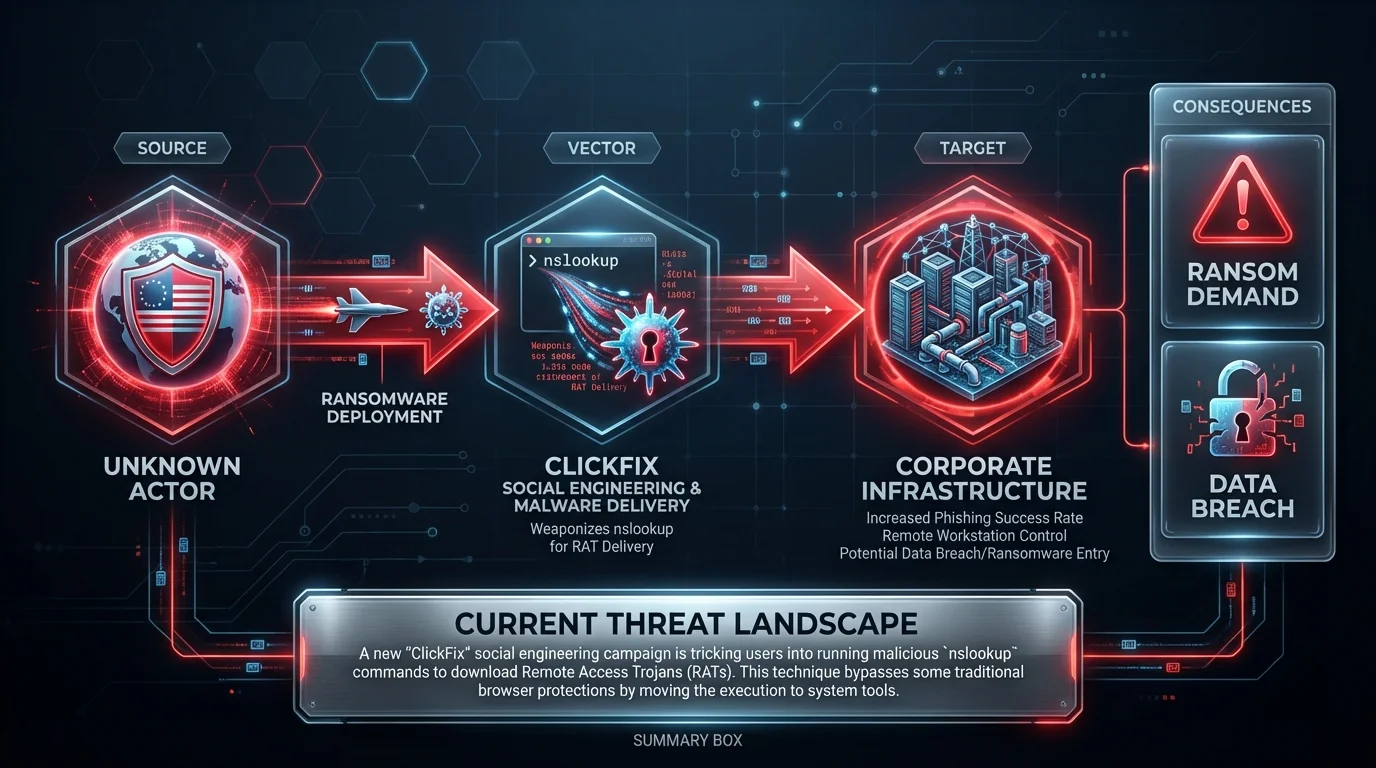
A new "ClickFix" social engineering campaign is tricking users into running malicious `nslookup` commands to download Remote Access Trojans (RATs). This technique bypasses some traditional browser protections by moving the execution to system tools.
Business Impact
This increases the success rate of phishing attacks. If an employee falls for this, attackers gain remote control of their workstation, potentially leading to data breaches or ransomware entry.
Recommended Action
Ask your SOC: "Can our endpoint detection systems identify and block unusual `nslookup` commands that attempt to download external payloads?"
Other Noteworthy
Vendor Spotlight
Lasso Security (Specialized Vendor)
Specialization: Generative AI (GenAI) and Large Language Model (LLM) Security
Why Lasso Security Today: Lasso Security specializes in securing Generative AI and Large Language Models (LLMs), making them directly relevant to the 'Promptware Kill Chain' threat which outlines attacks against AI models. Their platform is designed to detect and mitigate specific AI risks like prompt injections and jailbreaks, addressing the security challenges inherent in deploying or using LLMs.
Key Capability: Real-time detection and blocking of prompt injections, jailbreaks, and sensitive data leakage in LLM interactions.
Recommended Actions: 1. Navigate to Lasso Console → Policies → Firewall Policies → Create New Policy → Input Guardrails 2. Navigate to Lasso Console → Policies → Firewall Policies → Output Guardrails → Data Leakage Prevention 3. Navigate to Lasso Console → Shadow AI → Discovery → Inventory
Verification Steps: - Execute a benign 'Jailbreak' simulation (e.g., a 'Do Anything Now' prompt) against a protected LLM endpoint. - Navigate to Lasso Console → Observability → Alerts & Events