
Monday, February 2, 2026

MikeGPT CyberSecurity

“Playbook for the Secure Enterprise”

MikeGPT Daily Threat Rundown

Heroes, here's your curated threat landscape for Feb 02, 2026.

Critical Threats
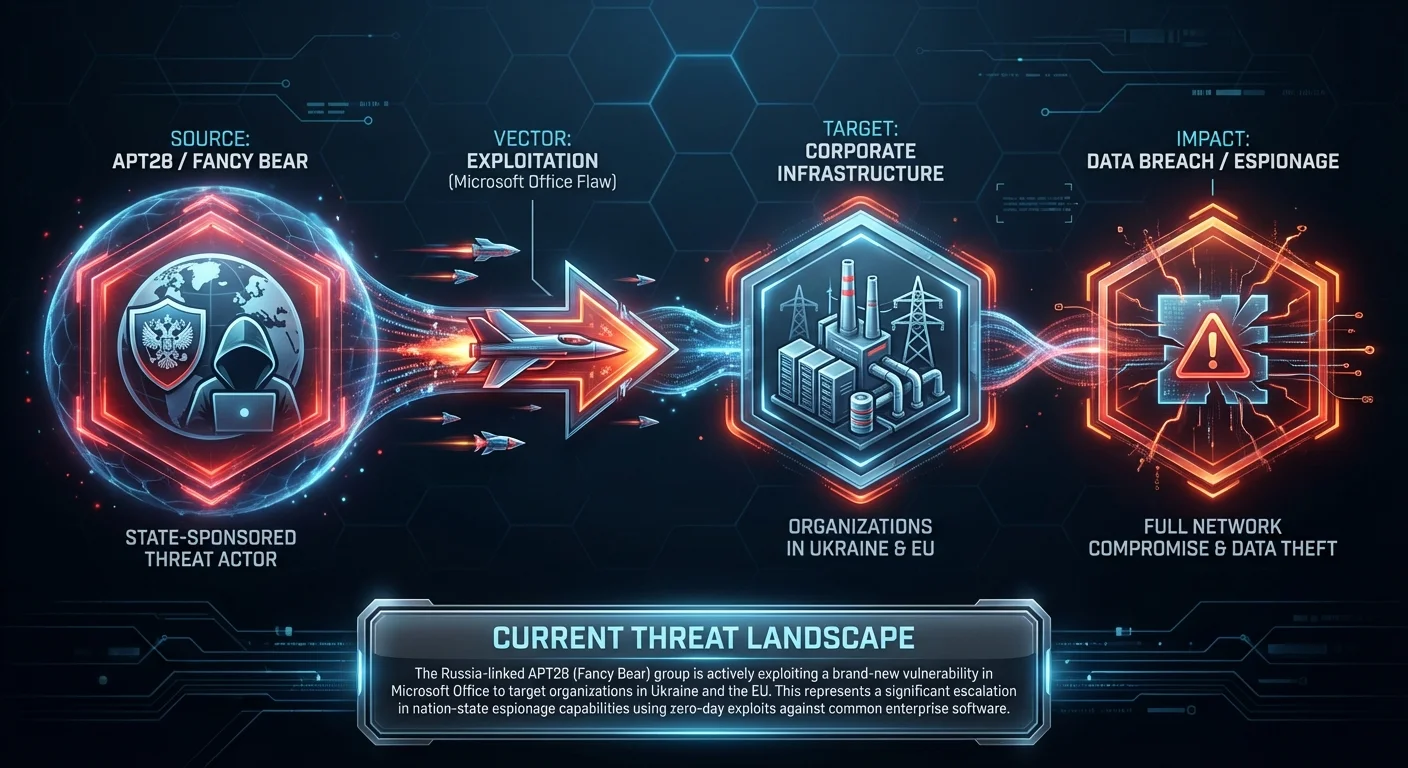
Fancy Bear Exploits New Microsoft Office Flaw

    The Russia-linked APT28 (Fancy Bear) group is actively exploiting a brand-new vulnerability in Microsoft Office to target organizations in Ukraine and the EU. This represents a significant escalation in nation-state espionage capabilities using zero-day exploits against common enterprise software.

    Business Impact

    Successful exploitation allows attackers to execute arbitrary code on victim machines, leading to full network compromise and data theft. For affected organizations, this means immediate exposure to espionage, potential GDPR fines for data breaches, and severe reputational damage.

    Recommended Action

    Ask your IT team: "Have we blocked the specific indicators associated with CVE-2026-21509 at our email gateway, and are we monitoring for Office processes spawning unexpected command shells?"
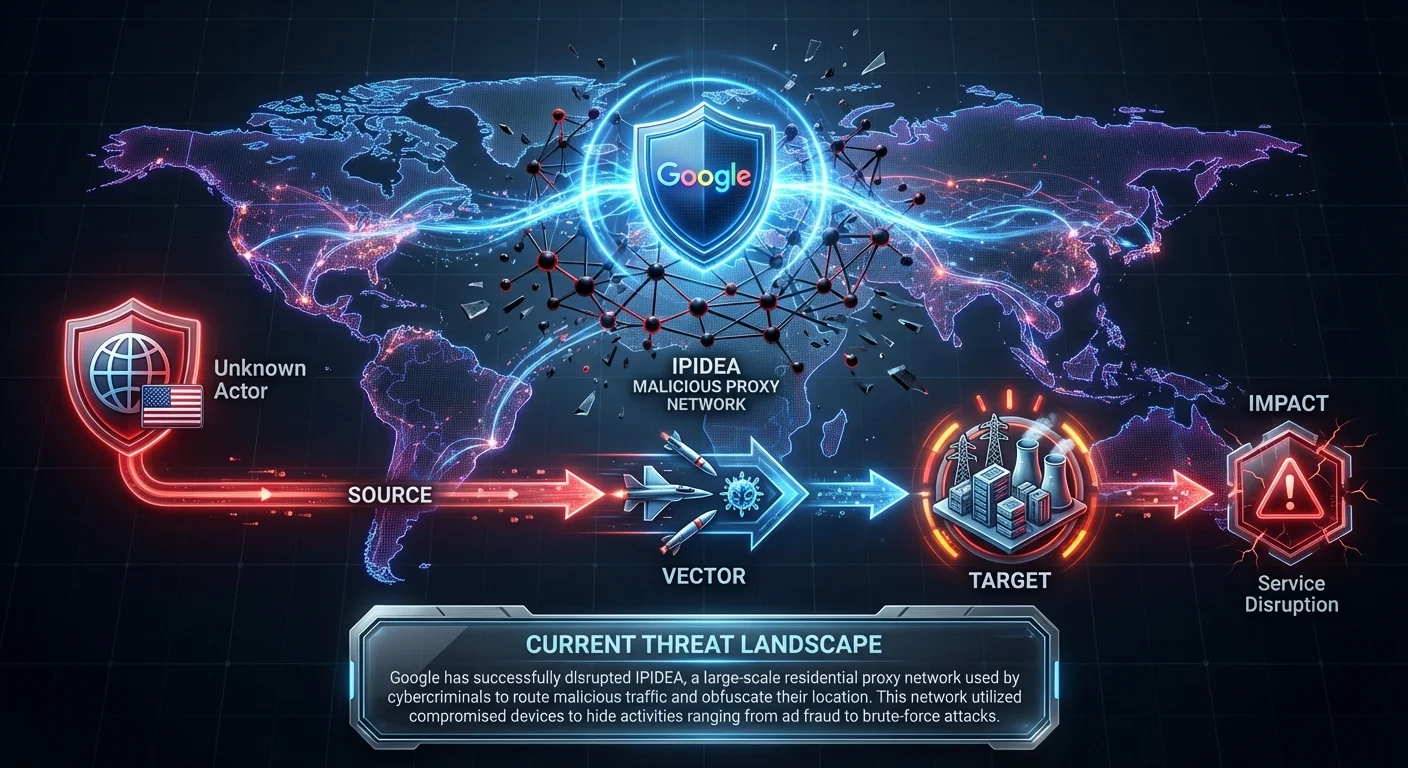
Google Disrupts Massive IPIDEA Malicious Proxy Network

    Google has successfully disrupted IPIDEA, a large-scale residential proxy network used by cybercriminals to route malicious traffic and obfuscate their location. This network utilized compromised devices to hide activities ranging from ad fraud to brute-force attacks.

    Business Impact

    While the disruption is positive, organizations may see a temporary shift in attack traffic patterns. If your organization relies on IP reputation filtering, expect volatility; conversely, if your devices were part of this botnet, you may experience connectivity changes or require remediation.

    Recommended Action

    Ask your Security Operations team: "Are we blocking traffic from known residential proxy subnets, and have we scanned our own external IPs to ensure none were part of the IPIDEA network?"

Nation-State Actors Hijack Notepad++ Update Infrastructure

    Sophisticated nation-state attackers compromised the hosting infrastructure of Notepad++, redirecting the application's update traffic to malicious servers. This supply chain attack targets developers and IT administrators who use this popular text editor.

    Business Impact

    Compromised developer tools provide attackers with a direct pathway into internal networks and production environments. This could lead to the injection of malicious code into your own software products, resulting in catastrophic supply chain liability and loss of customer trust.

    Recommended Action

    Ask your IT team: "Have we blocked automatic updates for Notepad++ and verified the cryptographic signatures of any recently downloaded installers against the official repository?"

Threat actors compromised a legitimate developer account on the Open VSX Registry to push malicious updates containing 'GlassWorm' malware to four established extensions. This attack directly targets the software development lifecycle by poisoning trusted tools.

Business Impact

If your developers use VS Code or compatible editors with these extensions, your source code and intellectual property are at risk of exfiltration. This creates immediate SOX compliance issues regarding change management and code integrity.

Recommended Action

Ask your Development Lead: "Do we have an inventory of installed VS Code extensions, and have we scanned for the specific malicious versions identified in the GlassWorm campaign?"

Other Noteworthy

A rising scam campaign is targeting desperate renters in Perth, Australia, exploiting the housing crisis to steal personal information and funds. While consumer-focused, employees may be targeted on corporate devices.

SOX, FISMA Cyble ↗

OWASP founder Jeff Williams has publicly criticized new administration cyber policies, specifically the rescinding of SBOM guidance, labeling it a disaster for software supply chain transparency.

SOX, FISMA Reddit ↗
Gen Z Ditching Smartphones for Dumbphones

    A cultural shift sees younger generations moving to 'dumbphones' to avoid tracking and distractions. This may impact BYOD policies and multi-factor authentication methods that rely on smartphone apps.

Executive Briefing

AI Managing Non-Human Identities

With 68% of IT security incidents involving machine identities, the role of AI in managing these non-human identities (NHIs) is becoming critical for scaling security operations effectively.

Entro Security · 10:00 PM ·
Emerging Technology Convergence Shaping Future Security

Future security resilience will depend not on single breakthroughs but on the orchestration of AI, quantum computing, 5G, and IoT. Strategic advantage will come from how well organizations integrate these converging technologies.

Lifeboat Foundation · 7:04 PM ·

Vendor Spotlight

Human Security

Specialization: Bot Management and Fraud Protection

Why Human Security Today: The provided threat intelligence highlights the disruption of 'IPIDEA,' a massive malicious residential proxy network used to hide criminal activity. Human Security is specifically relevant because they specialize in bot management and fraud protection, offering technology designed to detect and block traffic originating from malicious residential proxies and sophisticated botnets.

Key Capability: The Human Defense Platform provides advanced bot mitigation that identifies and blocks automated attacks and traffic from malicious residential proxies.

Recommended Actions: 1. Navigate to Human Console → Bot Defender → Configuration → Detection Modules → Network Context 2. Navigate to Human Console → Bot Defender → Policies → Mitigation Settings 3. Navigate to Human Console → Dashboard → Explore → Traffic Analysis

Verification Steps: - Review the 'Threat Categories' breakdown in the Bot Defender Dashboard over the last 24 hours - Monitor the 'False Positive' or 'Challenge Solved' rate for traffic originating from major residential ISPs (e.g., Comcast, Verizon)

Learn More About Human Security ↗

Detection & Response

Detection & Response Kit (4 items)

⚠️ Disclaimer: Test all detection logic in non-production environments before deployment.

1. Vendor Platform Configuration - Human Security

# Actionable Guidance for Human Security # Generated: 2026-02-02 14:31:29 # Step 1: Navigate to Human Console → Bot Defender → Configuration → Detection Modules → Network Context # Purpose: Enhance sensitivity for residential proxy detection to counter IPIDEA's routing methods # Expected: The 'Anonymizing Proxy' and 'Residential Proxy' detection signals will be weighted more heavily, flagging traffic that originates from residential IPs but exhibits non-human network signatures. # Step 2: Navigate to Human Console → Bot Defender → Policies → Mitigation Settings # Purpose: Enforce active blocking on identified proxy traffic rather than just monitoring # Expected: Traffic tagged with the 'Malicious Proxy' or 'High Risk' threat categories will be immediately challenged or blocked, preventing the IPIDEA network from successfully accessing protected endpoints. # Step 3: Navigate to Human Console → Dashboard → Explore → Traffic Analysis # Purpose: Isolate and analyze traffic patterns specifically from Residential ISPs to identify IPIDEA remnants # Expected: A filtered view showing 'ISP Type: Residential' vs. 'SIVT' (Sophisticated Invalid Traffic) rates, allowing you to confirm if the proxy network is targeting specific URIs. # Verification Steps: # - Review the 'Threat Categories' breakdown in the Bot Defender Dashboard over the last 24 hours # Expected: An increase in 'Blocked' or 'Challenged' requests attributed to 'Anonymizer' or 'Proxy' categories, indicating successful interception of the IPIDEA network traffic. # - Monitor the 'False Positive' or 'Challenge Solved' rate for traffic originating from major residential ISPs (e.g., Comcast, Verizon) # Expected: Legitimate residential traffic volume remains stable (low challenge rate), confirming that the detection logic is isolating the malicious proxy automation without impacting real users.

2. YARA Rule for EAP Legislator (CVE-2026-1186)

rule Detect_EAP_Legislator_Exploitation_Artifacts { meta: description = "Detects artifacts associated with EAP Legislator exploitation (CVE-2026-1186) and DynoWiper" author = "Threat Rundown" date = "2026-02-02" reference = "https://cert.pl/en/posts/2026/02/CVE-2026-1186/" severity = "high" tlp = "white" strings: $s1 = "schtask.exe" ascii wide $s2 = "_update.exe" ascii wide $s3 = "drive.google.com" ascii wide $s4 = "79A87EBB-4DF6-4541-9530-CAD8BEE8A7AD" ascii wide condition: any of ($s*) }

3. SIEM Query — Fancy Bear Office Exploitation (CVE-2026-21509)

index=security sourcetype="win_event_log" (EventID=4688 OR EventID=1) (ParentImage="*\\WINWORD.EXE" OR ParentImage="*\\EXCEL.EXE" OR ParentImage="*\\POWERPNT.EXE") (Image="*\\cmd.exe" OR Image="*\\powershell.exe" OR Image="*\\wscript.exe") | eval risk_score=case( match(CommandLine, ".*CVE-2026-21509.*"), 100, match(CommandLine, ".*http.*"), 75, 1==1, 50) | where risk_score >= 50 | table _time, src_ip, dest_ip, ParentImage, Image, CommandLine, risk_score | sort -_time

4. PowerShell Script — Check for EAP Legislator Artifacts

$computers = "localhost", "SERVER01", "WKSTN01" $suspiciousFiles = @("schtask.exe", "_update.exe", "<redacted>_update.exe") foreach ($computer in $computers) { if (Test-Connection -ComputerName $computer -Count 1 -Quiet) { Write-Host "Checking $computer for CVE-2026-1186 artifacts..." foreach ($file in $suspiciousFiles) { # Check common temp locations or application directories $path = "\\$computer\c$\Windows\Temp\$file" if (Test-Path $path) { Write-Warning "ALERT: Suspicious file found on $computer: $path" } } } }

This rundown should provide a solid overview of the current threat landscape. Thank you to all our cyberheroes for your diligence and hard work. Stay vigilant!