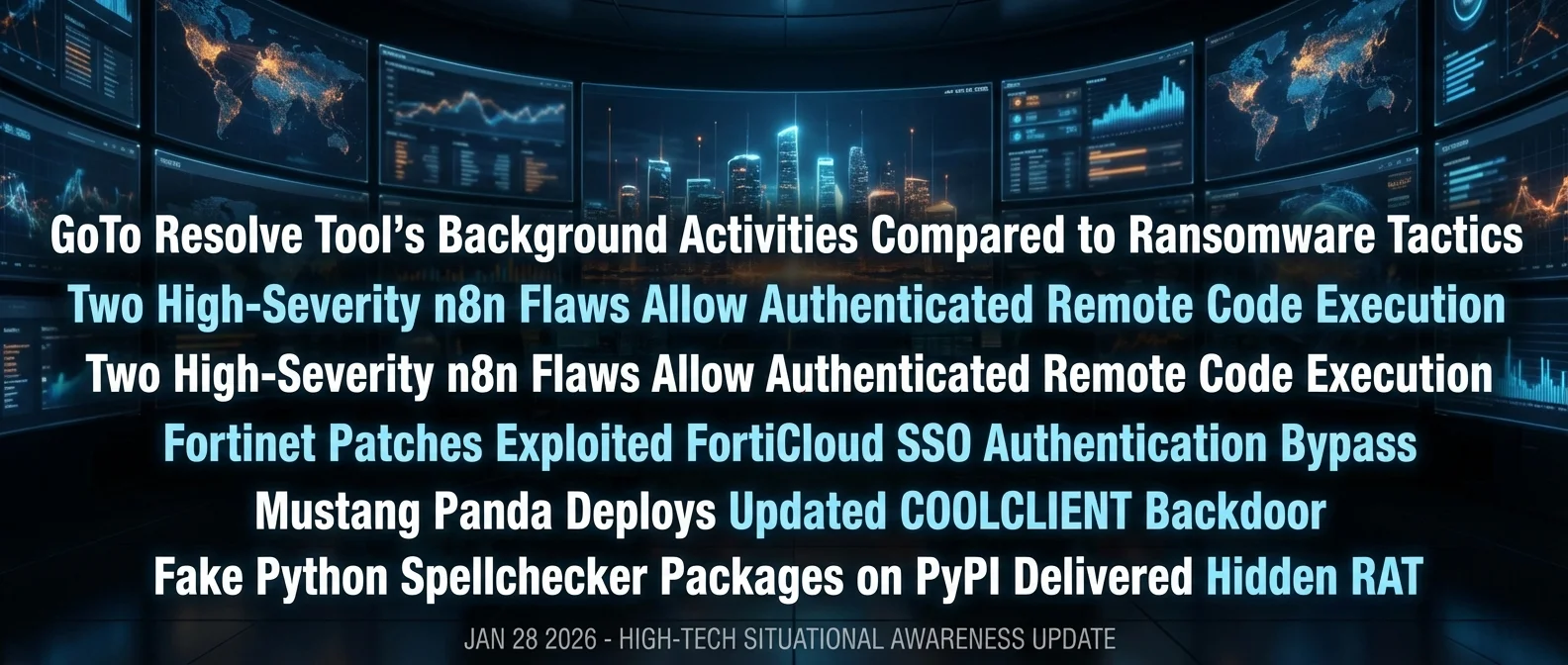
Heroes, your curated look at the current cybersecurity landscape for Jan 28, 2026.
Critical Threats

Research indicates that the legitimate remote administration tool GoTo Resolve is being flagged for allowing silent, unattended access similar to ransomware tactics. The tool `HEURRemoteAdmin.GoToResolve.gen` facilitates persistence without user knowledge.
Business Impact
If abused, this tool allows attackers to maintain stealthy access to corporate networks, bypassing traditional malware detection because the software itself is legitimate. This increases the dwell time of attackers and the risk of data exfiltration.
Recommended Action
Ask your SOC team: "Are we monitoring for unauthorized or silent installations of GoTo Resolve, specifically looking for the 'GhostPoster' or 'Imagents' indicators?"

Researchers at JFrog have discovered two high-severity flaws in the n8n workflow automation platform, one of which allows authenticated users to execute arbitrary code. This vulnerability turns a legitimate automation tool into a potential backdoor for attackers.
Business Impact
If exploited, an attacker with low-level access could take over the automation server, potentially manipulating business workflows, stealing processed data, or launching attacks on connected services. This could lead to significant operational disruption and data breaches.
Recommended Action
Ask your DevOps team: "What version of n8n are we running, and have we updated to the latest version to mitigate CVE-2026-1470?"

Fortinet has patched a vulnerability in FortiCloud SSO that allows attackers to log into devices registered to other accounts. This flaw is currently being exploited in the wild.
Business Impact
If exploited, unauthorized actors could gain administrative access to network security devices, allowing them to disable defenses or intercept traffic. This poses a severe risk to network integrity and confidentiality.
Recommended Action
Ask your Network Security team: "Have we applied the patch for CVE-2026-24858 to our FortiCloud integration immediately?"
High Severity
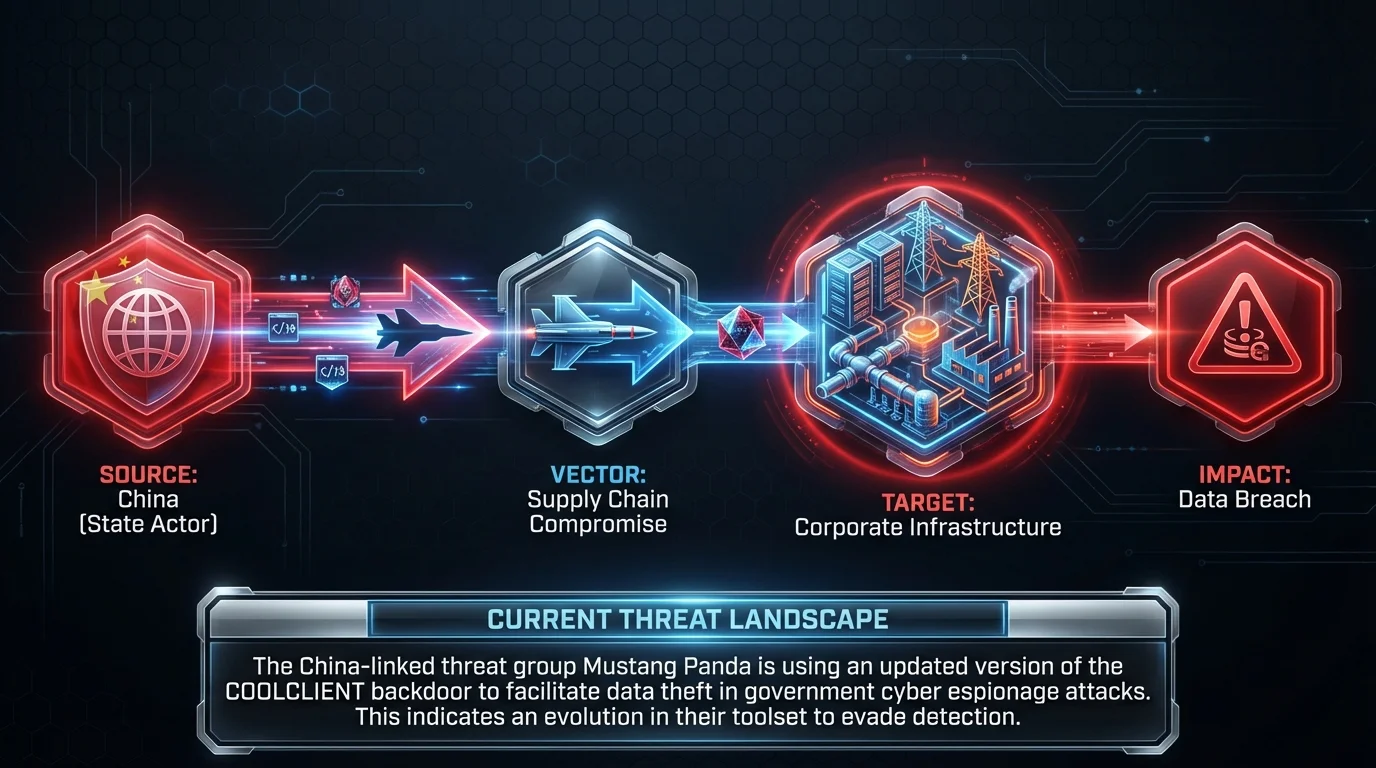
The China-linked threat group Mustang Panda is using an updated version of the COOLCLIENT backdoor to facilitate data theft in government cyber espionage attacks. This indicates an evolution in their toolset to evade detection.
Business Impact
Organizations in government or critical supply chains face a heightened risk of intellectual property theft and long-term espionage. A breach could lead to the loss of sensitive state secrets or competitive data.
Recommended Action
Ask your Threat Intelligence team: "Have we updated our indicators of compromise to detect the latest COOLCLIENT variants associated with Mustang Panda?"
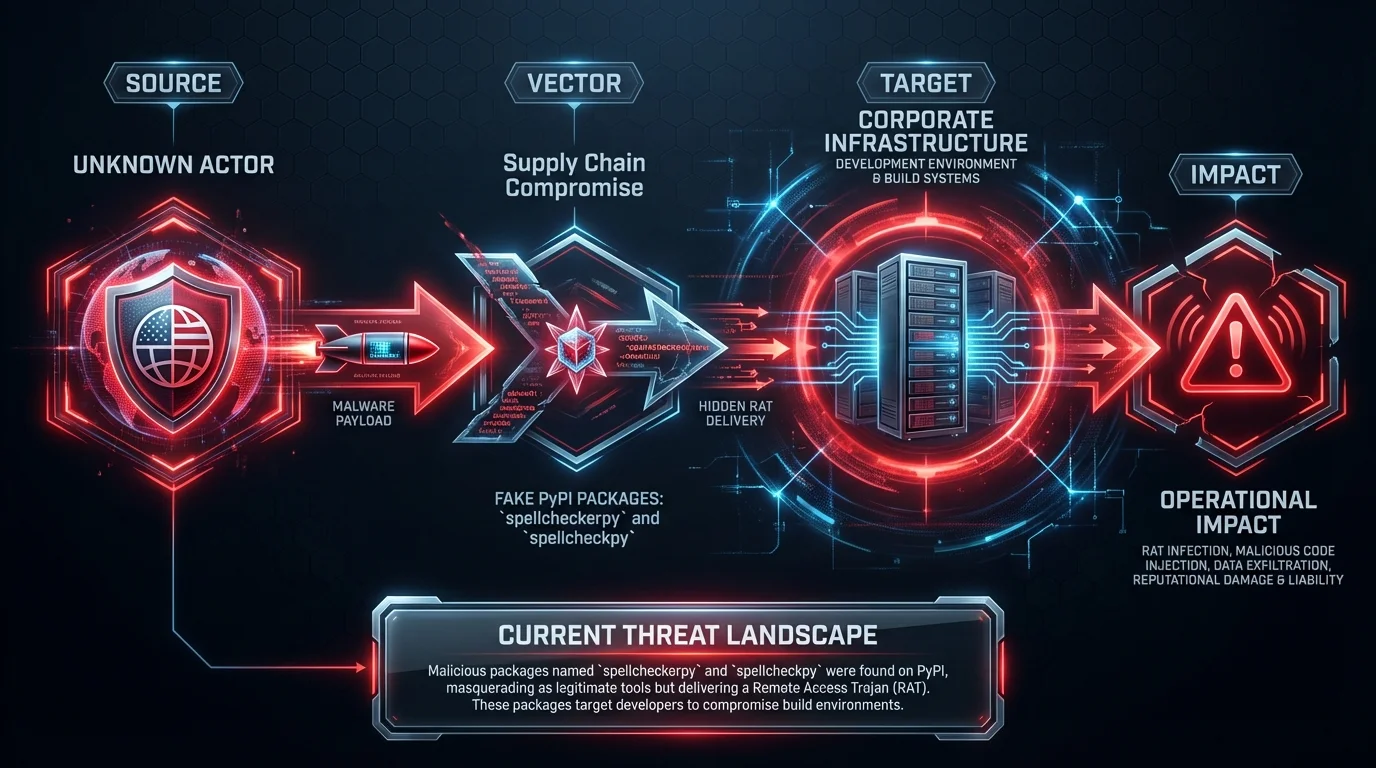
Malicious packages named `spellcheckerpy` and `spellcheckpy` were found on PyPI, masquerading as legitimate tools but delivering a Remote Access Trojan (RAT). These packages target developers to compromise build environments.
Business Impact
If a developer installs these packages, attackers gain access to the development environment, potentially injecting malicious code into the company's software products (supply chain attack). This can lead to massive reputational damage and liability.
Recommended Action
Ask your Development team: "Do we have a process to vet public software repositories like PyPI, and have we scanned our projects for 'spellcheckerpy' or 'spellcheckpy'?"
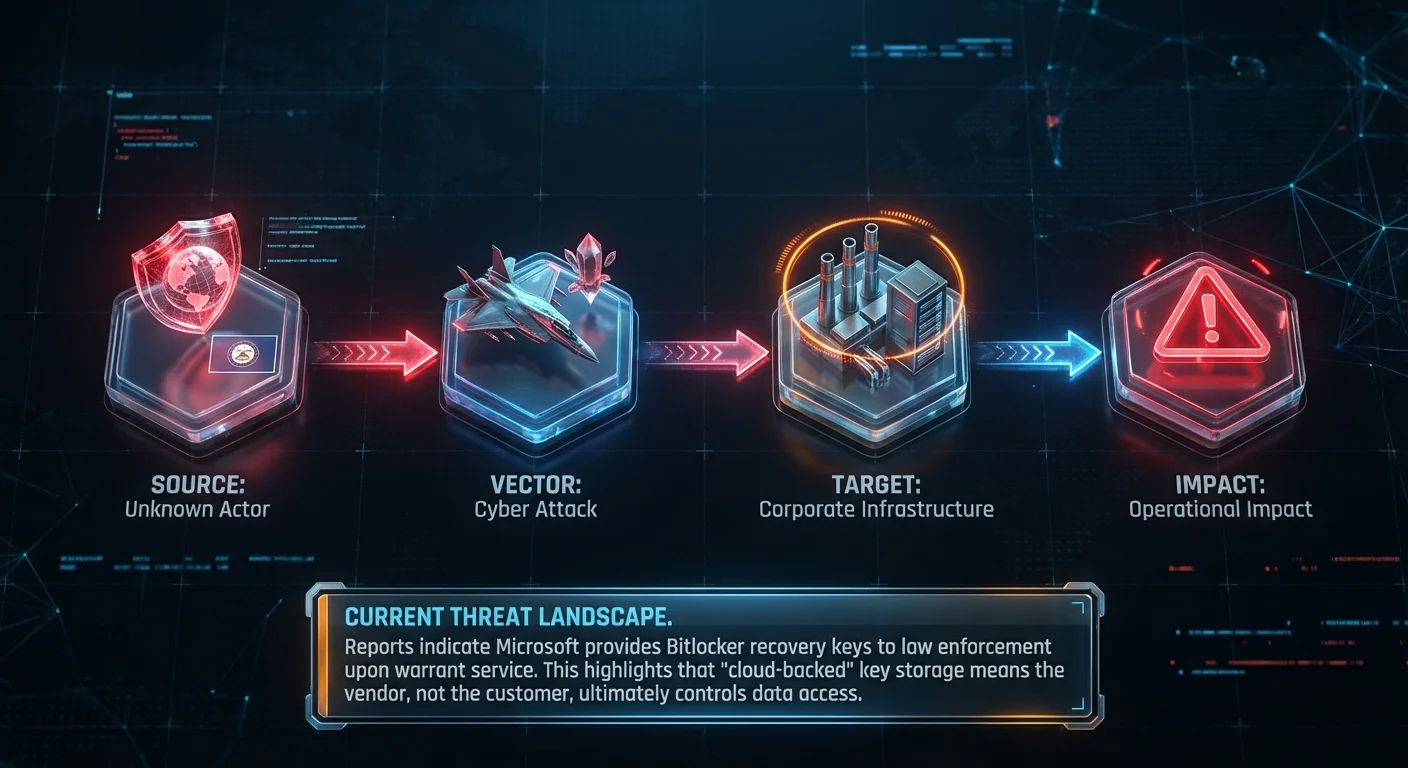
Reports indicate Microsoft provides Bitlocker recovery keys to law enforcement upon warrant service. This highlights that "cloud-backed" key storage means the vendor, not the customer, ultimately controls data access.
Business Impact
For organizations relying on default Bitlocker configurations, data privacy is not absolute against legal requests served to the vendor. This may violate specific data sovereignty or confidentiality requirements for sensitive industries.
Recommended Action
Ask your CISO: "Do we manage our own encryption keys for Bitlocker, or are we relying on Microsoft's default cloud storage which they can access?"

The interim head of CISA reportedly uploaded sensitive contracting documents to a public version of ChatGPT. This incident underscores the pervasive risk of "Shadow AI" usage even at the highest levels of leadership.
Business Impact
Uploading sensitive data to public AI models constitutes a data leak, as that data may be used to train the model or be accessed by the AI provider. This can lead to regulatory fines and loss of competitive advantage.
Recommended Action
Ask your Security Awareness team: "Do we have technical controls in place to block the upload of sensitive documents to public AI platforms like ChatGPT?"
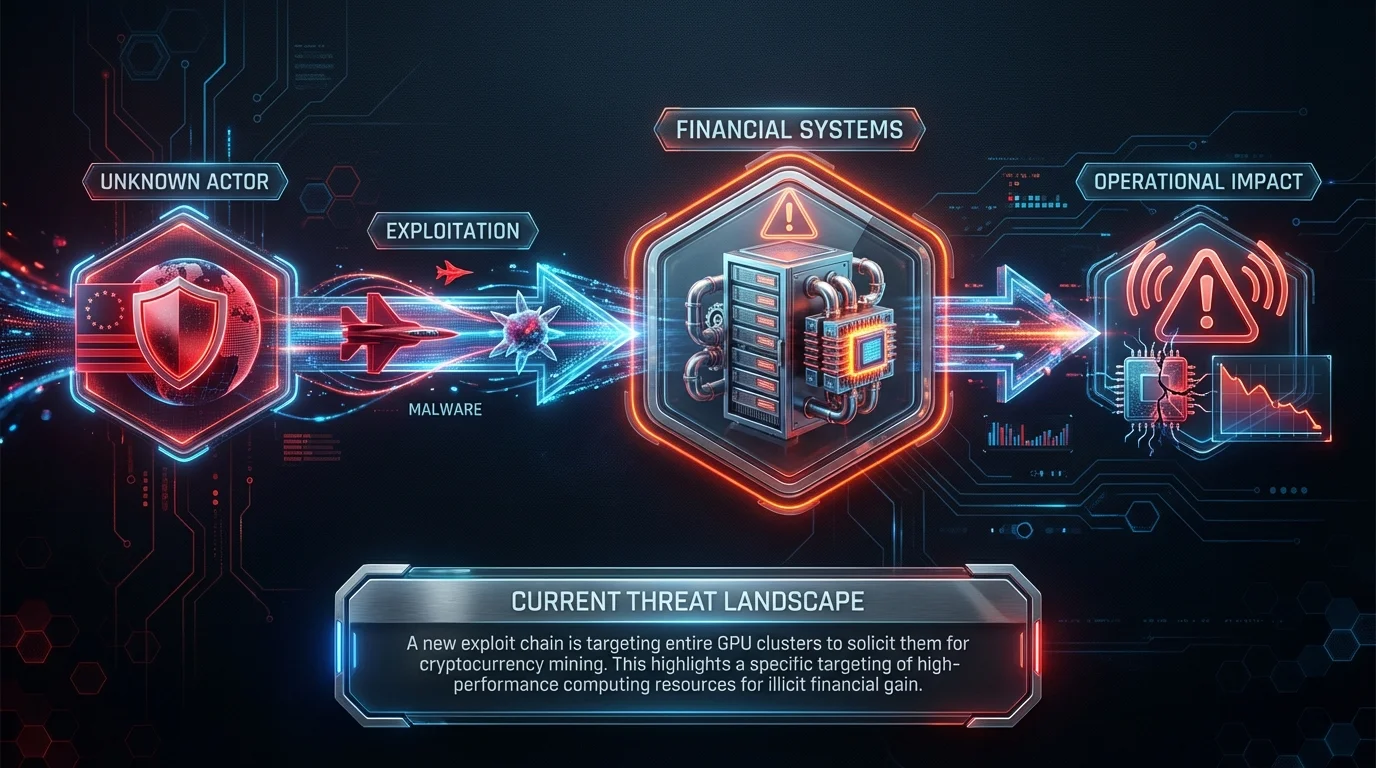
A new exploit chain is targeting entire GPU clusters to solicit them for cryptocurrency mining. This highlights a specific targeting of high-performance computing resources for illicit financial gain.
Other Noteworthy
A new exploit chain is targeting entire GPU clusters to solicit them for cryptocurrency mining. This highlights a specific targeting of high-performance computing resources for illicit financial gain.
Executive Briefing
While phishing and ransomware dominate headlines, subtle forms of password reuse remain a persistent and underestimated systemic risk. Security leaders should revisit identity hygiene policies beyond simple rotation requirements.
The trend of consolidating security vendors to cut costs may inadvertently increase risk by creating single points of failure and relying on "good enough" engines rather than best-of-breed solutions. Executives should weigh efficiency against resilience.
Vendor Spotlight
Red Canary (Specialized Vendor)
Specialization: Managed Detection & Response (MDR)
Why Red Canary Today: With legitimate RMM tools like GoTo Resolve being weaponized and GPU clusters being hijacked for crypto mining, signature-based detection often fails. Red Canary specializes in behavioral analytics and Managed Detection and Response (MDR), making them uniquely capable of identifying the 'living off the land' tactics and anomalous workload usage described in these threats.
Key Capability: Behavioral analytics for detecting abuse of legitimate tools
Recommended Actions: 1. Navigate to Red Canary Console → Analytics → Applications 2. Navigate to Red Canary Console → Automations → New Automation 3. Navigate to Red Canary Console → Threats
Verification Steps: - Navigate to Automations → [Select Created Automation] → Recent Activity - Navigate to Endpoints → [Select a High-Risk Endpoint] → Telemetry