Heroes, here's your curated threat landscape for Jan 27, 2026.
Critical Threats
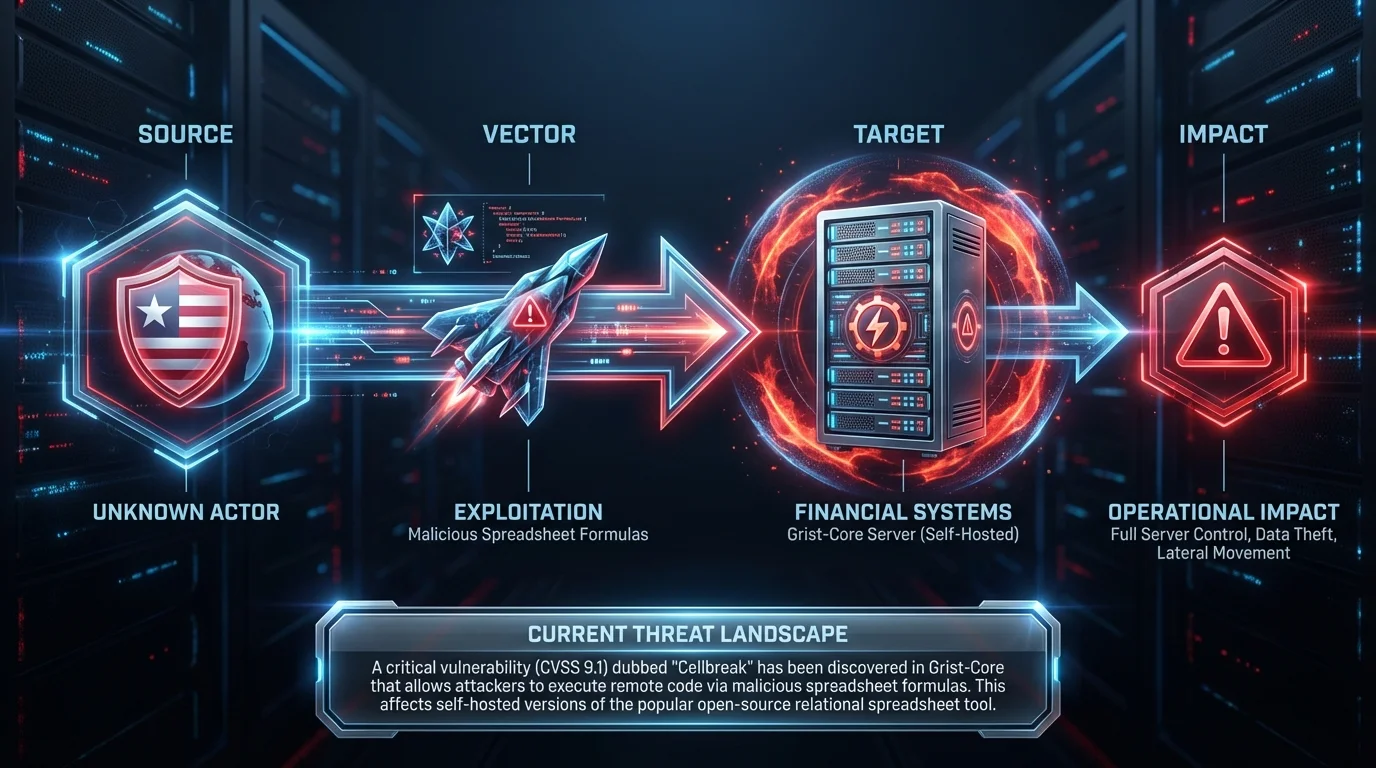
A critical vulnerability (CVSS 9.1) dubbed "Cellbreak" has been discovered in Grist-Core that allows attackers to execute remote code via malicious spreadsheet formulas. This affects self-hosted versions of the popular open-source relational spreadsheet tool.
Business Impact
Exploitation allows attackers to take full control of the server hosting the database, leading to the theft of sensitive financial or operational data and potential lateral movement across the network.
Recommended Action
Ask your IT team: "Do we self-host Grist-Core, and if so, have we applied the patch for CVE-2026-24002 immediately?"

CISA has mandated federal agencies to patch actively exploited vulnerabilities in Microsoft Office, Linux Kernel, GNU InetUtils, and SmarterMail. This action confirms that attackers are currently using these specific flaws to compromise networks, necessitating immediate prioritization over theoretical risks.
Business Impact
Failure to patch these specific vulnerabilities leaves the organization open to known, active attack vectors, potentially leading to data exfiltration, regulatory penalties under FISMA/SOX, and loss of accreditation for government contractors.
Recommended Action
Ask your IT team: "Have we scanned for and patched the specific CVEs added to the CISA KEV list today, particularly for Microsoft Office and Linux systems?"

Cisco has officially announced the end-of-life for its Kenna Vulnerability Management platform with no direct replacement on the roadmap. This forces current customers to identify and migrate to a new risk-based vulnerability management solution to maintain visibility into their exposure.
Business Impact
Organizations relying on Kenna face an unavoidable capability gap; without a replacement, the business risks losing the ability to prioritize vulnerabilities effectively, leading to increased exposure time and potential audit failures.
Recommended Action
Ask your Security Director: "What is our transition plan for the Cisco Kenna sunset, and have we evaluated alternatives like Nucleus Security to ensure no gap in our risk scoring?"
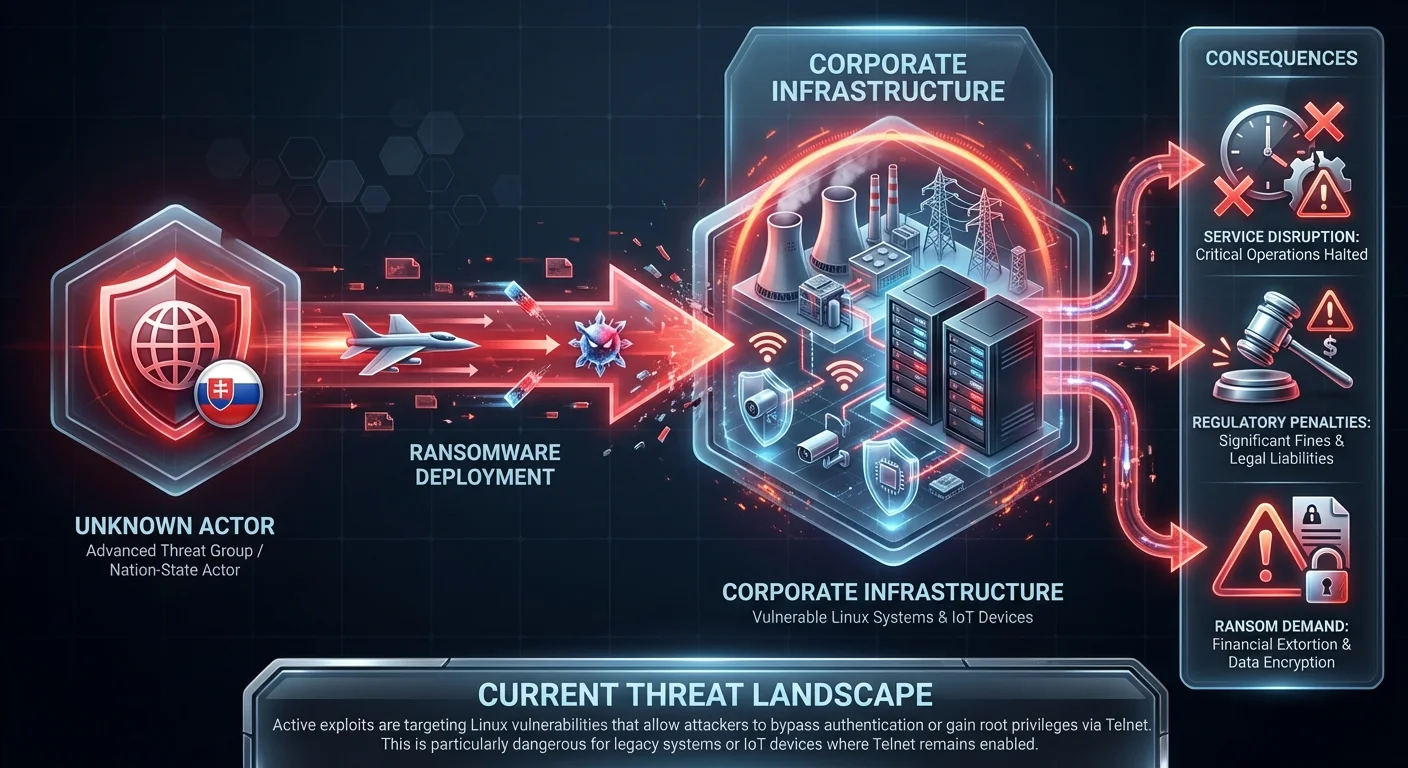
Active exploits are targeting Linux vulnerabilities that allow attackers to bypass authentication or gain root privileges via Telnet. This is particularly dangerous for legacy systems or IoT devices where Telnet remains enabled.
Business Impact
Root-level compromise allows attackers to fully control affected servers, install ransomware, or steal data, resulting in severe operational disruption and potential regulatory fines.
Recommended Action
Ask your Network team: "Is Telnet disabled on all our external-facing Linux systems, and have we patched the reported privilege escalation vulnerabilities?"
High Severity
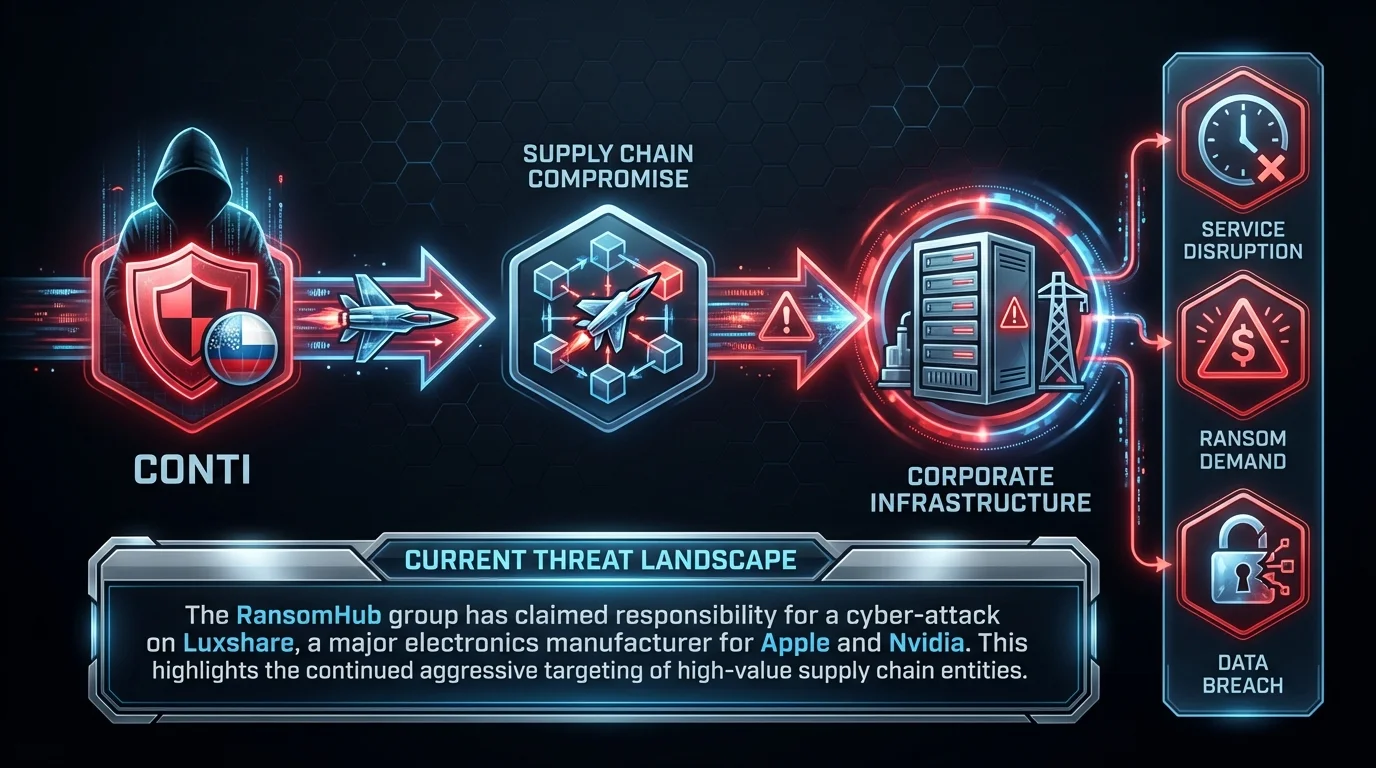
The RansomHub group has claimed responsibility for a cyber-attack on Luxshare, a major electronics manufacturer for Apple and Nvidia. This highlights the continued aggressive targeting of high-value supply chain entities.
Business Impact
Supply chain disruptions could delay product delivery or expose intellectual property shared with the manufacturer, impacting revenue and partner trust.
Recommended Action
Ask your Vendor Risk Management team: "Do we have direct exposure to Luxshare, and what are our contingency plans for supply chain disruptions involving critical electronics manufacturers?"
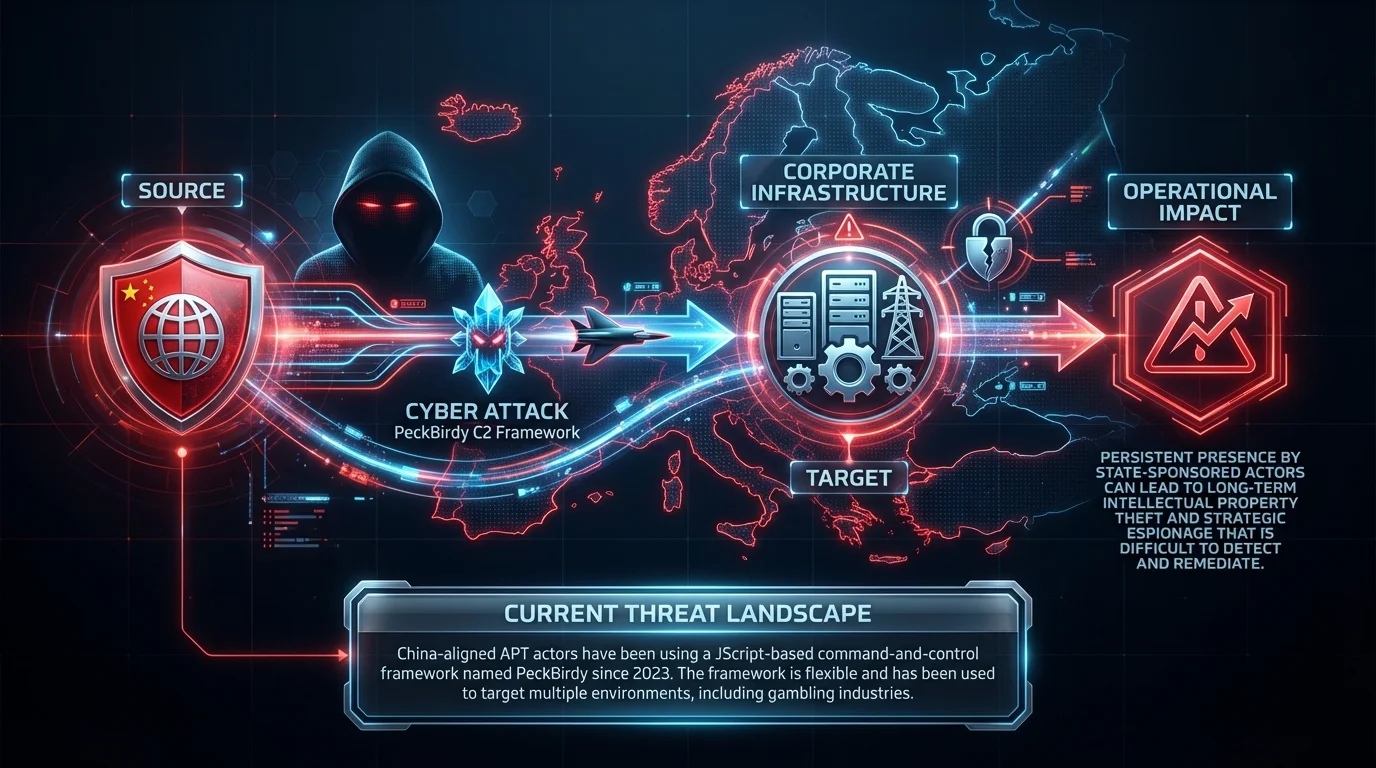
China-aligned APT actors have been using a JScript-based command-and-control framework named PeckBirdy since 2023. The framework is flexible and has been used to target multiple environments, including gambling industries.
Business Impact
Persistent presence by state-sponsored actors can lead to long-term intellectual property theft and strategic espionage that is difficult to detect and remediate.
Recommended Action
Ask your SOC: "Can our detection systems identify JScript-based C2 beacons associated with the PeckBirdy framework?"
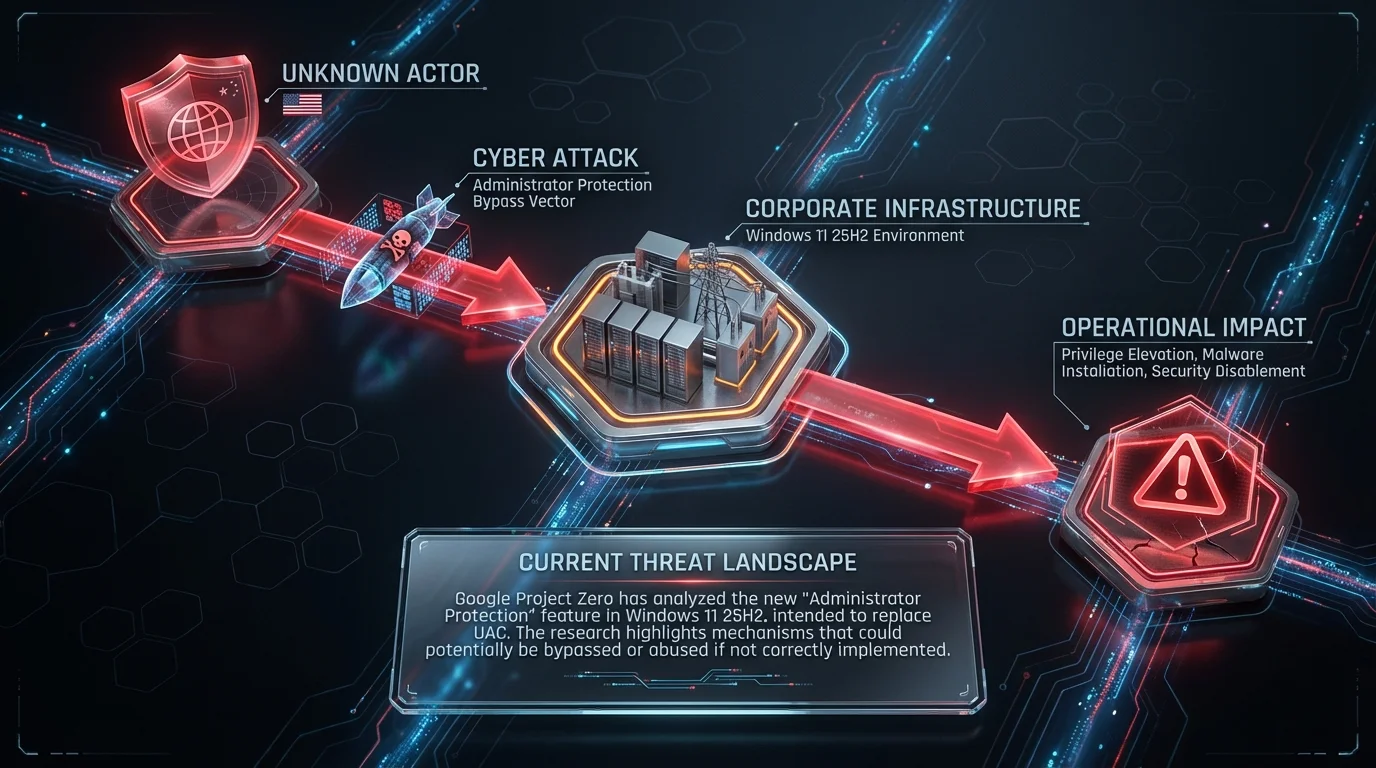
Google Project Zero has analyzed the new "Administrator Protection" feature in Windows 11 25H2, intended to replace UAC. The research highlights mechanisms that could potentially be bypassed or abused if not correctly implemented.
Business Impact
If the primary administrative security control in Windows is bypassed, attackers can silently elevate privileges, making it easier to install malware and disable security tools.
Recommended Action
Ask your Endpoint Security team: "Are we testing the new Windows 11 Administrator Protection feature, and are we monitoring for bypass techniques described by Project Zero?"
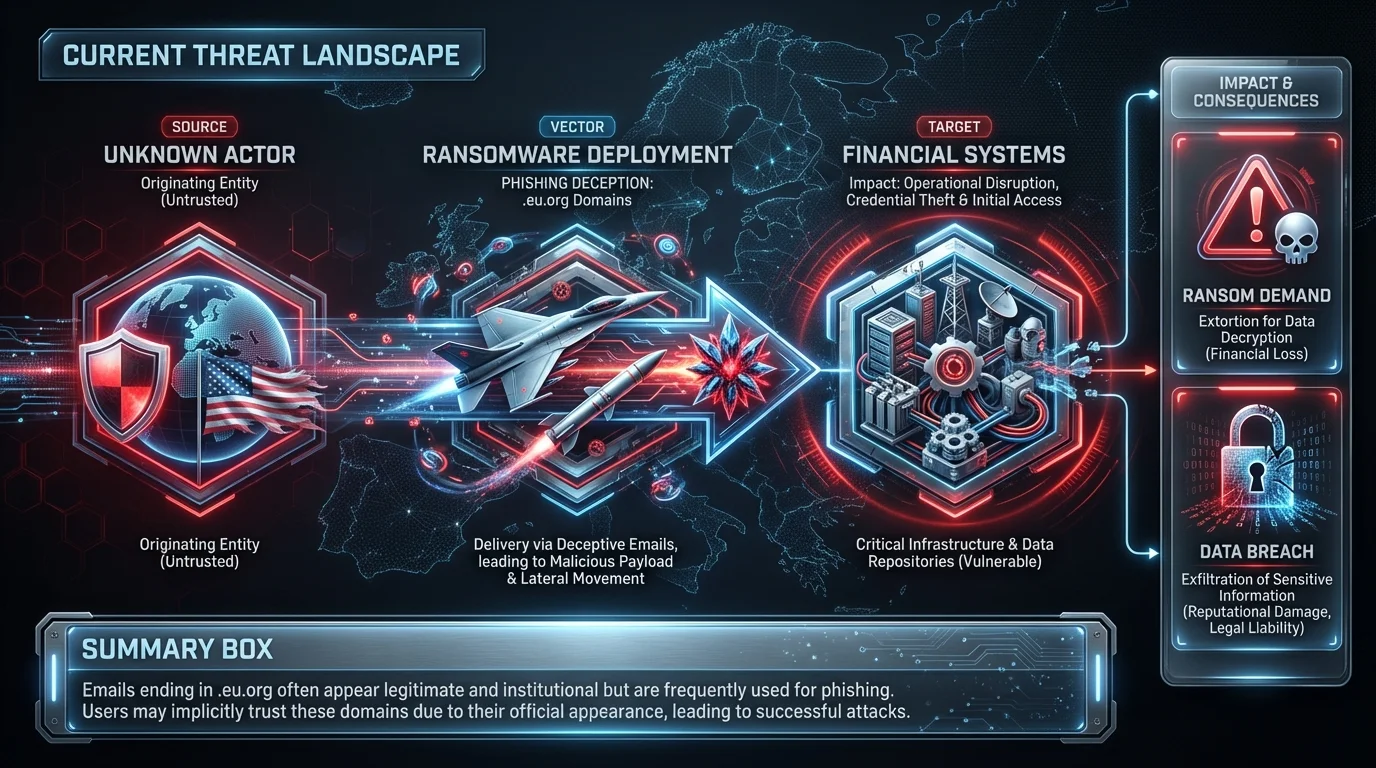
Emails ending in .eu.org often appear legitimate and institutional but are frequently used for phishing. Users may implicitly trust these domains due to their official appearance.
Business Impact
Successful phishing attacks can lead to credential theft and initial access for ransomware, resulting in financial loss and data breaches.
Recommended Action
Ask your Email Security team: "Do we treat .eu.org domains with higher scrutiny in our spam filters, and have we warned users about this specific phishing vector?"
Executive Briefing
The lifecycle of digital certificates is accelerating, and legacy management practices are failing to keep up, leading to potential outages and trust failures.
CISA has released a list of IT products to help federal agencies update their technology stacks with quantum-resistant encryption, signaling a shift toward preparing for future cryptographic threats.
Security teams are moving towards Continuous Threat Exposure Management (CTEM) to focus on where threats and vulnerabilities intersect, rather than managing them in isolation.
Vendor Spotlight
Nucleus Security (Specialized Vendor)
Specialization: Risk-Based Vulnerability Management (RBVM) and Vulnerability Aggregation
Why Nucleus Security Today: Nucleus Security is a direct alternative to Cisco Kenna (Cisco Vulnerability Management), making them highly relevant to the news regarding Kenna's sunsetting. Furthermore, their platform automates the prioritization of vulnerabilities based on threat intelligence, directly addressing the need to manage the new flaws added to the CISA Known Exploited Vulnerabilities catalog.
Key Capability: Unified vulnerability management that correlates scanner data with threat intelligence (including CISA KEV) to prioritize remediation, serving as a replacement for legacy or sunsetting tools.
Recommended Actions: 1. Navigate to Automation → Finding Processing → Add Rule 2. Navigate to Vulnerabilities → Active → Filter Panel (Left) → Threat Intelligence 3. Navigate to Project Administration → Risk Scoring → Threat Intelligence
Verification Steps: - Ingest a new scan file or trigger a connector sync containing a known CISA KEV vulnerability (e.g., CVE-2023-20198). - Navigate to Dashboard → Overview and review the 'Risk Score' trend.