Heroes, here's the curated threat landscape for Jan 23, 2026.
Critical Threats
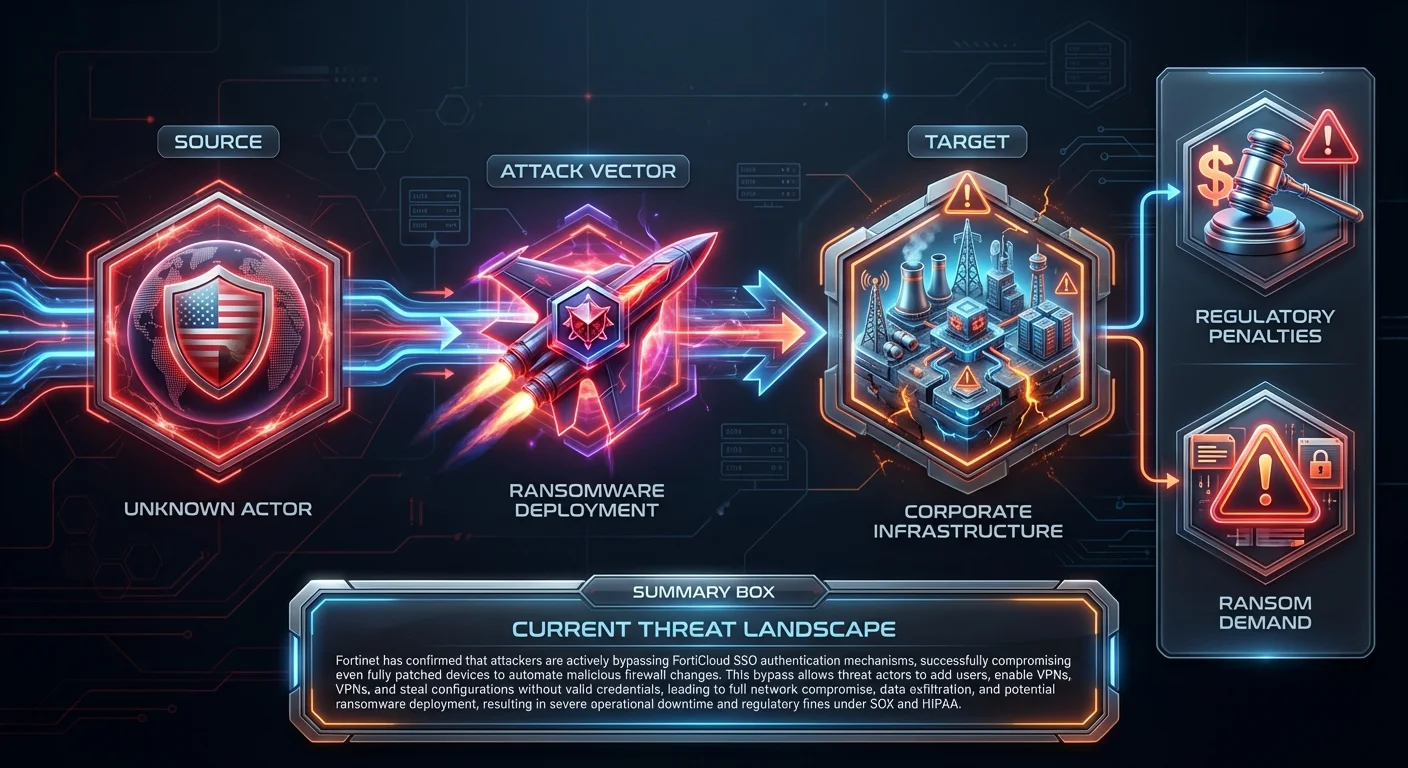
Fortinet has confirmed that attackers are actively bypassing FortiCloud SSO authentication mechanisms, successfully compromising even fully patched devices to automate malicious firewall changes. This bypass allows threat actors to add users, enable VPNs, and steal configurations without valid credentials.
Business Impact
If exploited, attackers gain administrative control over network firewalls, leading to full network compromise, data exfiltration, and potential ransomware deployment, resulting in severe operational downtime and regulatory fines under SOX and HIPAA.
Recommended Action
Ask your IT team: "Are we monitoring directory-level authentication logs for our Fortinet devices to detect access that bypasses the SSO provider, and have we reviewed the latest indicators of compromise?"
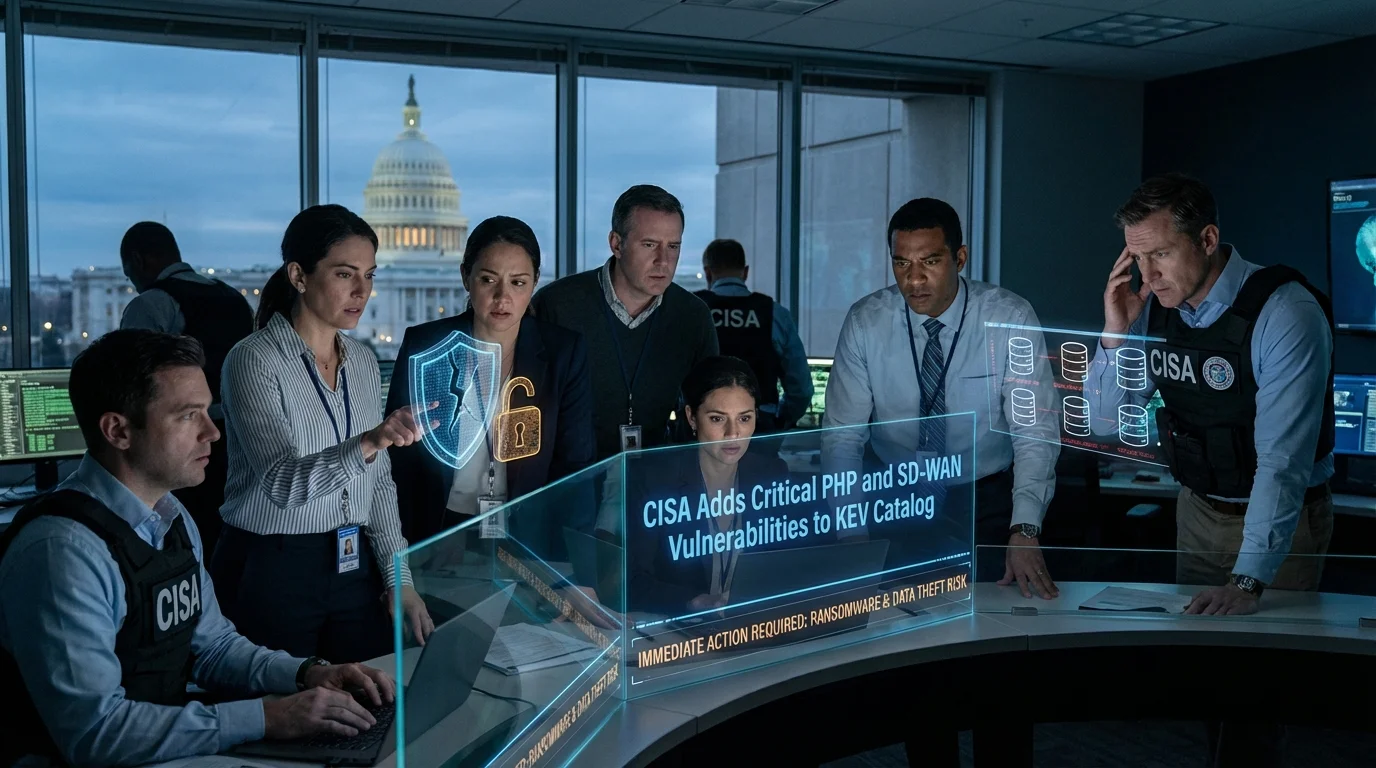
CISA has updated its Known Exploited Vulnerabilities (KEV) catalog with four actively exploited flaws, including a critical PHP remote code execution vulnerability (CVE-2025-68645) and issues affecting Versa Concerto SD-WAN and Synacor Zimbra. Federal agencies and critical infrastructure are mandated to patch these immediately.
Business Impact
Failure to patch these actively exploited vulnerabilities exposes the organization to immediate ransomware deployment and data theft, potentially triggering regulatory penalties and loss of customer trust.
Recommended Action
Ask your IT team: "Have we scanned our environment for PHP CVE-2025-68645 and the Versa/Zimbra vulnerabilities added to the CISA KEV list today, and is patching scheduled within the required timeframe?"
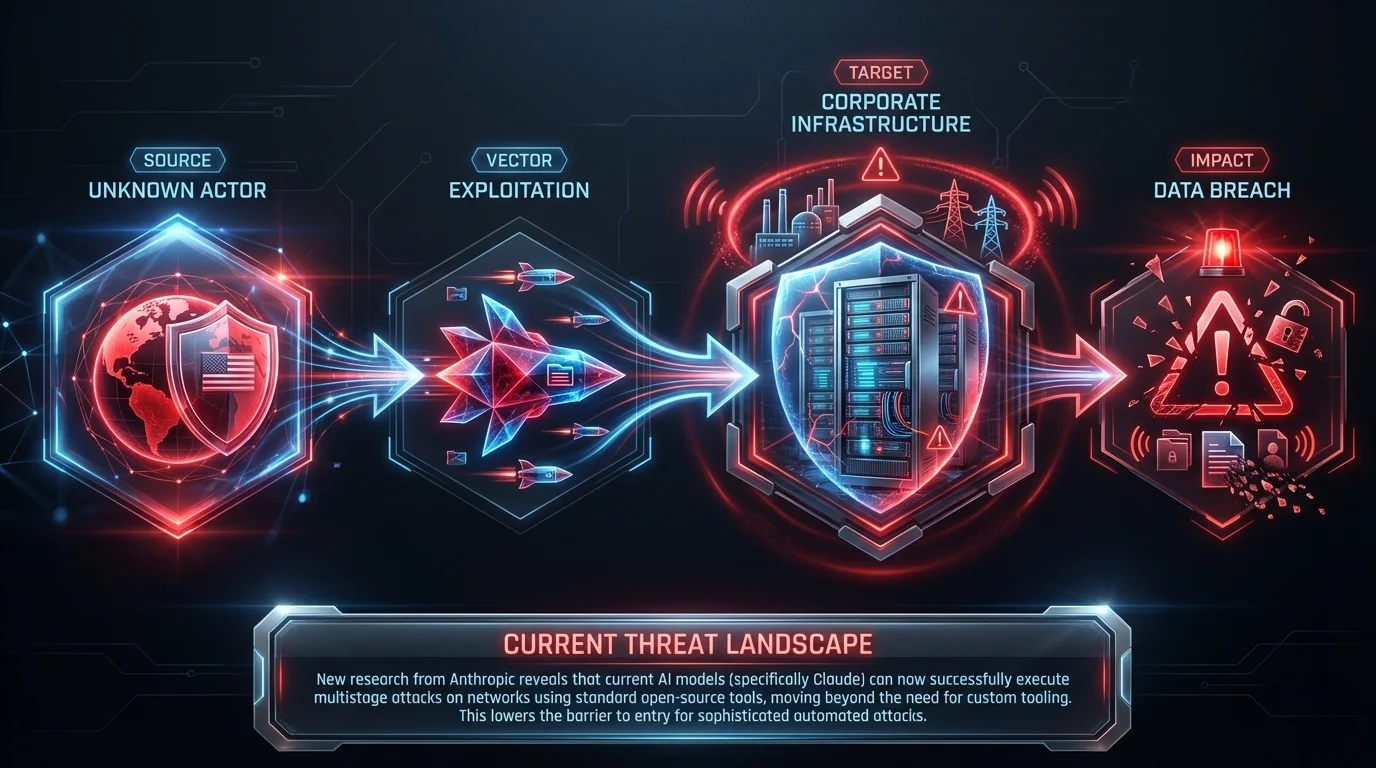
New research from Anthropic reveals that current AI models (specifically Claude) can now successfully execute multistage attacks on networks using standard open-source tools, moving beyond the need for custom tooling. This lowers the barrier to entry for sophisticated automated attacks.
Business Impact
The democratization of sophisticated attack capabilities means organizations may face a higher volume of complex, automated attacks, increasing the cost of defense and the likelihood of a successful breach.
Recommended Action
Ask your IT team: "Do our current threat detection models account for automated, machine-speed attacks that utilize standard administration tools?"
High Severity
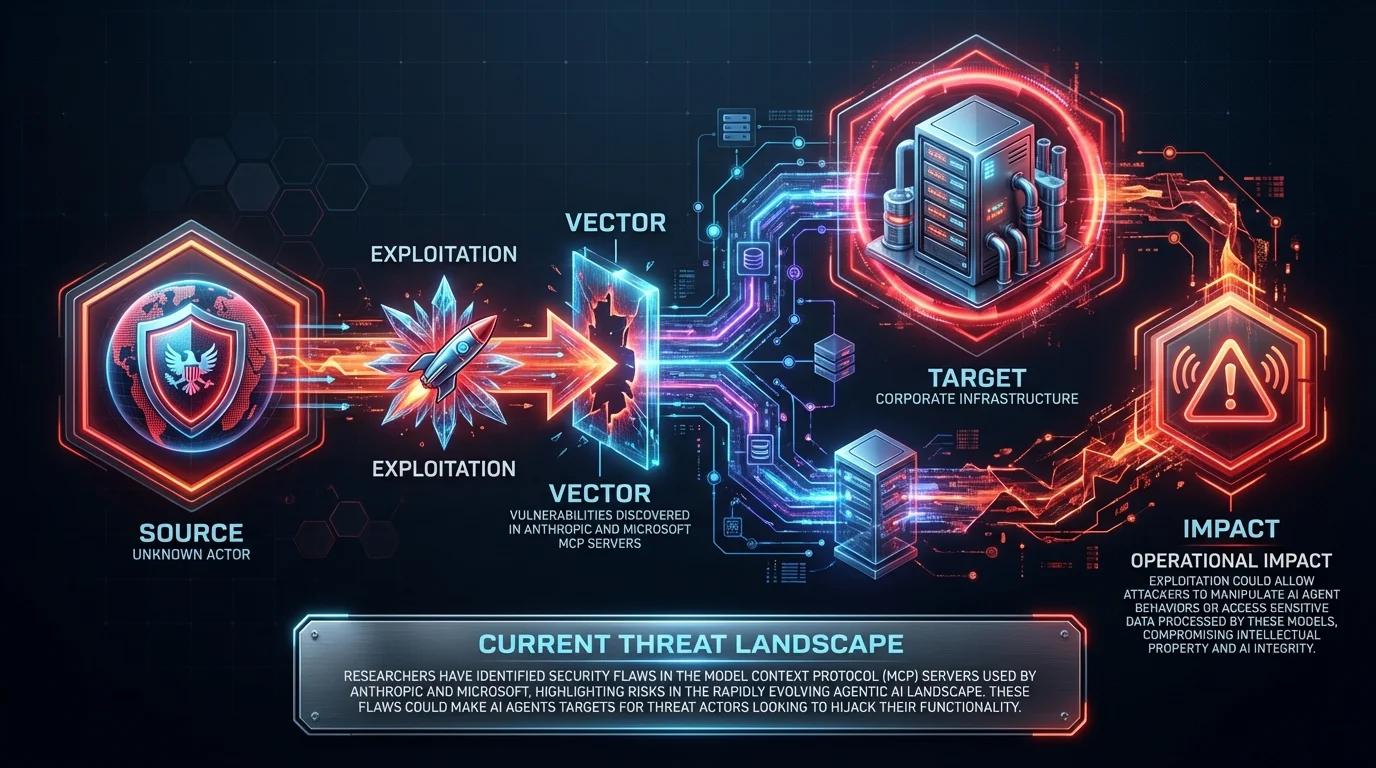
Researchers have identified security flaws in the Model Context Protocol (MCP) servers used by Anthropic and Microsoft, highlighting risks in the rapidly evolving agentic AI landscape. These flaws could make AI agents targets for threat actors looking to hijack their functionality.
Business Impact
Exploitation could allow attackers to manipulate AI agent behaviors or access sensitive data processed by these models, compromising intellectual property and AI integrity.
Recommended Action
Ask your IT team: "Are we running Anthropic or Microsoft MCP servers, and have we applied the latest security updates to mitigate CVE-2026-20805?"
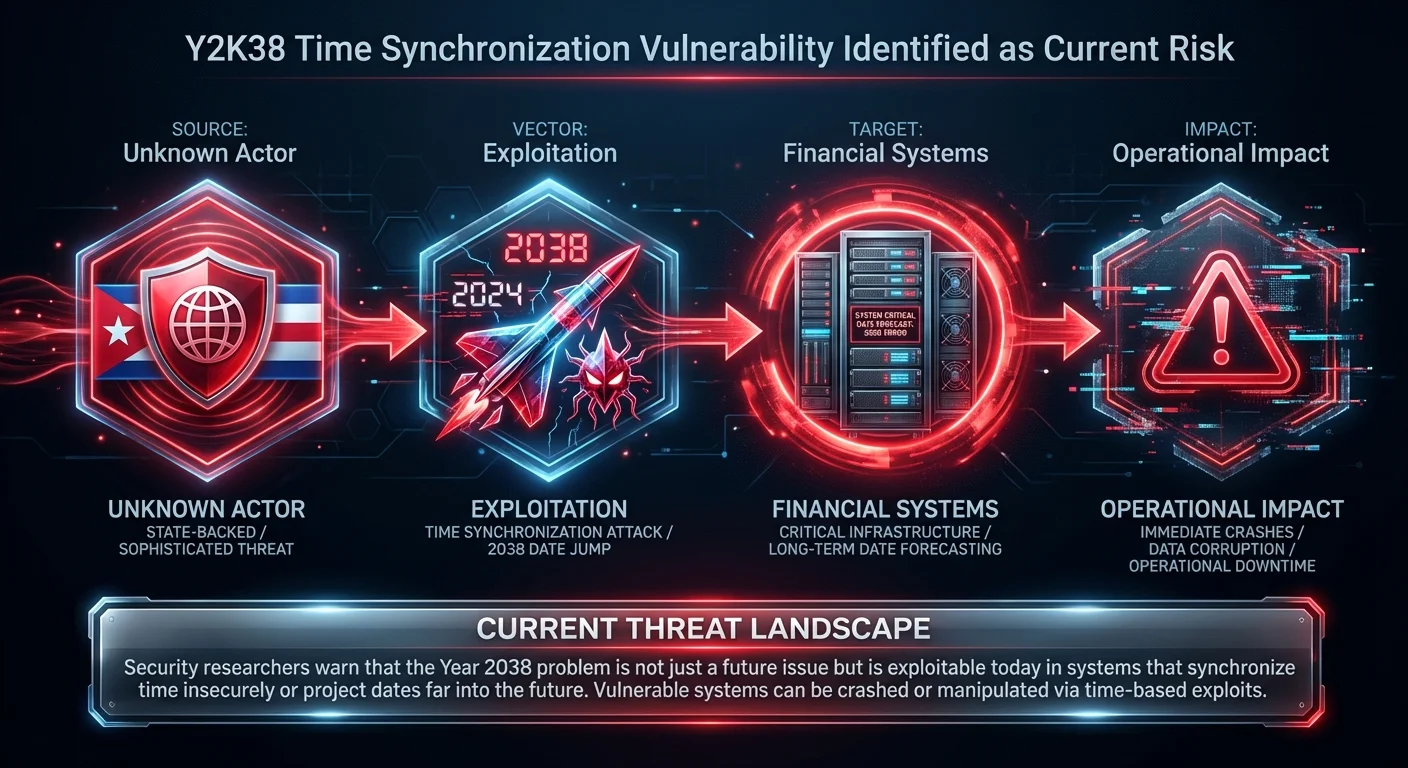
Security researchers warn that the Year 2038 problem is not just a future issue but is exploitable today in systems that synchronize time insecurely or project dates far into the future. Vulnerable systems can be crashed or manipulated via time-based exploits.
Business Impact
Critical infrastructure or financial systems relying on long-term date forecasting could suffer immediate crashes or logic errors, leading to operational downtime and data corruption.
Recommended Action
Ask your IT team: "Have we audited our legacy systems and time synchronization protocols for Y2K38 susceptibility?"
Executive Briefing
The cybersecurity paradigm is shifting from "prevention" to "assumed compromise." In an era where adversaries exfiltrate and weaponize data, resilience strategies must focus on rapid recovery and data un-usability rather than just perimeter defense.
Retrospective analysis of the 2025 phishing surge indicates that reactive "whack-a-mole" strategies are failing. Organizations must adopt adaptive defenses that can handle the volume and sophistication of modern social engineering.
Vendor Spotlight
Specialization: Unified Identity Protection / Identity Threat Detection and Response (ITDR)
Why Silverfort Today: Silverfort is directly relevant to the reported Fortinet FortiCloud SSO bypass threat. As a Unified Identity Protection platform, Silverfort can enforce Multi-Factor Authentication (MFA) and identity policies at the directory level (Active Directory/Entra ID), providing a critical safety net when edge authentication mechanisms like SSO are compromised or bypassed.
Key Capability: Extending MFA and real-time security policies to resources that do not natively support them, including legacy applications, command-line interfaces, and industrial control systems.
Recommended Actions: 1. Navigate to Silverfort Console → Policies → New Policy → Authentication Policy 2. Navigate to Silverfort Console → Policies → Policy List → [Select Created Policy] → Enable 3. Navigate to Silverfort Console → Logs → Authentications
Verification Steps: - Initiate a login attempt via the Fortinet VPN/Portal using a test account. - Review the Silverfort Logs for the test user authentication.