
Wednesday, January 21, 2026

MikeGPT CyberSecurity

“Playbook for the Secure Enterprise”

MikeGPT Daily Threat Rundown

Heroes, your curated look at the current cybersecurity landscape for Jan 21, 2026.

Critical Threats
CERT/CC Warns binary-parser Bug Allows Node.js Privilege-Level Code Execution

    A critical vulnerability in the widely used `binary-parser` npm library allows attackers to execute arbitrary JavaScript code, potentially compromising any Node.js application using versions prior to 2.3.0. This represents a significant supply chain risk as this library is a dependency for many enterprise applications.

    Business Impact

    If exploited, attackers could gain full control over application servers, leading to data theft, service disruption, and potential lateral movement across the cloud environment—triggering SOX compliance failures and mandatory breach notifications.

    Recommended Action

    Ask your development and AppSec teams: "Have we scanned our Node.js projects for the `binary-parser` library today, and are we blocking builds using versions older than 2.3.0?"
Oracle has released its quarterly Critical Patch Update (CPU) addressing 158 unique vulnerabilities, including 27 critical issues affecting major products like Oracle Database and Middleware. This massive update highlights systemic risks in legacy and core database infrastructure.

Business Impact

Unpatched Oracle databases are prime targets for ransomware and data exfiltration; a successful exploit could result in catastrophic loss of patient records (HIPAA violation) or financial data integrity issues (SOX violation).

Recommended Action

Ask your Infrastructure team: "What is our timeline for applying the January 2026 Oracle CPU to our internet-facing and production database systems?"

SOX, HIPAA Tenable ↗
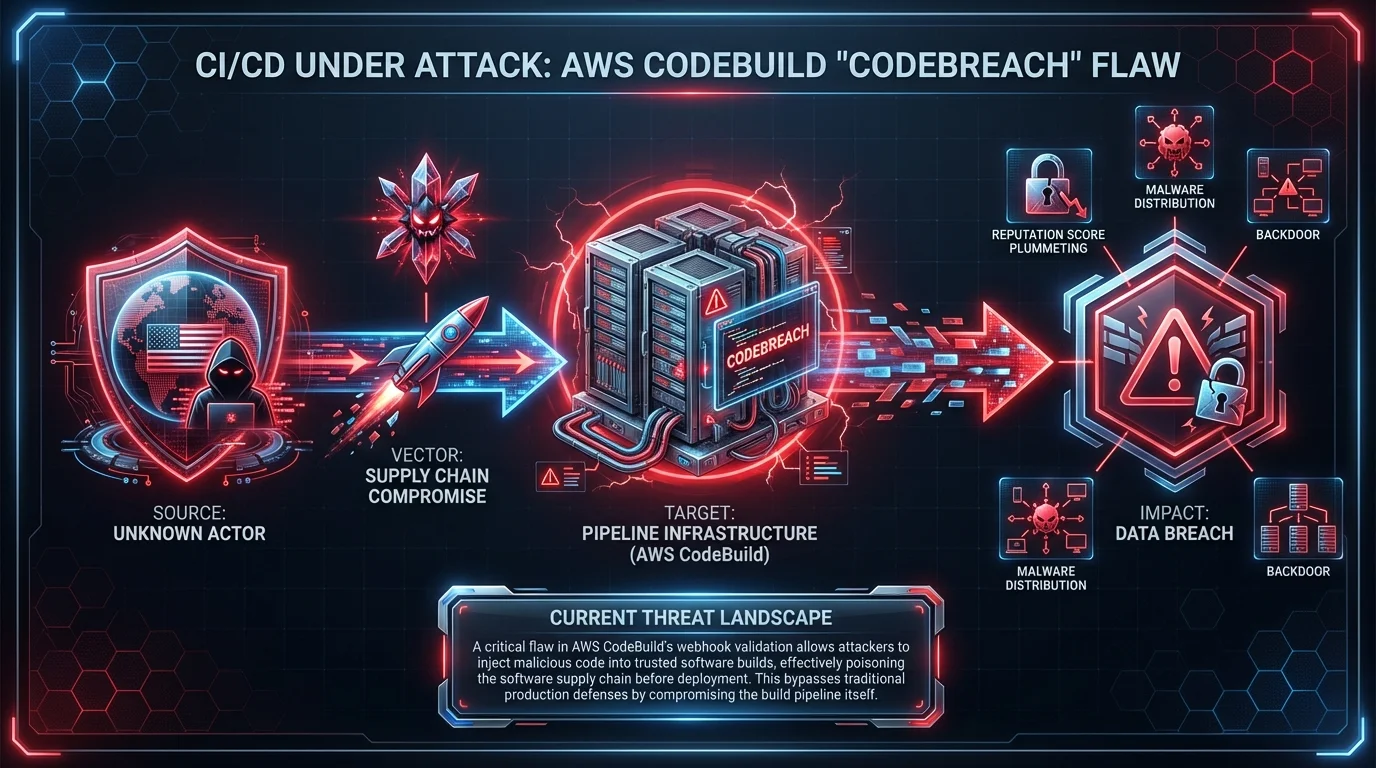
CI/CD Under Attack: AWS CodeBuild

    A critical flaw in AWS CodeBuild's webhook validation allows attackers to inject malicious code into trusted software builds, effectively poisoning the software supply chain before deployment. This bypasses traditional production defenses by compromising the build pipeline itself.

    Business Impact

    Compromised CI/CD pipelines can distribute malware to customers or deploy backdoors into production environments, leading to severe reputational damage and loss of trust in software integrity.

    Recommended Action

    Ask your DevOps lead: "Have we reviewed our AWS CodeBuild webhook configurations to ensure strict validation is enabled against this specific injection flaw?"

High Severity
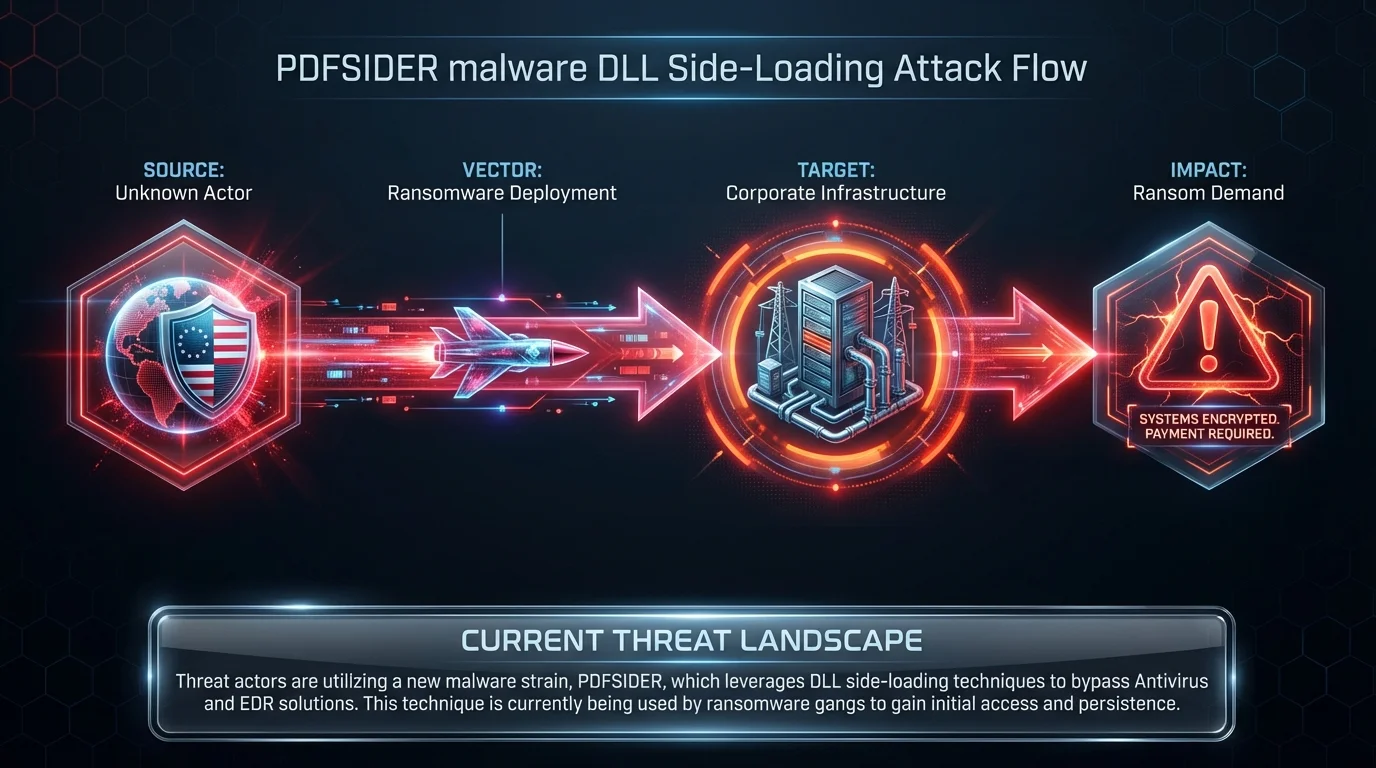
PDFSIDER Malware – Exploitation of DLL Side-Loading for AV and EDR Evasion

    Threat actors are utilizing a new malware strain, PDFSIDER, which leverages DLL side-loading techniques to bypass Antivirus and EDR solutions. This technique is currently being used by ransomware gangs to gain initial access and persistence.

    Business Impact

    Successful evasion of endpoint protection means ransomware can deploy undetected, leading to operational paralysis and potential ransom demands.

    Recommended Action

    Ask your SOC team: "Does our EDR solution have specific detection logic for DLL side-loading behaviors associated with PDFSIDER, or do we need to update our blocking rules?"
Chainlit AI Framework Flaws Enable Data Theft via File Read and SSRF Bugs

    High-severity vulnerabilities have been discovered in Chainlit, a popular open-source AI framework, allowing attackers to perform Server-Side Request Forgery (SSRF) and read sensitive files. This could expose proprietary AI models and training data.

    Business Impact

    Theft of AI intellectual property or sensitive training data could compromise competitive advantage and violate data privacy regulations.

    Recommended Action

    Ask your AI/Data Science team: "Are we using Chainlit in our AI projects, and have we updated to the latest version to patch these SSRF vulnerabilities?"
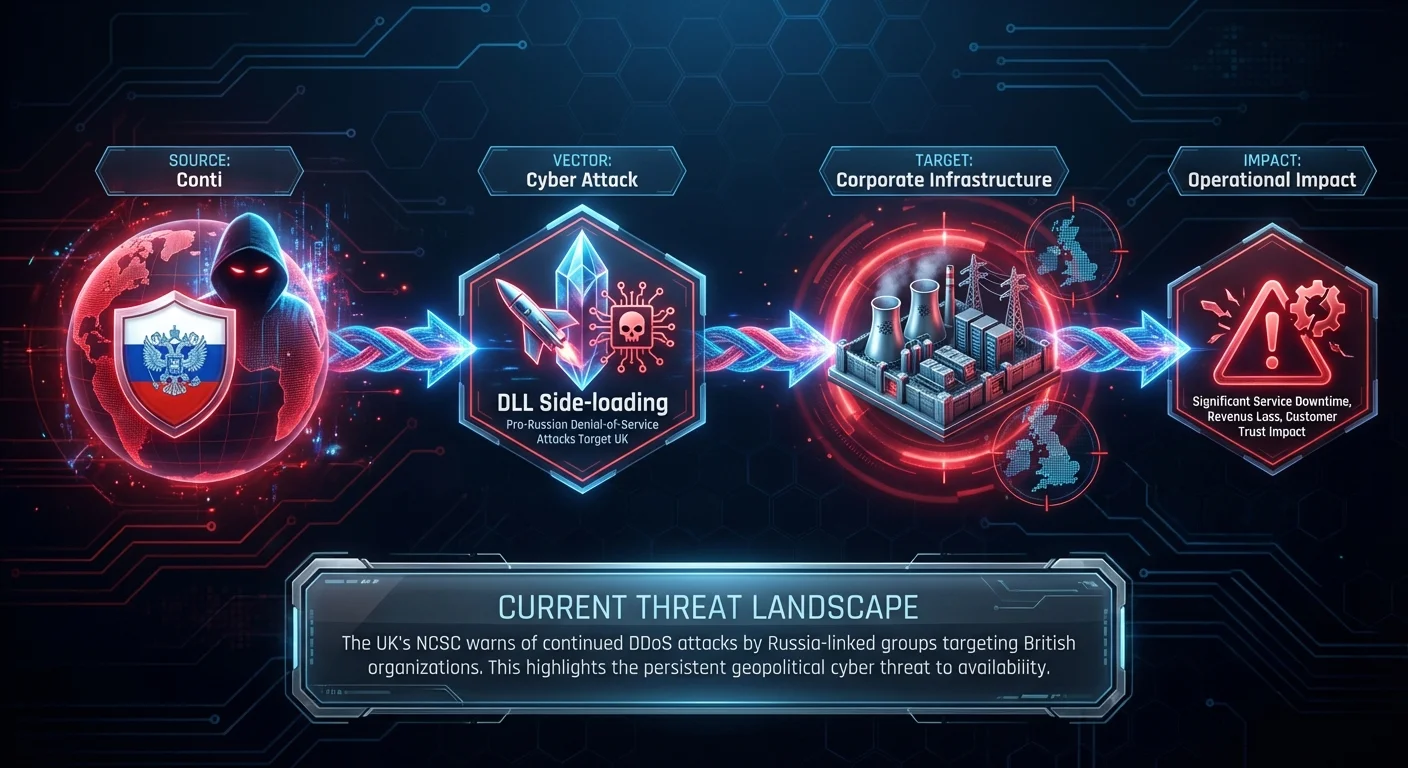
Pro-Russian Denial-of-Service Attacks Target UK

    The UK's NCSC warns of continued DDoS attacks by Russia-linked groups targeting British organizations. This highlights the persistent geopolitical cyber threat to availability.

    Business Impact

    Targeted DDoS attacks can cause significant service downtime, impacting revenue and customer trust.

    Recommended Action

    Verify DDoS mitigation services are active and stress-tested for high-volume traffic.

Rapid7 has enhanced its MDR service to ingest Microsoft Defender signals, improving visibility across the Microsoft stack. This integration aims to operationalize vast signal data for better threat anticipation.

SOX, HIPAA Rapid7 ↗

Other Noteworthy

Rapid7 has enhanced its MDR service to ingest Microsoft Defender signals, improving visibility across the Microsoft stack. This integration aims to operationalize vast signal data for better threat anticipation.

SOX, HIPAA Rapid7 ↗

Executive Briefing

What a Year of DORA Reveals About Cyber Resilience

One year into the enforcement of the EU's Digital Operational Resilience Act (DORA), organizations are seeing a shift in regulatory expectations towards demonstrable digital risk management rather than just compliance checklists.

Security Boulevard · 9:01 PM ·
HackerOne Rolls Out Framework for 'Good Faith' AI Research

HackerOne is establishing a framework to protect independent security researchers investigating AI systems, building on DOJ guidance. This encourages responsible disclosure of AI vulnerabilities like those found in Chainlit.

CyberScoop · 8:59 PM ·

Vendor Spotlight

Vendor

Morphisec (Specialized Vendor)

Specialization: Automated Moving Target Defense (AMTD) & Endpoint Security

Why Morphisec Today: Morphisec is directly relevant to the 'PDFSIDER Malware' threat, which uses DLL side-loading to evade AV and EDR systems. Morphisec's Moving Target Defense technology is specifically engineered to stop evasive attacks and in-memory exploits that bypass traditional detection-based security layers.

Key Capability: Deterministic prevention of memory-based attacks and evasion techniques (like DLL side-loading) without relying on signatures.

Recommended Actions: 1. Navigate to Security Center → Policies → Protection Profiles → [Select Critical Profile] → Protectors 2. Navigate to Security Center → Policies → Protection Profiles → [Select Critical Profile] → General → Protection Mode 3. Navigate to Security Center → Dashboards → Attacks

Verification Steps: - Verify Policy Synchronization in 'Endpoints' view - Review Windows Event Logs (Application) on a sample endpoint

Learn More About Morphisec ↗

Detection & Response

Detection & Response Kit (4 items)

⚠️ Disclaimer: Test all detection logic in non-production environments before deployment.

1. Vendor Platform Configuration - Morphisec

# Actionable Guidance for Morphisec # Generated: 2026-01-21 15:18:15 # Step 1: Navigate to Security Center → Policies → Protection Profiles → [Select Critical Profile] → Protectors # Purpose: Ensure the application targeted by PDFSIDER (typically PDF readers like Adobe Acrobat or Foxit) is explicitly selected for Moving Target Defense protection. # Expected: The 'Adobe Acrobat' and 'Foxit Reader' checkboxes are enabled. If the malware utilizes a specific non-standard signed binary for side-loading, use 'Add Custom Protector' to include that specific executable. # Step 2: Navigate to Security Center → Policies → Protection Profiles → [Select Critical Profile] → General → Protection Mode # Purpose: Enforce active blocking of the DLL side-loading attempt rather than passive logging. # Expected: The Protection Mode is set to 'Protect' (Prevent) rather than 'Monitor'. This ensures the Morphisec agent actively terminates the process when the malicious DLL attempts to execute in the morphed memory space. # Step 3: Navigate to Security Center → Dashboards → Attacks # Purpose: Identify if PDFSIDER has already attempted execution by looking for memory anomalies characteristic of DLL side-loading. # Expected: Review recent alerts filtered by Attack Type 'Code Injection' or 'Process Hollowing'. A successful block will show the status 'Prevented' with details indicating a trap was triggered by an unmapped module. # Verification Steps: # - Verify Policy Synchronization in 'Endpoints' view # Expected: Target endpoints display 'Up to Date' status under the Policy column, confirming the Protector updates and Prevention Mode settings have been applied. # - Review Windows Event Logs (Application) on a sample endpoint # Expected: Search for Source 'Morphisec'. If a simulation or attack occurs, a log entry should confirm 'Morphisec prevented an attack' targeting the protected PDF application process.

2. YARA Rule for VoidLink/PDFSIDER Detection

rule Linux_VoidLink_Malware { meta: description = "Detects artifacts related to VoidLink AI-generated malware and PDFSIDER loaders" author = "Threat Rundown" date = "2026-01-21" reference = "https://securityaffairs.com/?p=187123" severity = "medium" tlp = "white" strings: $s1 = "VoidLink" ascii wide $s2 = "PDFSIDER" ascii wide $s3 = "binary-parser" ascii wide $h1 = { 45 4C 46 02 01 01 00 } // ELF Header for Linux variants condition: (uint32(0) == 0x464C457F or uint16(0) == 0x5A4D) and // ELF or MZ header any of ($s*) }

3. SIEM Query — Detect binary-parser Vulnerability Exploitation Attempts

index=security sourcetype="web_server_logs" OR sourcetype="application_logs" uri_path="*binary-parser*" OR payload="*eval(*" OR user_agent="*VoidLink*" | eval risk_score=case( match(payload, "child_process"), 100, match(uri_path, "node_modules"), 75, 1==1, 25) | where risk_score >= 50 | table _time, src_ip, dest_ip, uri_path, payload, user_agent, risk_score | sort -_time

4. PowerShell Script — Check for Vulnerable npm Packages Locally

$computers = "localhost" foreach ($computer in $computers) { if (Test-Connection -ComputerName $computer -Count 1 -Quiet) { Write-Host "Checking $computer for vulnerable binary-parser..." # Requires npm to be installed and in path try { $result = Invoke-Command -ComputerName $computer -ScriptBlock { npm list binary-parser --depth=999 2>$null } if ($result -match "binary-parser@[0-1]\.|binary-parser@2\.[0-2]\.") { Write-Warning "VULNERABLE: binary-parser version < 2.3.0 detected on $computer" } else { Write-Host "Safe or not found on $computer" -ForegroundColor Green } } catch { Write-Error "Could not run npm check on $computer" } } }

This rundown should provide a solid overview of the current threat landscape. Thank you to all our cyberheroes for your diligence and hard work. Stay vigilant!