
Heroes, your curated look at the current cybersecurity landscape for Jan 20, 2026.
Critical Threats
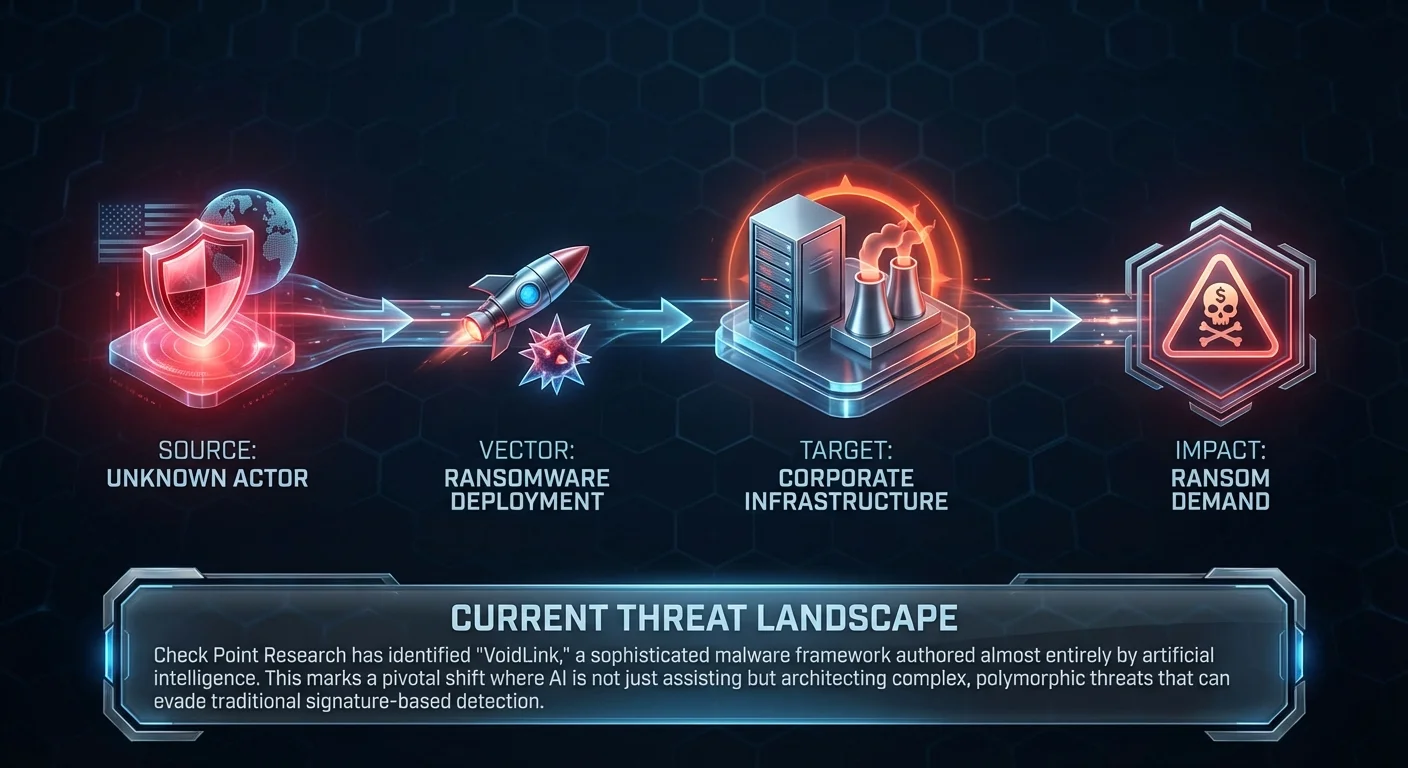
Check Point Research has identified "VoidLink," a sophisticated malware framework authored almost entirely by artificial intelligence. This marks a pivotal shift where AI is not just assisting but architecting complex, polymorphic threats that can evade traditional signature-based detection.
Business Impact
The barrier to entry for sophisticated cyberattacks has lowered drastically, meaning organizations will face a higher volume of unique, high-quality attacks. Legacy antivirus solutions may fail to detect these AI-generated variants, increasing the risk of successful ransomware deployment or data theft.
Recommended Action
Ask your CISO: "Do our endpoint protection systems utilize behavioral analysis and heuristic detection rather than just static signatures to catch AI-generated polymorphic code?"
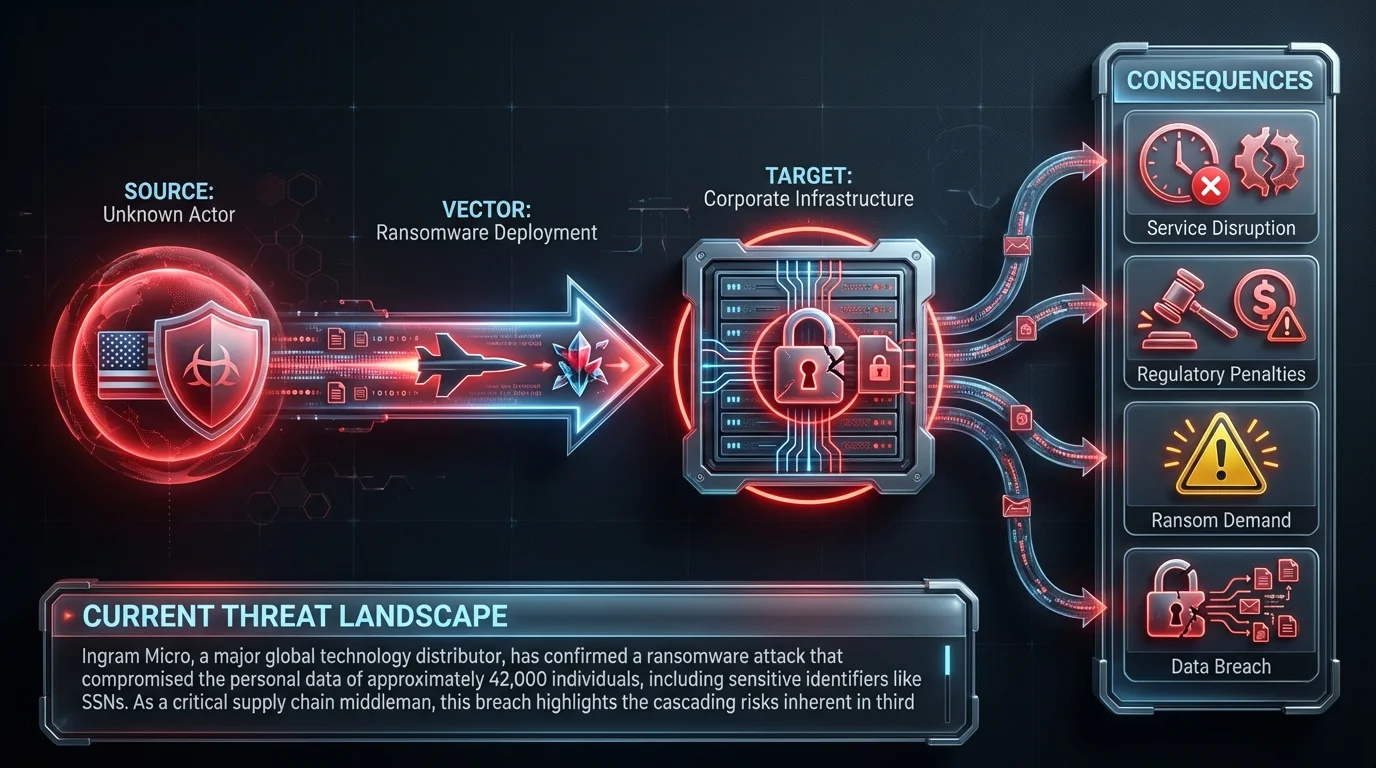
Ingram Micro, a major global technology distributor, has confirmed a ransomware attack that compromised the personal data of approximately 42,000 individuals, including sensitive identifiers like SSNs. As a critical supply chain middleman, this breach highlights the cascading risks inherent in third-party logistics and IT distribution networks.
Business Impact
This incident triggers immediate regulatory reporting obligations under GDPR and SOX, likely resulting in significant fines and mandatory credit monitoring costs. For partners, this represents a supply chain disruption risk and potential exposure of B2B contact data, necessitating vendor risk reassessments.
Recommended Action
Ask your Vendor Risk Management team: "Have we assessed our direct or indirect exposure to Ingram Micro's systems, and are we monitoring for phishing attempts using their branding?"
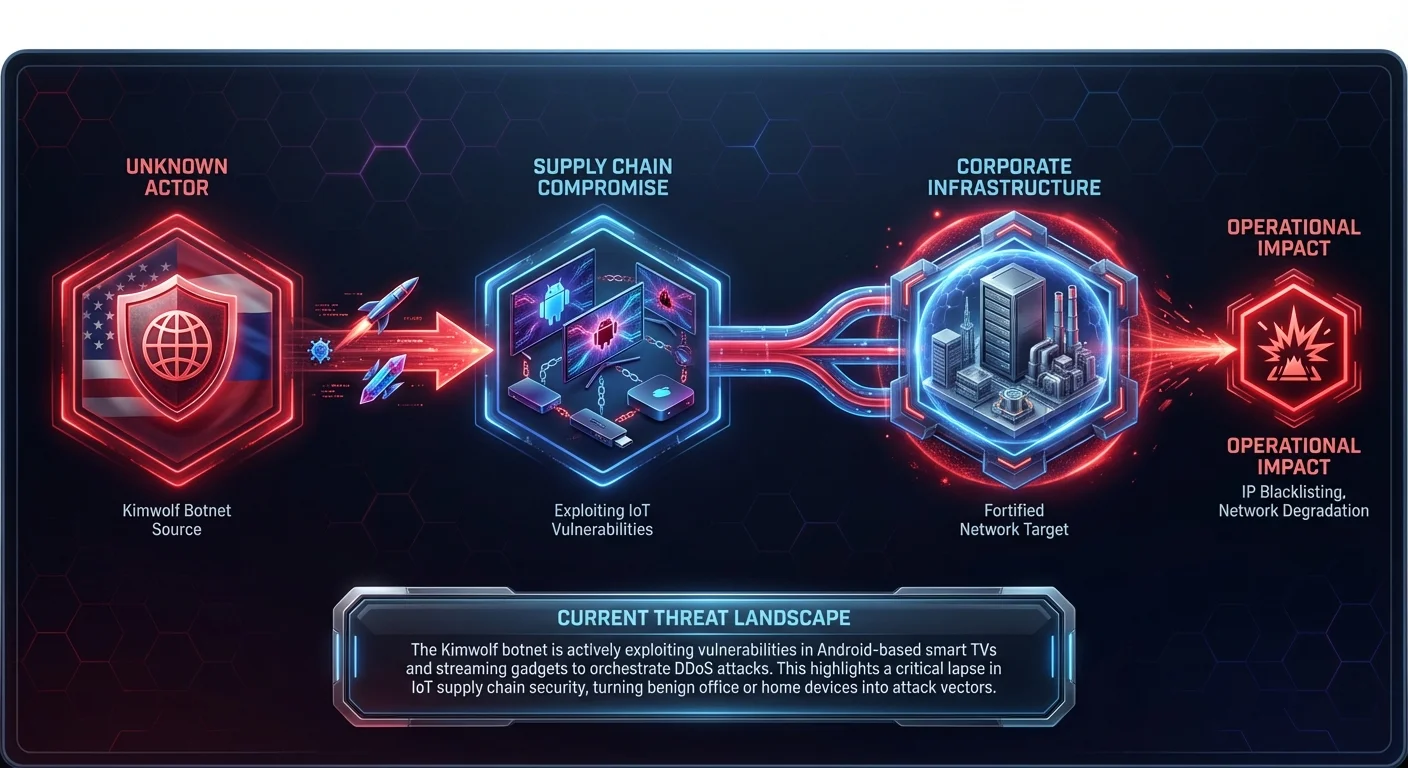
The Kimwolf botnet is actively exploiting vulnerabilities in Android-based smart TVs and streaming gadgets to orchestrate DDoS attacks. This highlights a critical lapse in IoT supply chain security, turning benign office or home devices into attack vectors.
Business Impact
Compromised IoT devices on corporate networks can be used as beachheads for lateral movement or to launch attacks against others, leading to IP blacklisting and network performance degradation.
Recommended Action
Ask your IT team: "Are all smart TVs and streaming devices on our network isolated on a separate guest VLAN with no access to critical internal resources?"
High Severity

Researchers discovered a flaw in Google Gemini allowing indirect prompt injection via malicious calendar invites to bypass guardrails and extract private user data. This demonstrates how LLMs integrated with personal data sources (RAG) can be manipulated by external inputs.
Business Impact
If your organization integrates GenAI tools with corporate calendars or email, employees could unknowingly exfiltrate sensitive meeting details or internal strategy documents simply by interacting with a malicious invite.
Recommended Action
Ask your AppSec team: "What guardrails are in place for our GenAI integrations to prevent indirect prompt injection from untrusted external sources like calendar invites?"

The UK's NCSC warns that ideologically motivated Russian hacktivists are evolving beyond simple website disruption to more damaging attacks. Organizations in the UK or with UK assets should anticipate targeted disruption.
Business Impact
Increased risk of service availability loss (DDoS) and potential defacement, leading to customer frustration and reputational harm.
Recommended Action
Ask your Infrastructure team: "Is our DDoS mitigation capacity sufficient to handle a sustained, state-aligned hacktivist campaign?"

The ESA suffered a series of cyberattacks resulting in the theft of hundreds of gigabytes of data, including proprietary software. This underscores the escalating targeting of aerospace and research sectors by sophisticated threat actors.
Business Impact
Theft of intellectual property and proprietary research erodes competitive advantage and can compromise national security or critical infrastructure projects relying on this technology.
Recommended Action
Ask your Security Operations team: "Have we reviewed our data exfiltration monitoring rules to detect large, anomalous outbound transfers similar to those seen in the ESA breach?"
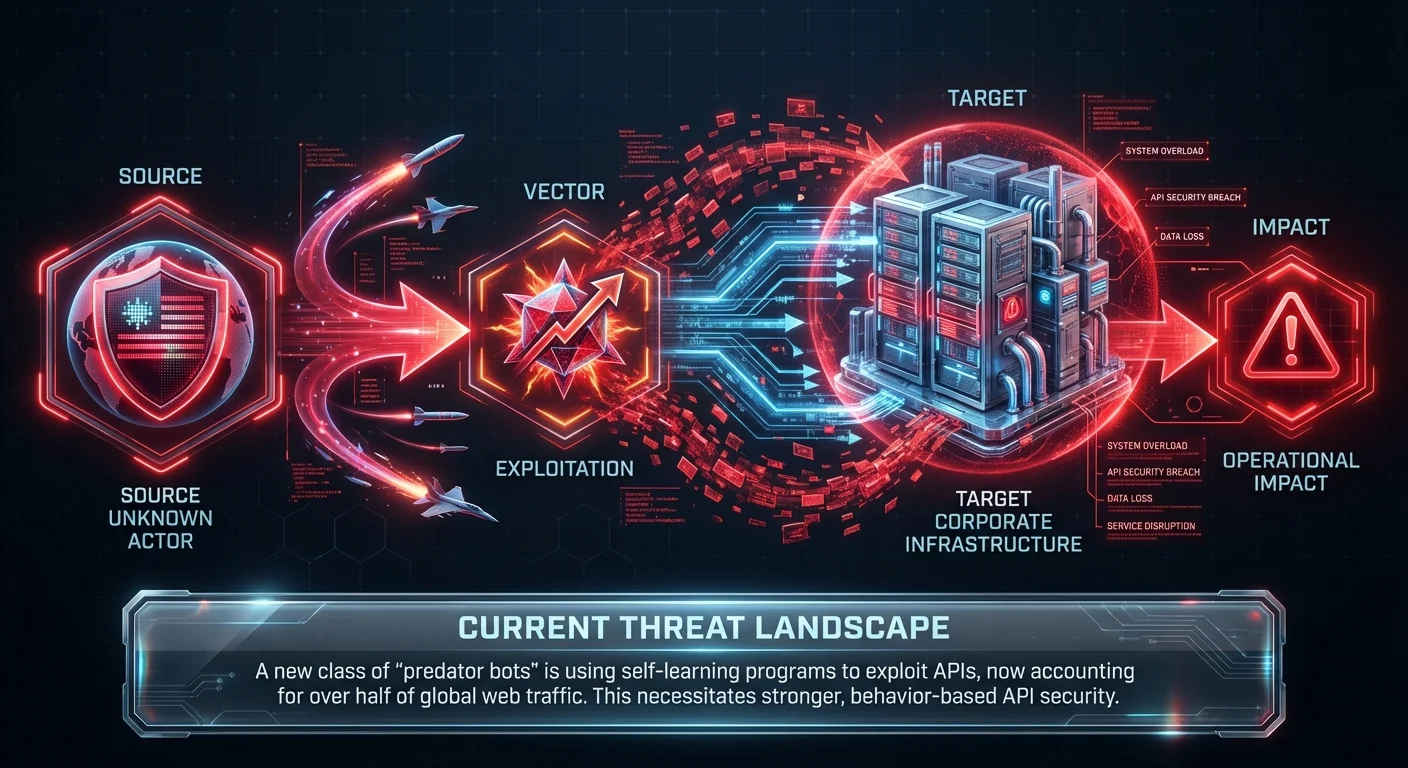
A new class of "predator bots" is using self-learning programs to exploit APIs, now accounting for over half of global web traffic. This necessitates stronger, behavior-based API security.
Other Noteworthy
A new class of "predator bots" is using self-learning programs to exploit APIs, now accounting for over half of global web traffic. This necessitates stronger, behavior-based API security.
Executive Briefing
An analysis of how Non-Human Identities (NHIs)—like API keys and service accounts—are becoming the new perimeter. The article argues that AI adaptability is crucial for detecting anomalous behavior in these machine-to-machine interactions.
Vendor Spotlight
Specialization: Network Security & Threat Prevention
Why Check Point Today: The summary cites Check Point Research as the entity that identified 'VoidLink,' the first advanced AI-generated malware framework. As the discoverer of this threat, Check Point's threat intelligence and Infinity Platform are uniquely positioned to identify and block this specific strain of AI-authored code that may evade less sophisticated detection engines.
Key Capability: AI-driven advanced threat prevention and zero-day malware analysis
Recommended Actions: 1. Navigate to SmartConsole → Security Policies → Threat Prevention → Policy → [Right-click Action Column on Active Rule] → Edit Profile → Threat Emulation → General 2. Navigate to SmartConsole → Gateways & Servers → [Select Target Gateway] → Actions (Top Menu) → Updates → Update Now → Application & Threat Definitions 3. Navigate to Infinity Portal → Harmony Endpoint → Policy → Threat Prevention → Behavioral Guard → Mode
Verification Steps: - Navigate to SmartConsole → Logs & Monitor → Logs tab and run query: blade:"Threat Emulation" AND protection_name:"VoidLink" - SSH into Security Gateway and execute: 'fw stat' followed by 'cpstat antimalware'