Monday, January 12, 2026

MikeGPT CyberSecurity

“Playbook for the Secure Enterprise”

MikeGPT Daily Threat Rundown

Heroes, your curated look at the current cybersecurity landscape for Jan 12, 2026.

Critical Threats
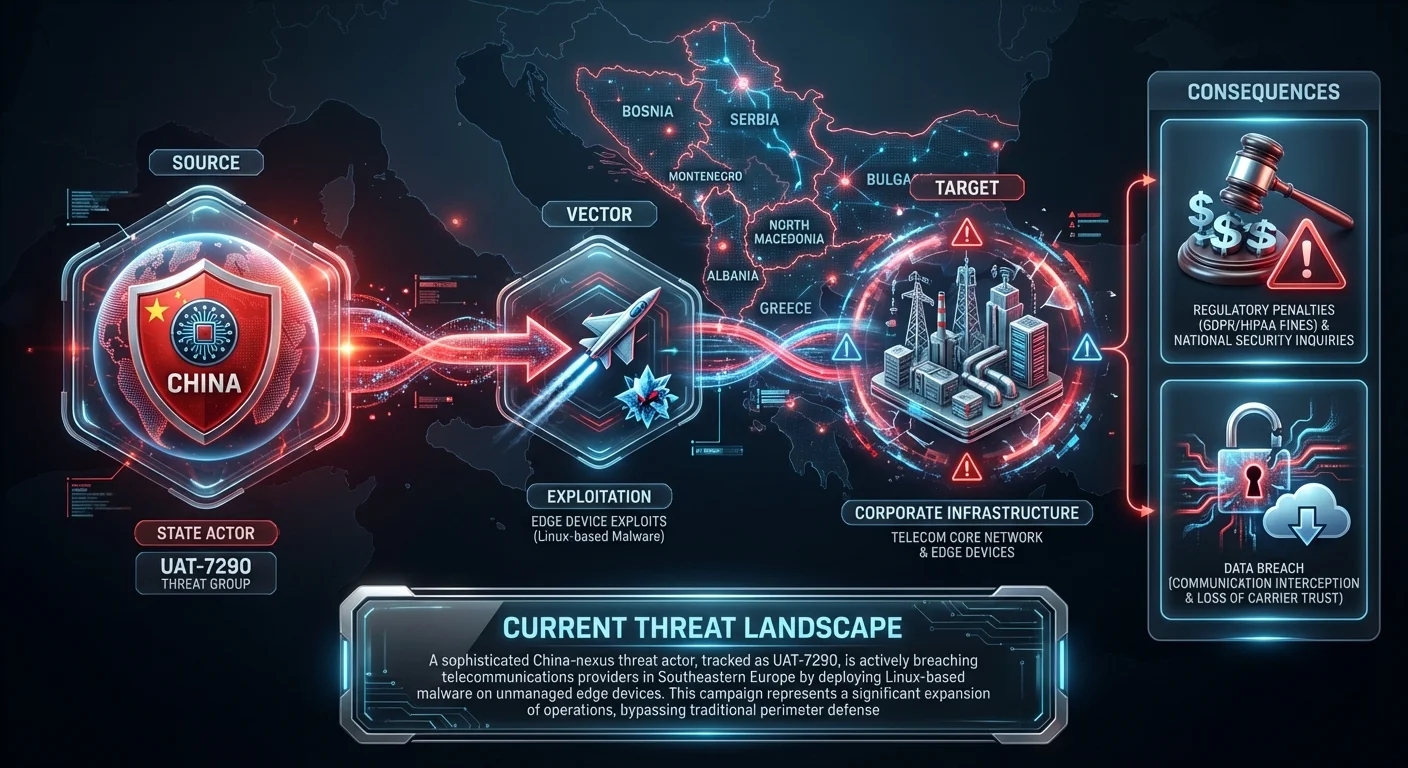
New China-linked hackers breach telcos using edge device exploits

    A sophisticated China-nexus threat actor, tracked as UAT-7290, is actively breaching telecommunications providers in Southeastern Europe by deploying Linux-based malware on unmanaged edge devices. This campaign represents a significant expansion of operations, bypassing traditional perimeter defenses to establish persistent access.

    Business Impact

    Exploitation of edge devices allows attackers to intercept communications and pivot into core networks, leading to severe regulatory fines under GDPR/HIPAA, loss of carrier trust, and potential national security inquiries.

    Recommended Action

    Ask your IT team: Do we have a verified inventory of all edge devices (VPNs, routers) and are they running the latest firmware? Verify that management interfaces are not exposed to the public internet.
    HIPAA, GDPR Lifeboat ↗
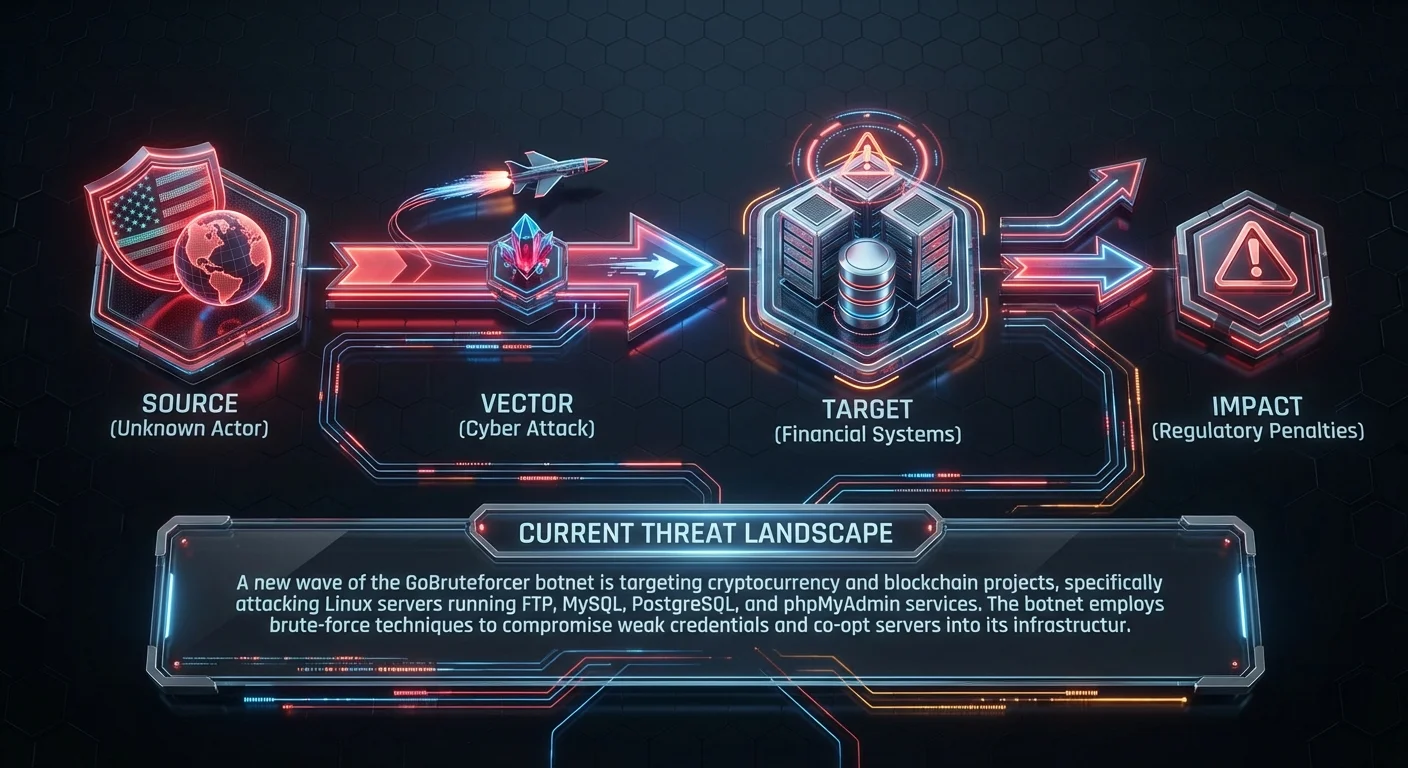
GoBruteforcer Botnet Targets Crypto Project Databases

    A new wave of the GoBruteforcer botnet is targeting cryptocurrency and blockchain projects, specifically attacking Linux servers running FTP, MySQL, PostgreSQL, and phpMyAdmin services. The botnet employs brute-force techniques to compromise weak credentials and co-opt servers into its infrastructure.

    Business Impact

    Successful compromise can lead to direct theft of digital assets, corruption of transaction ledgers, and unauthorized access to customer PII, resulting in immediate financial loss and NIS2 non-compliance penalties.

    Recommended Action

    Ask your Security Operations team: Have we enforced strict IP allow-listing for all database management ports? Confirm that complex password policies are enforced for all service accounts.

High Severity
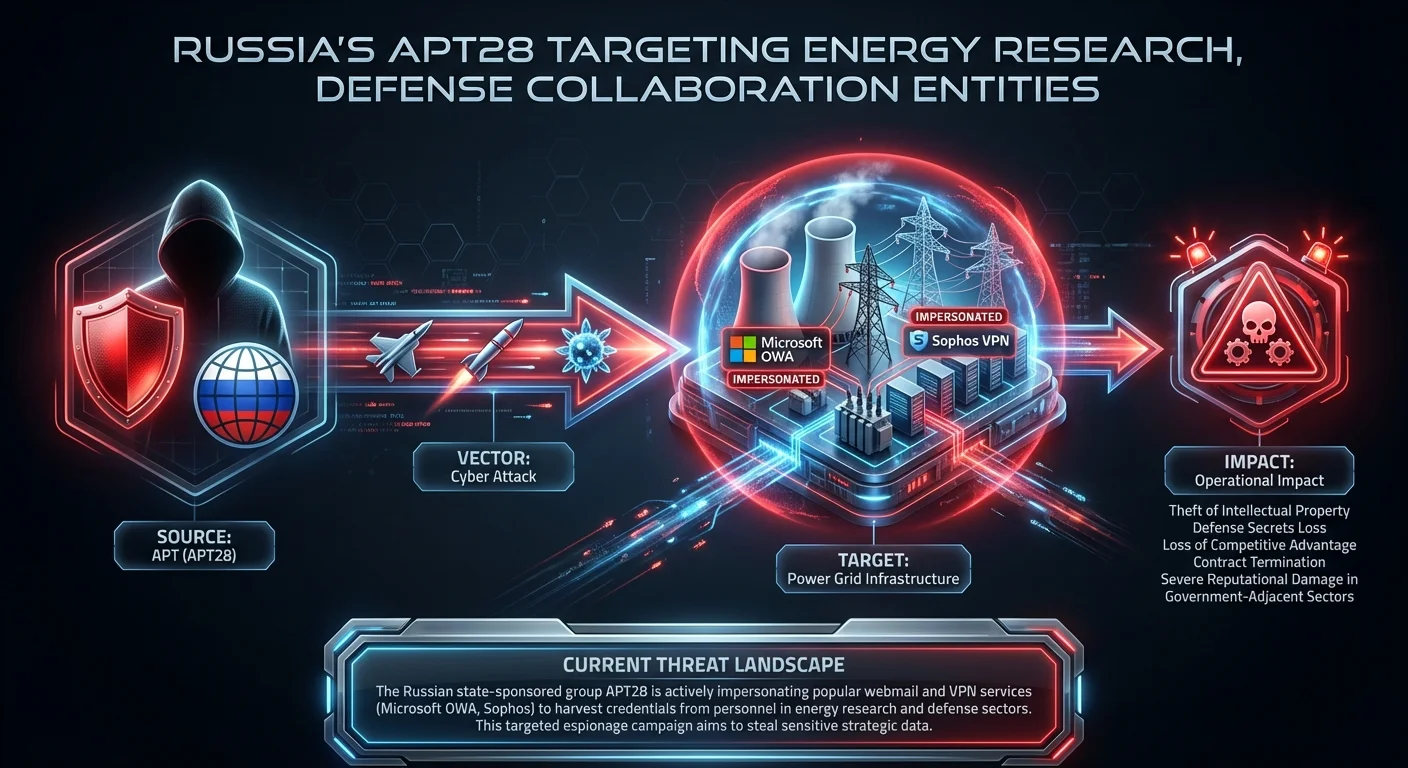
Russia’s APT28 Targeting Energy Research, Defense Collaboration Entities

    The Russian state-sponsored group APT28 is actively impersonating popular webmail and VPN services (Microsoft OWA, Sophos) to harvest credentials from personnel in energy research and defense sectors. This targeted espionage campaign aims to steal sensitive strategic data.

    Business Impact

    Theft of intellectual property and defense secrets can lead to loss of competitive advantage, contract termination, and severe reputational damage in government-adjacent sectors.

    Recommended Action

    Ask your Identity team: Do we require FIDO2/hardware-based MFA for all external access points? Legacy MFA methods (SMS/Push) are insufficient against these phishing proxies.

Palo Alto Networks Defines SHIELD Framework to Secure Vibecoding

    Palo Alto Networks has released the SHIELD framework to address security risks in "vibecoding" (AI-assisted coding) environments. This framework provides best practices to mitigate vulnerabilities introduced by rapid, AI-generated development cycles.

NASA has publicly acknowledged a researcher for responsibly disclosing vulnerabilities via their VDP. This reinforces the value of maintaining robust vulnerability disclosure programs for organizational security.

Investors Are Getting Into Data Centers And Downtime Is A Serious Concern

    With data storage needs hitting 200 zettabytes, investors are increasingly focused on data center resilience. Downtime is becoming a critical financial risk factor beyond just technical operations.

Other Noteworthy

Palo Alto Networks Defines SHIELD Framework to Secure Vibecoding

    Palo Alto Networks has released the SHIELD framework to address security risks in "vibecoding" (AI-assisted coding) environments. This framework provides best practices to mitigate vulnerabilities introduced by rapid, AI-generated development cycles.

NASA has publicly acknowledged a researcher for responsibly disclosing vulnerabilities via their VDP. This reinforces the value of maintaining robust vulnerability disclosure programs for organizational security.

Investors Are Getting Into Data Centers And Downtime Is A Serious Concern

    With data storage needs hitting 200 zettabytes, investors are increasingly focused on data center resilience. Downtime is becoming a critical financial risk factor beyond just technical operations.

Executive Briefing

Tenable Is a Gartner® Peer InsightsTM Customers’ Choice for Cloud-Native Application Protection Platforms

Tenable has been recognized for its Cloud-Native Application Protection Platform (CNAPP), highlighting the market consolidation around unified cloud security tools. For executives, this validates the shift towards integrated platforms for SOX/SOC 2 compliance in cloud environments.

Tenable · 1:28 PM ·

Vendor Spotlight

Vendor

Eclypsium (Specialized Vendor)

Specialization: Firmware and Hardware Supply Chain Security

Why Eclypsium Today: Eclypsium specializes in securing the firmware and hardware layer of IT infrastructure, which is directly relevant to the reported China-linked attacks targeting telecommunications providers via edge device exploits. Their platform detects vulnerabilities and implants in network gear and VPN appliances, a critical defense against sophisticated actors like UAT-7290 that leverage Linux-based malware on unmanaged edge devices.

Key Capability: Automated discovery and integrity verification of firmware in network and edge devices

Recommended Actions: 1. Navigate to Eclypsium Console → Risks → Threats & Integrity → Filter by Device Type: 'Network' 2. Navigate to Eclypsium Console → Risks → Vulnerabilities → Filter by Severity: 'Critical' & Device Type: 'Network' 3. Navigate to Eclypsium Console → Devices → Network Devices → Select Target Subnets → Actions → Scan Now

Verification Steps: - Review 'Last Scanned' timestamp and 'Scan Status' in the Devices inventory for critical edge assets. - Drill down into a specific remediated asset: Device Details → Firmware → Change Log.

Learn More About Eclypsium ↗

Detection & Response

Detection & Response Kit (4 items)

⚠️ Disclaimer: Test all detection logic in non-production environments before deployment.

1. Vendor Platform Configuration - Eclypsium

# Actionable Guidance for Eclypsium # Generated: 2026-01-12 14:31:08 # Step 1: Navigate to Eclypsium Console → Risks → Threats & Integrity → Filter by Device Type: 'Network' # Purpose: Detect potential firmware implants or unauthorized modifications on edge devices (VPNs, Routers) consistent with UAT-7290 tactics. # Expected: A list of network assets flagged with 'Verification Failed' or 'Unknown Firmware', indicating deviation from known-good vendor baselines or presence of known implants. # Step 2: Navigate to Eclypsium Console → Risks → Vulnerabilities → Filter by Severity: 'Critical' & Device Type: 'Network' # Purpose: Identify unpatched firmware vulnerabilities (CVEs) on edge appliances that actors are exploiting for initial access. # Expected: Prioritized list of edge devices running firmware versions with known exploits, specifically looking for vulnerabilities in VPN concentrators and boundary routers. # Step 3: Navigate to Eclypsium Console → Devices → Network Devices → Select Target Subnets → Actions → Scan Now # Purpose: Force an immediate integrity and vulnerability assessment of the specific edge network segments targeted by the threat intelligence. # Expected: Initiation of an active scan via the Eclypsium backend to retrieve the latest firmware hashes and configuration data for comparison against the threat database. # Verification Steps: # - Review 'Last Scanned' timestamp and 'Scan Status' in the Devices inventory for critical edge assets. # Expected: Status reads 'Success' with a timestamp within the last hour, confirming recent telemetry has been analyzed against the latest threat signatures. # - Drill down into a specific remediated asset: Device Details → Firmware → Change Log. # Expected: Confirmation that the firmware version has updated to a secure release and the Integrity Status has returned to 'Valid' or 'Known Good'.

2. YARA Rule for APT28 Indicators

rule APT28_Credential_Harvesting_Indicators { meta: description = "Detects artifacts associated with APT28/Fancy Bear credential harvesting campaigns" author = "Threat Rundown" date = "2026-01-12" reference = "https://securityaffairs.com/?p=186801" severity = "high" tlp = "white" strings: $s1 = "APT28" ascii wide $s2 = "Fancy Bear" ascii wide $s3 = "Sofacy" ascii wide $s4 = "Sednit" ascii wide $s5 = "BlueDelta" ascii wide $s6 = "STRONTIUM" ascii wide $s7 = "UAC-0001" ascii wide // Contextual strings based on targeting $c1 = "Outlook" ascii wide $c2 = "Sophos" ascii wide $c3 = "Google" ascii wide condition: (any of ($s*) and any of ($c*)) or 3 of ($s*) }

3. SIEM Query — GoBruteforcer Database Attack Detection

index=security sourcetype="linux_secure" OR sourcetype="mysql_audit" (process_name="mysqld" OR process_name="postgres" OR service="ftp") | eval risk_score=case( match(_raw, "(?i)failed password"), 10, match(_raw, "(?i)authentication failure"), 10, match(_raw, "(?i)brute force"), 50, 1==1, 0) | stats sum(risk_score) as total_risk, count as attempt_count by src_ip, dest_ip, user, _time | where total_risk >= 100 AND attempt_count > 20 | table _time, src_ip, dest_ip, user, attempt_count, total_risk | sort -_time

4. PowerShell Script — Tycoon/Palo Alto Indicator Check

# Check for Tycoon/Palo Alto SHIELD related indicators (File Hash) $computers = "localhost" $targetHash = "5feceb66ffc86f38d952786c6d696c79c2dbc239dd4e91b46729d73a27fb57e9" foreach ($computer in $computers) { Write-Host "Scanning $computer for malicious artifacts..." # Example: Scanning a specific temp directory often used by droppers $files = Get-ChildItem -Path "C:\Windows\Temp", "C:\Users\*\AppData\Local\Temp" -ErrorAction SilentlyContinue foreach ($file in $files) { try { $fileHash = Get-FileHash -Path $file.FullName -Algorithm SHA256 -ErrorAction SilentlyContinue if ($fileHash.Hash -eq $targetHash) { Write-Warning "CRITICAL: Malicious file detected on $computer: $($file.FullName)" } } catch { # Skip locked files } } }

This rundown should provide a solid overview of the current threat landscape. Thank you to all our cyberheroes for your diligence and hard work. Stay vigilant!