Heroes, 84 years ago this morning, Naval Station Pearl Harbor was attacked. Let's take a moment for them.
Here's a look at the current cybersecurity landscape for December 7, 2025.
Critical Threats
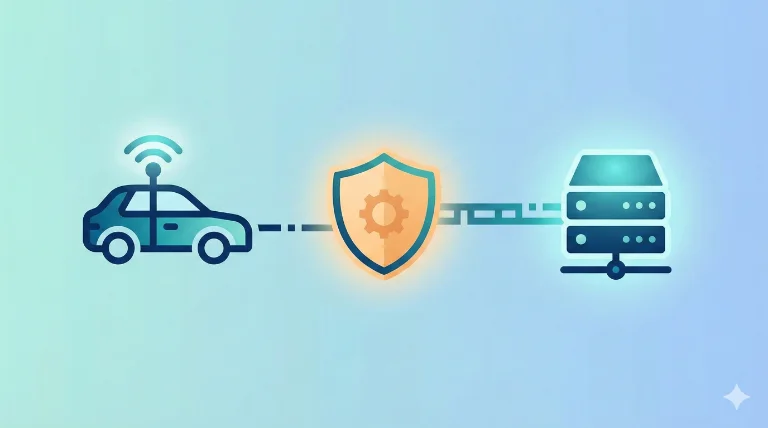
Porsche Outage in Russia Highlights Connected Vehicle Risks
securityaffairs.com·1:42 PM
▾
Hundreds of Porsche vehicles in Russia have been rendered undrivable following a malfunction in their factory-installed satellite security systems. This incident underscores the fragility of connected vehicle ecosystems where a single component failure can cause widespread operational paralysis.
Business Impact
For fleet operators and manufacturers, this represents immediate operational downtime and severe reputational damage; publicly traded entities may face SOX reporting requirements due to material impact on revenue and asset usability.
Recommended Action
Ask your IT/OT security leads: "Do we have manual override protocols for our connected assets, and have we audited our third-party telemetry dependencies for single points of failure?"
DoS Vulnerability in Logrus Logging Library (CVE-2025-65637)
NIST·1:03 AM·CVE-2025-65637
▾
A Denial-of-Service vulnerability has been discovered in `github.com/sirupsen/logrus`, a widely used Go logging library, where logging a single-line payload larger than 64KB causes the writer pipe to close. This affects versions < 1.8.3, 1.9.0, and 1.9.2, potentially crashing applications that process untrusted input logs.
Business Impact
If exploited, critical applications and microservices could crash repeatedly, leading to service unavailability, SLA breaches, and potential revenue loss during downtime.
Recommended Action
Ask your DevOps team: "Are any of our Go-based applications using vulnerable versions of Logrus, and have we upgraded to version 1.9.3+?"
Multiple vulnerabilities have been identified in the Linux kernel, including race conditions in `sys_prlimit64`, allocation failures in media drivers, and out-of-bounds access in mailbox cleanup loops. These issues primarily affect system stability and local privilege boundaries.
Multiple vulnerabilities have been identified in the Linux kernel, including race conditions in `sys_prlimit64`, allocation failures in media drivers, and out-of-bounds access in mailbox cleanup loops. These issues primarily affect system stability and local privilege boundaries.
Spotlight Rationale: With the emergence of CVE-2025-65637 (Logrus DoS) and multiple Linux Kernel vulnerabilities (CVE-2022-4543, CVE-2025-40201) in today's rundown, organizations need rapid visibility into open-source dependencies and containerized workloads.
Snyk specializes in developer-first security, integrating directly into the CI/CD pipeline to detect vulnerable dependencies like `logrus` before they reach production. Unlike traditional scanners, Snyk provides actionable fix pull requests and can identify if the vulnerable function (e.g., `Entry.Writer()`) is actually reachable in your code, prioritizing the specific threats highlighted today.
Actionable Platform Guidance: Use the Snyk CLI to test your Go projects specifically for the Logrus vulnerability and verify your container base images against the new Linux Kernel CVEs.
⚠️ Disclaimer: Test all detection logic in non-production environments before deployment.
1. Vendor Platform Configuration - Snyk
# 1. Authenticate Snyk CLI
snyk auth
# 2. Test Go projects specifically for the Logrus vulnerability (CVE-2025-65637)
# Run this in your project root
snyk test --file=go.mod
# 3. Monitor for new instances of this vulnerability in the future
snyk monitor --project-name="Project-Logrus-Check"
# 4. Test container images for the Linux Kernel vulnerabilities (EntryBleed/CVE-2022-4543)
snyk container test <your-image-name> --app-vulns
2. YARA Rule for CVE-2025-65637 (Logrus DoS Indicators)
rule Logrus_DoS_CVE_2025_65637_Indicator {
meta:
description = "Detects potential indicators of Logrus DoS exploitation attempts or vulnerable configurations"
author = "Threat Rundown"
date = "2025-12-07"
reference = "https://nvd.nist.gov/vuln/detail/CVE-2025-65637"
severity = "medium"
tlp = "white"
strings:
$s1 = "github.com/sirupsen/logrus" ascii
$s2 = "Entry.Writer" ascii
$s3 = "token too long" ascii
$s4 = "bufio.Scanner" ascii
condition:
$s1 and ($s2 or $s3) and $s4
}
3. SIEM Query — Logrus DoS Error Detection
index=application_logs sourcetype="go_app"
"token too long" OR "bufio.Scanner: token too long"
| eval risk_score=case(
match(_raw, "logrus"), 100,
match(_raw, "panic"), 80,
1==1, 50)
| where risk_score >= 50
| table _time, host, app_name, error_msg, risk_score
| sort -_time
4. PowerShell Script — Check Linux Kernel Version (SSH)
# Requires Posh-SSH module
$computers = "192.168.1.10", "192.168.1.11" # List your Linux servers
$credential = Get-Credential
foreach ($computer in $computers) {
try {
$session = New-SSHSession -ComputerName $computer -Credential $credential -AcceptKey
# Check for kernel version to identify potential EntryBleed (CVE-2022-4543) exposure
$command = Invoke-SSHCommand -SSHSession $session -Command "uname -r"
Write-Host "Server: $computer | Kernel: $($command.Output)"
Remove-SSHSession -SSHSession $session
} catch {
Write-Host "Failed to connect to $computer" -ForegroundColor Red
}
}
This rundown should provide a solid overview of the current threat landscape. Thank you to all our cyberheroes for your diligence and hard work. Stay vigilant!
Cookie Notice
We use essential cookies to provide our cybersecurity newsletter service and analytics cookies to improve your experience.
About STIX 2.1: Structured Threat Information eXpression (STIX) is the machine language of cybersecurity. This bundle contains validated threat objects, indicators, and relationships that can be directly imported into your SIEM, TIP, or security orchestration platform.
Usage: Download or copy the JSON below and import it directly into your threat intelligence platform, SIEM, or security orchestration tools for automated threat detection and response.
{
  "type": "bundle",
  "id": "bundle--84ce1ab0-5bda-4d8c-8775-8a83143d58e2",
  "objects": [
    {
      "type": "marking-definition",
      "spec_version": "2.1",
      "id": "marking-definition--94868c89-83c2-464b-929b-a1a8aa3c8487",
      "created": "2022-10-01T00:00:00.000Z",
      "definition_type": "tlp:2.0",
      "name": "TLP:CLEAR",
      "definition": {
        "tlp": "clear"
      }
    },
    {
      "type": "identity",
      "spec_version": "2.1",
      "id": "identity--85f423c5-fbc4-4ec9-b172-dff59e8799c0",
      "created": "2025-12-07T15:29:33.408Z",
      "modified": "2025-12-07T15:29:33.408Z",
      "name": "MikeGPT Intelligence Platform",
      "description": "AI-powered threat intelligence collection and analysis platform providing automated cybersecurity intelligence feeds",
      "identity_class": "organization",
      "sectors": [
        "technology",
        "defense"
      ],
      "contact_information": "Website: https://mikegptai.com | Email: intel@mikegptai.com",
      "object_marking_refs": [
        "marking-definition--94868c89-83c2-464b-929b-a1a8aa3c8487"
      ]
    },
    {
      "type": "report",
      "spec_version": "2.1",
      "id": "report--33fea823-e5ac-4d6b-8bca-ba4e929bf367",
      "created": "2025-12-07T15:29:33.408Z",
      "modified": "2025-12-07T15:29:33.408Z",
      "name": "Threat Intelligence Report - 2025-12-07",
      "description": "Threat Intelligence Report - 2025-12-07\n\nThis report consolidates actionable cybersecurity intelligence from 34 sources, processed through automated threat analysis and relationship extraction.\n\nKEY FINDINGS:\n• CVE-2025-65637 A denial-of-service vulnerability exists in github.com/sirupsen/logrus when using Ent (Score: 90.6)\n• Porsche outage in Russia serves as a reminder of the risks in connected vehicle security (Score: 87.0)\n• CVE-2022-4543 A flaw named \"EntryBleed\" was found in the Linux Kernel Page Table Isolation (KPTI). T (Score: 84.9)\n• CVE-2025-40201 kernel/sys.c: fix the racy usage of task_lock(tsk->group_leader) in sys_prlimit64() p (Score: 83.0)\n• CVE-2025-40207 media: v4l2-subdev: Fix alloc failure check in v4l2_subdev_call_state_try() (Score: 83.0)\n\nEXTRACTED ENTITIES:\n• 2 Attack Pattern(s)\n• 1 Marking Definition(s)\n\nCONFIDENCE ASSESSMENT:\nVariable confidence scoring applied based on entity type and intelligence source reliability. Confidence ranges from 30-95% reflecting professional intelligence assessment practices.\n\nGENERATION METADATA:\n- Processing Time: Automated\n- Validation: Three-LLM consensus committee\n- Standards Compliance: STIX 2.1\n",
      "published": "2025-12-07T15:29:33.408Z",
      "object_refs": [
        "identity--85f423c5-fbc4-4ec9-b172-dff59e8799c0",
        "attack-pattern--280ebd89-59bc-4ae2-a9db-1c01a56e50dc",
        "attack-pattern--e5974f70-5745-450a-908a-6483ad9c4678"
      ],
      "labels": [
        "threat-report",
        "threat-intelligence"
      ],
      "created_by_ref": "identity--85f423c5-fbc4-4ec9-b172-dff59e8799c0",
      "object_marking_refs": [
        "marking-definition--94868c89-83c2-464b-929b-a1a8aa3c8487"
      ]
    },
    {
      "spec_version": "2.1",
      "created": "2025-12-07T15:29:33.407Z",
      "modified": "2025-12-07T15:29:33.407Z",
      "confidence": 90,
      "type": "attack-pattern",
      "id": "attack-pattern--280ebd89-59bc-4ae2-a9db-1c01a56e50dc",
      "name": "Exploit Public-Facing Application",
      "kill_chain_phases": [
        {
          "kill_chain_name": "mitre-attack",
          "phase_name": "initial-access"
        }
      ],
      "x_mitre_id": "T1190",
      "external_references": [
        {
          "source_name": "MITRE ATT&CK",
          "url": "https://attack.mitre.org/techniques/T1190/",
          "external_id": "T1190"
        }
      ],
      "object_marking_refs": [
        "marking-definition--94868c89-83c2-464b-929b-a1a8aa3c8487"
      ],
      "labels": [
        "mitre-attack"
      ]
    },
    {
      "spec_version": "2.1",
      "created": "2025-12-07T15:29:33.407Z",
      "modified": "2025-12-07T15:29:33.407Z",
      "confidence": 90,
      "type": "attack-pattern",
      "id": "attack-pattern--e5974f70-5745-450a-908a-6483ad9c4678",
      "name": "Exploitation for Client Execution",
      "kill_chain_phases": [
        {
          "kill_chain_name": "mitre-attack",
          "phase_name": "execution"
        }
      ],
      "x_mitre_id": "T1203",
      "external_references": [
        {
          "source_name": "MITRE ATT&CK",
          "url": "https://attack.mitre.org/techniques/T1203/",
          "external_id": "T1203"
        }
      ],
      "object_marking_refs": [
        "marking-definition--94868c89-83c2-464b-929b-a1a8aa3c8487"
      ],
      "labels": [
        "mitre-attack"
      ]
    }
  ]
}